Quick answer
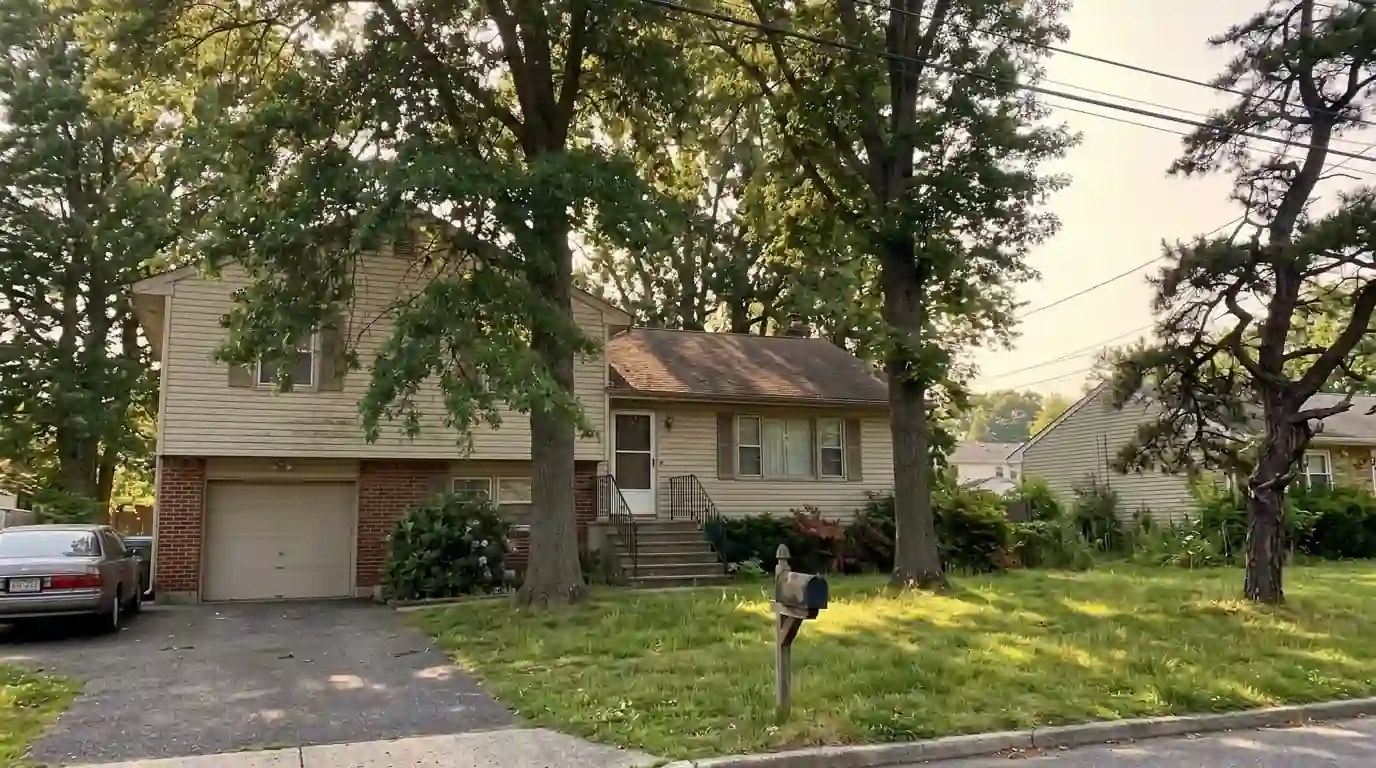
Yes, we work all over Camden County, from Cherry Hill out to the Pinelands towns. Most calls here are wind-thrown trees after summer storms, big oaks and maples crowding older houses, and permit questions, since Cherry Hill and Haddonfield both control tree work in ways a homeowner should know about before anyone starts cutting.
Low, flat ground and summer thunderstorms
Camden County is about as flat as the Delaware Valley gets. It covers 227.42 square miles, counted 523,485 people in 2020, and tops out at only 219 feet, near the Burlington County line. Flat, low ground drains slowly, and a tall tree standing in soaked soil can tip over root plate and all when a gust front comes through.
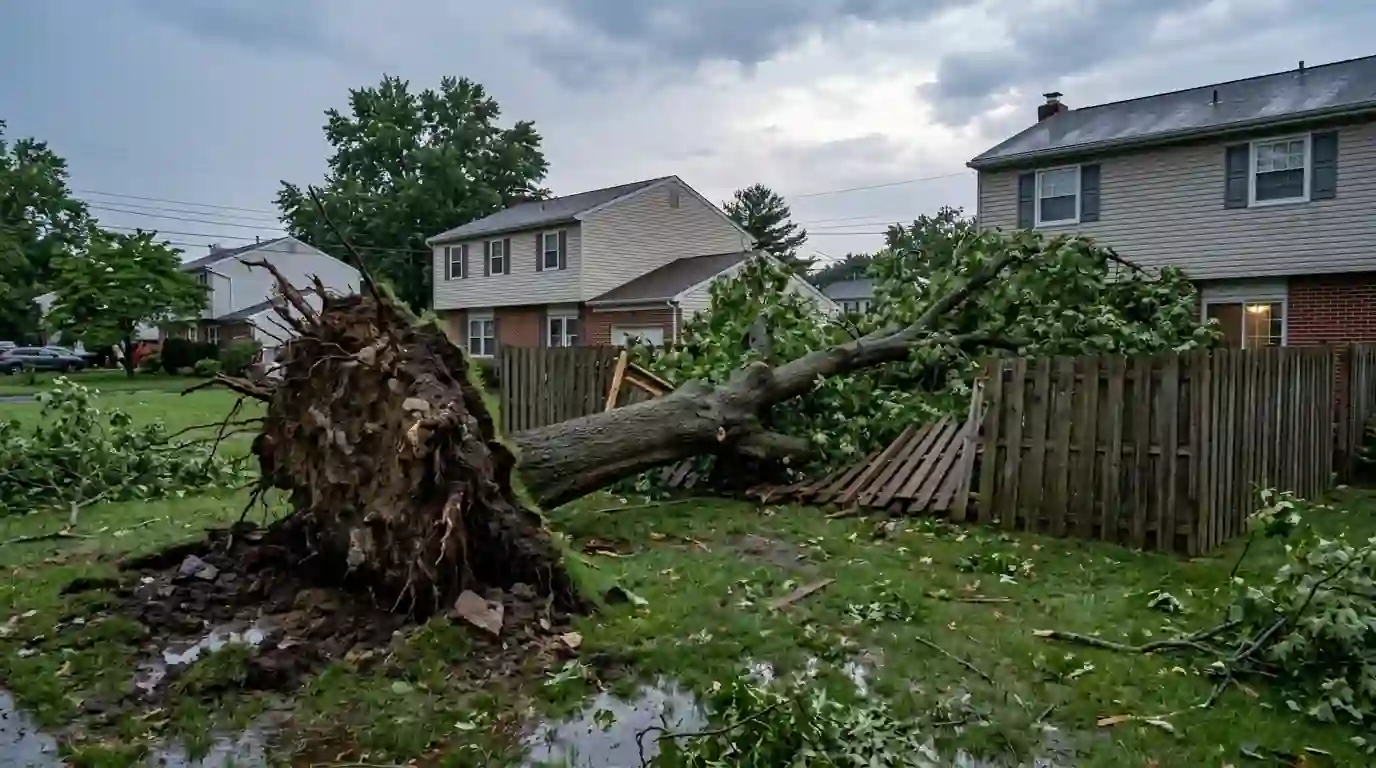
That is what happened on the evening of June 3, 2020, when a severe thunderstorm uprooted trees in Cherry Hill and Haddonfield and buried backyards under fallen limbs. Cleanup after a night like that is mostly triage: what is on a roof, what is hung up in another tree, and what can wait for daylight. Our storm damage cleanup page walks through the order we work in.
What Camden County homeowners call about
Storms make the headlines here, but most of the year the calls are planned jobs like these.
- Storm Damage CleanupWind-thrown trees and limb piles after summer thunderstorms on flat, slow-draining ground.
- Fallen Tree RemovalUprooted trees lying on fences, sheds or cars, cut free and hauled out of the yard.
- Bradford Pear RemovalSplit Callery pears in front yards, now a listed invasive in New Jersey.
- Deadwood RemovalDieback in oaks with bacterial leaf scorch, pruned out well below the affected wood.
- Tree RemovalBig shade trees leaning toward older houses from wooded park and creek edges.
Cooper River Park and the county's wooded edges
Camden County runs more than 2,000 acres of parkland across 21 parks and conservation areas. The one most people know is Cooper River Park, built between 1925 and 1940 to a design by Charles Wellford Leavitt Jr., which impounded a 2.5-mile stretch of the river: open lawn and scattered groves on the west end, dense mature forest on the east.
Homes that back onto wooded park land or a stream corridor tend to raise the same questions: a big tree leaning toward the house from the woods, dead limbs over the fence, vines dragging down an understory tree. Farther out, about 55,000 acres of the county, roughly 38 percent, sit inside the state Pinelands Area, where pitch pine takes over from the shade trees.
Oaks with leaf scorch, and the Callery pear problem
If you have an oak, bacterial leaf scorch is the disease to learn to recognize. Leaf edges brown from midsummer into early fall, branches die back a little more each year, and there is no cure. The NJ Forest Service advises pruning well below the affected leaves, which buys time; an oak that is mostly bare is a removal.
Callery pear, sold for years as Bradford, is the other one. New Jersey's Invasive Species Management Act, enacted in January 2026, lists it among plants that cannot be sold or propagated without a state permit. The law is about selling and spreading it, not trees already in yards, but those tight forks split in storms, and many owners choose a Bradford pear removal over waiting for the next split.
Cherry Hill permits and Haddonfield's borough trees
Two Camden County towns stand out. Cherry Hill needs a permit to remove, or trim more than 30 percent of, any tree 5 inches or more in diameter, healthy or dead; residential permits are free and allow any number of dead trees and up to three healthy ones every 12 months. Haddonfield maintains about 9,000 trees along its streets and park strips, and residents may not prune one without written permission from the Superintendent of Public Works.
Other towns write their own chapters, so ask before a cut. The Cherry Hill page lays out that township's permit in full.
Camden County tree questions
The county is flat and low, so soil stays wet after heavy rain. A tall tree in soaked ground has less grip, and a strong gust can tip the whole root plate instead of snapping the trunk.
Not if it is a Borough tree in the park strip. Haddonfield requires written permission from the Superintendent of Public Works first, and dead or storm-damaged Borough trees are generally removed in winter.
The 2026 law targets selling and propagating, not trees already standing. The practical reason to remove one is structure: tight forks that split in wind. If yours has started splitting, it is time.
In South Jersey that pattern can point to bacterial leaf scorch. There is no cure, but pruning well below the affected leaves slows the visible decline. We can look and tell you how far along it seems.
Close to Camden County
Calling about a tree in Camden County?
Call any hour. Tell us where it stands and what it is doing, and we will look at it and talk through the permit side before cutting.