Quick answer
Most hedges need trimming once or twice a year, after the spring flush and again in midsummer, with the last cut done well before fall so new growth hardens off. Lawn Love's published national range for hedge work is $200 to $600 and most homeowners pay around $429. Length, height and how far the hedge has run wild set the price.
What a proper hedge trim looks like
A hedge is a row of shrubs trained to act as a wall, and it only stays dense if light reaches all of it. Trim it straight-sided or wider at the top and the bottom shades out, leaving bare stems at knee height. We cut a slight taper so the base stays full.
Shrubs are not hedges. A forsythia or holly that has swallowed a window does not want shearing; it wants older stems cut out low so it renews from below. Formal hedges get powered trimmers, and everything else gets hand pruners and loppers. Small trees in the bed are a hand-pruning job for ornamentals, and a yard lost under growth is closer to clearing overgrowth.
What hedge trimming costs
Lawn Love publishes a national range for hedge work. Five things decide where a yard lands.
- 01
Length. A short front hedge is quick; a long screen down a property line takes hours.
- 02
Height. Anything above head height needs a stepladder or long-reach trimmer and more time.
- 03
How overgrown it is. A regular trim is fast; a hedge two years late needs heavier cuts and more cleanup.
- 04
Getting clippings out. A rear yard with no alley means every bag leaves by hand.
- 05
Plant type. Boxwood and arborvitae need slower, more careful cuts than privet.
| Job | Published range | Source |
|---|---|---|
| Hedge trimming | $200 to $600 | Lawn Love, 2025 |
Planning numbers from published surveys, not our prices. We price after seeing the tree.
Shear it, cut it back hard, or replace it?
Overgrown hedges leave three real choices. Which one works depends on the plant.
| Plant | Regular shearing | Hard cutback | Replace |
|---|---|---|---|
| Privet | Takes it easily, two or three times a season | Regrows from stems cut low, a good reset | Rarely needed |
| Boxwood | Light shearing only, leaving some green | Recovers slowly over a few years | When blight or winter burn has killed whole sections |
| Arborvitae | Light trims kept within the green | Will not regrow from bare brown wood | When it is far too tall or open at the base |
| Forsythia and lilac | Ruins the flowering, so avoid it | Oldest canes cut at the base each year | Seldom |
If a screen does have to come out, grinding the old stumps leaves the bed ready to replant.
Trimming your own hedge, or calling us
| Doing it yourself | Having us do it | |
|---|---|---|
| Height | A ladder on a soft bed with a running trimmer overhead is a common way to get hurt. | Steady footing and long-reach trimmers for tall screens. |
| Shape | Straight sides or a wider top shade out the base. | A slight taper so the bottom stays green. |
| Plant knowledge | Cutting arborvitae or boxwood into bare wood leaves lasting holes. | We stop at the green on plants that will not regrow. |
| Cleanup | Bags of clippings and nowhere to take them. | Clippings raked from beds and hauled away. |
Privet and boxwood hedges
Privet is the classic front-yard hedge, and it grows fast enough to crowd a walk in one summer. It takes shearing well and can be cut back hard if it gets away from you. Boxwood is the opposite: slow, dense and easily scarred by cuts into old wood. We shear it lightly, keep some green on every face, and clean our tools between properties so boxwood blight does not travel with us.
Arborvitae screens
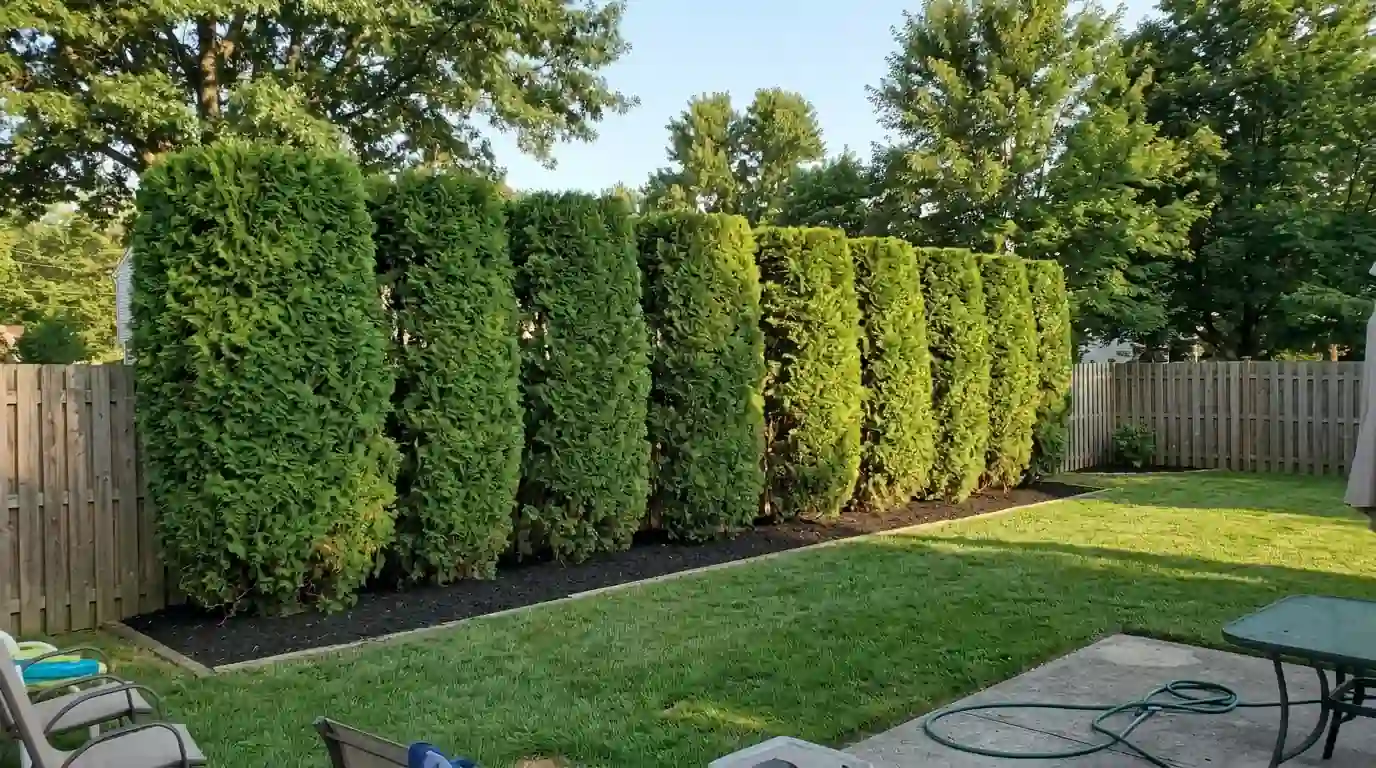
Arborvitae makes a tall, narrow privacy screen, but it will not regrow from brown interior wood, so every cut stays inside the green. You notice trouble when heavy snow splays the tops open or the bottom goes thin and brown. We trim the faces lightly, lower the top only where it is still green, and can tie splayed leaders back together. A screen that has shot up 20 feet is often past trimming.
Overgrown shrub cutbacks
Foundation plantings put in decades ago often cover windows, scrape siding and hide the front steps. Many deciduous shrubs, forsythia, lilac, spirea and privet among them, renew if a third of the oldest stems are cut to the ground each year for three years. Some handle a single hard cutback in late winter. Hollies and rhododendrons recover more slowly, so we tell you which group your shrubs fall into before cutting.
Hedges in rowhome country
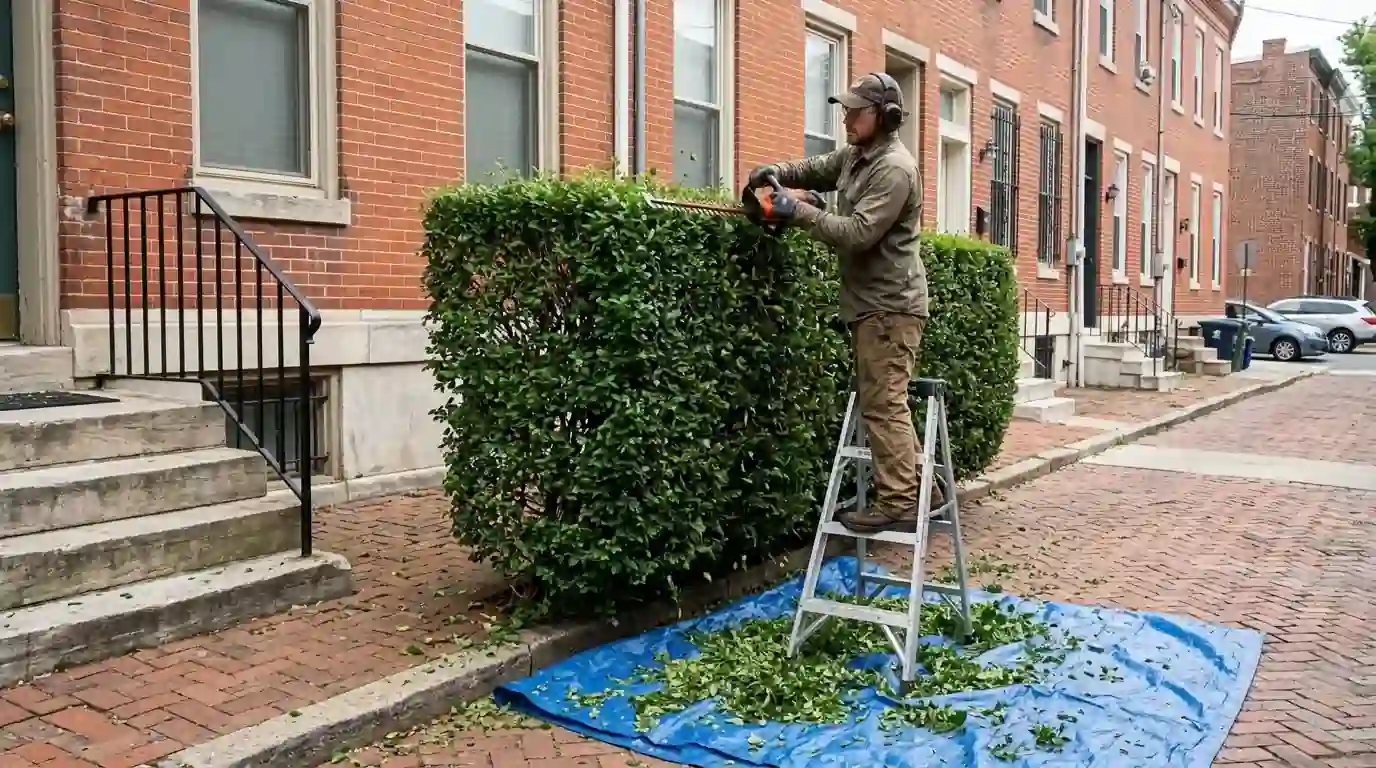
Rowhomes make up about 70 percent of Philadelphia's housing units, and nearly 60 percent of Philadelphians live in one, a higher share than in any other U.S. city. That shapes hedge work here. The front hedge is often the only green between the house and the sidewalk, and the rear one sits in a yard reached through the house or a narrow gate. Clippings get raked onto tarps, bagged and carried out, with drop sheets laid along the route.
How a hedge trimming visit runs
Walk the hedge
We look at length, height, species and any dead sections.
Agree the shape
Height, width and how far back the faces come.
Lay drop sheets
Tarps along beds and walks catch the clippings.
Check for nests
Active bird nests are left alone and worked around.
Cut the top line
A level or gently rounded top, set by eye and string.
Taper the faces
Sides cut slightly wider at the base.
Rake and haul
Clippings bagged and removed, walks blown clean.
Hedge and shrub trimming questions
Two or three times a growing season for a crisp look, starting after the spring flush. Once a year keeps it in bounds but shaggy by late summer.
Finish by early fall. A late cut pushes soft new growth that a hard frost can burn, leaving brown patches all winter.
Often. Privet and many deciduous hedges refill if cut back hard and then shaped with a taper. Arborvitae bare at the base usually will not.
It was probably cut past the green into old wood, which arborvitae does not regrow from. Keeping cuts within the foliage avoids it.
Yes. Clippings are raked out of beds, bagged or chipped, and hauled off unless you want them for compost.
Other yard work we handle
Ornamental Tree Pruning
Careful hand pruning for Japanese maples, dogwoods and flowering cherries.
Crown Raising & Clearance Pruning
Lifting low limbs off sidewalks, driveways, parked cars and the lawn.
Young Tree Structural Pruning
Early cuts that set a strong structure so the tree needs less work later.
Brush & Overgrowth Clearing
Overgrown yards, fence lines and alleys cut back and hauled out.
Hedge taking over the walk?
Call and describe it. We will come look, agree the shape with you, and price it before we start.