Quick answer
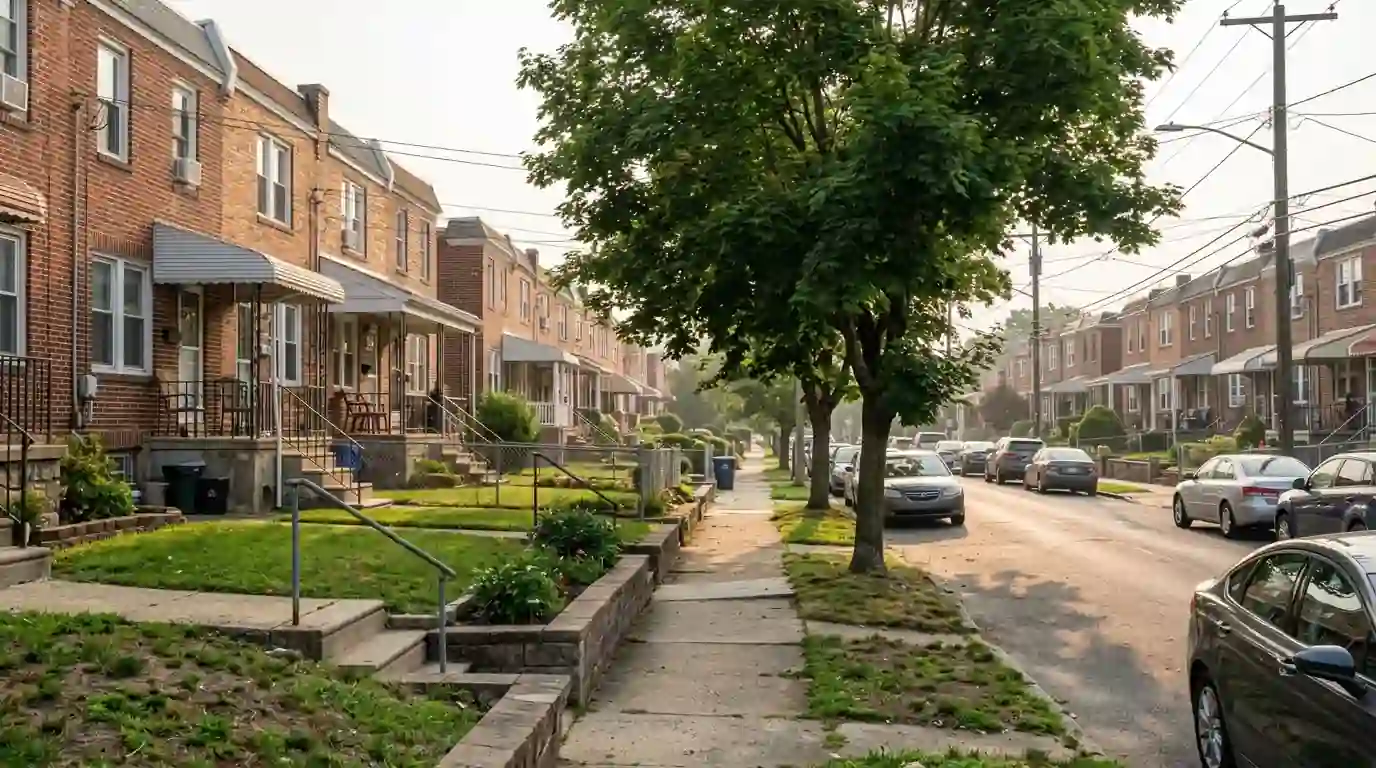
Yes, Somerton is regular ground for us, from Old Somerton north of Byberry Road to tracts like Somerton Terrace and Philmont Heights. What we find depends on the block: bigger trees around the oldest houses, yard trees that went in when a tract was new, and woodland edges along Poquessing Creek. Nearly every removal here ends with a stump to grind. Phones are answered 24/7.
Old Somerton to Timberwalk: a century of houses
Somerton was not built in one go. The larger houses of Old Somerton, north of Byberry Road, predate 1900. Upper Selma and Burgess streets filled in during the 1920s. Then came the tracts: Lumar Park in 1950-1951, Somerton Terrace from 1952 to 1954, Brentwood in 1958, Westwood in 1966-1967, Philmont Heights in 1970-1972 and Timberwalk in 1986.
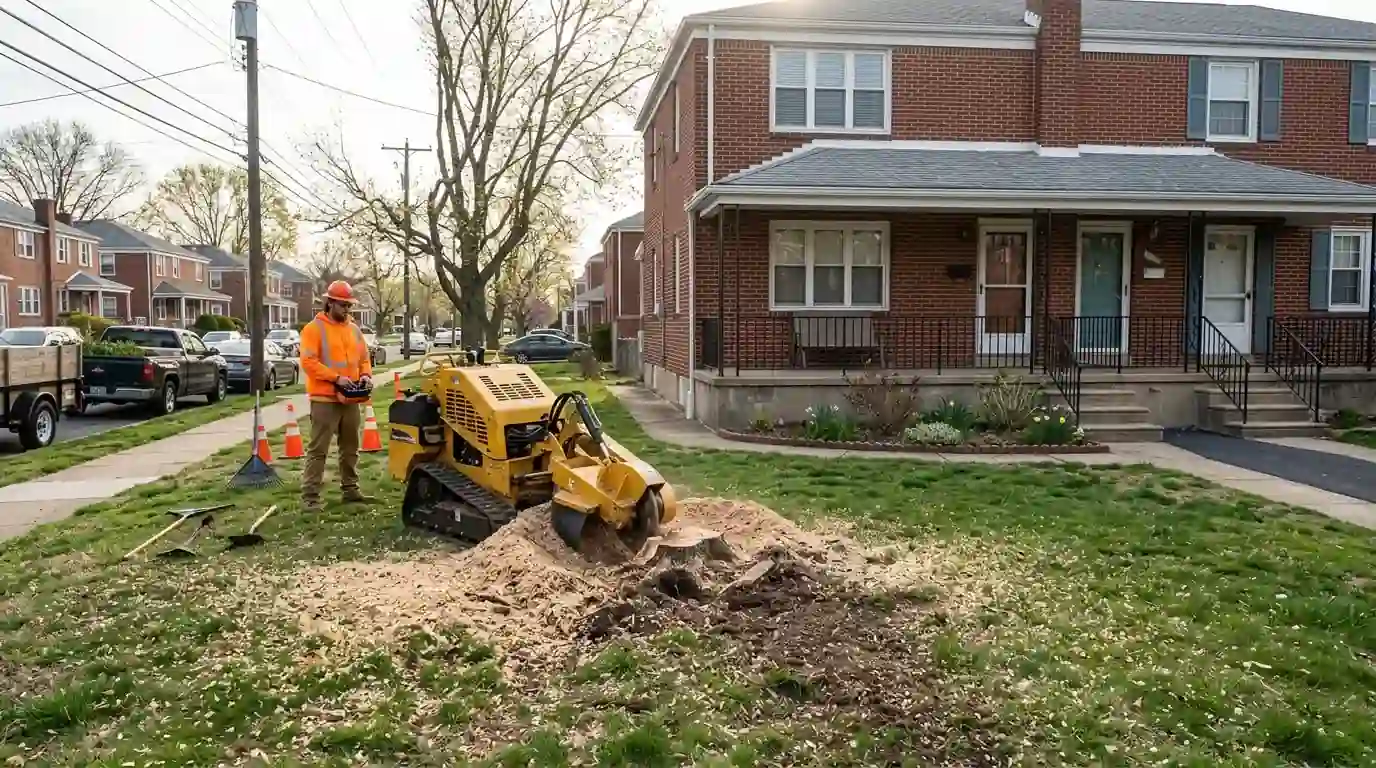
That spread changes the work from street to street. Around the oldest houses a tree can be older than anyone on the block and big enough to need rigging over the roof, so it goes on our large tree list. In a 1950s or 1970s tract, the usual call is a yard tree planted with the house that has now outgrown a modest lot, pressing on gutters or heaving a walk. Either way a stump is left behind, and few owners want one sitting in a front lawn, so grinding it out is usually part of the same visit.
What Somerton jobs usually look like
The age of the house and the distance to the creek decide most of what we do in Somerton.
- Tree RemovalTract-era yard trees that have outgrown a small Somerton lot and now crowd the house, the drive or the fence.
- Stump GrindingStumps ground below grade so a front lawn in Somerton Terrace or Westwood can be seeded flat again.
- Large Tree RemovalBig trees around the pre-1900 houses north of Byberry Road, rigged down in sections over the roof.
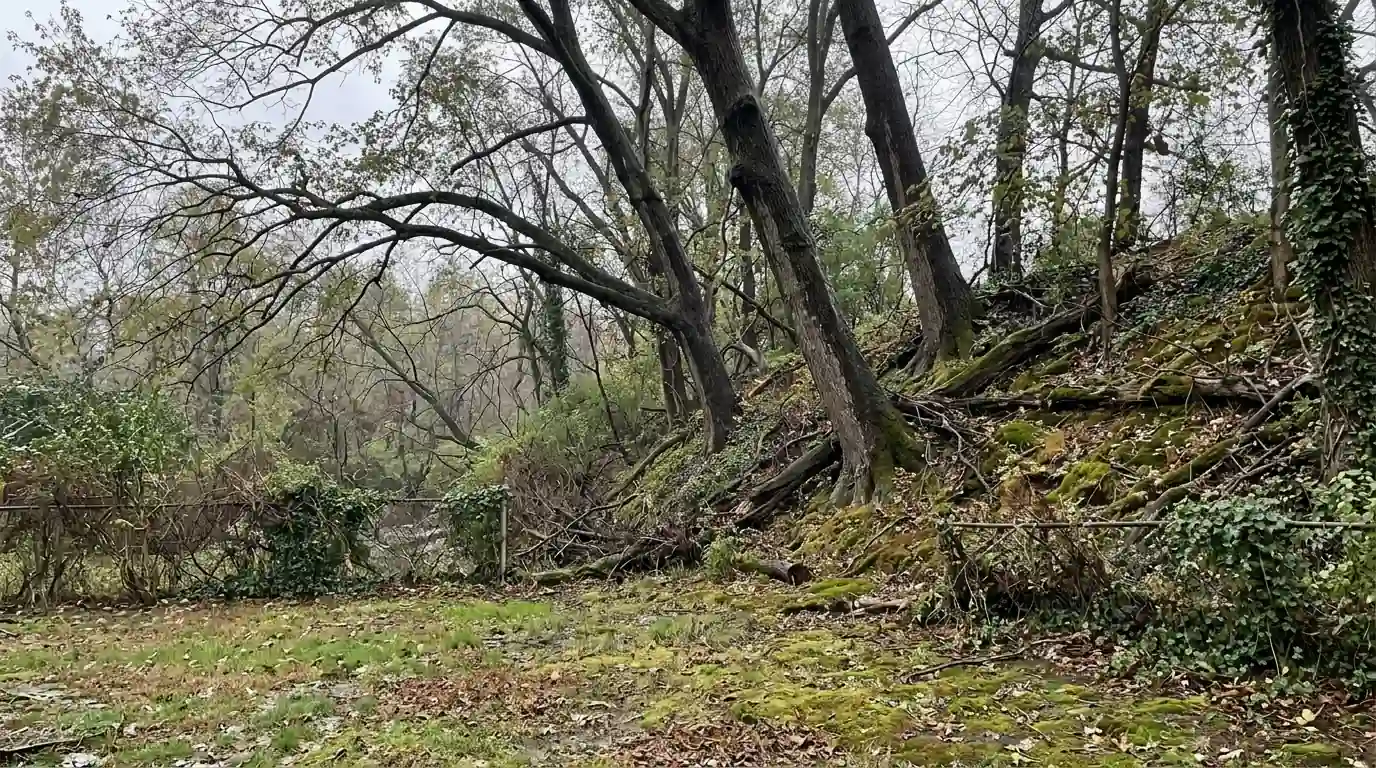
- Leaning Tree RemovalTrees at the creek and woodland edges that have tipped toward the yard after wet weather.
- Storm Damage CleanupLimbs and trunks brought down by a storm, cut up and hauled off yards near the creek.
Poquessing Creek and the Benjamin Rush woods
Somerton's northern edge follows East County Line Road and Poquessing Creek, with Roosevelt Boulevard on the east and Bustleton Avenue meeting Byberry Road at the center. The creek runs 10.3 miles down to the Delaware, drains about 21.5 square miles of Philadelphia, Montgomery and Bucks counties, and is the line between the city and Bensalem Township.
Benjamin Rush State Park adds more woods. Created in 1975 on 275 acres of the old Philadelphia State Hospital grounds, known as Byberry, beside Roosevelt Boulevard, it is still largely undeveloped, with woodland along the creek on its northern edge and big community gardens.
Trees at a creek or woodland edge grow toward the open light, which usually means toward the yard. Their roots sit in soil that stays wet after heavy rain, and a lean that has held for years can shift in one storm. Fresh soil cracking on the far side of the trunk is the sign to call about a leaning tree before it settles the question itself.
Somerton tree questions
Yes, when the trunk stands on your property. Creek-edge trees tend to lean toward the yard, so we lower them in pieces toward open ground instead of dropping them whole.
Usually. Older, larger trees close to pre-1900 houses need more rigging over the roof, so the day runs longer than a typical removal beside a postwar twin.
As soon as the chips are raked out and topsoil goes in. Seed can go down the same week, and most patches fill in within a growing season.
Yes. The creek is only the city line for us. A job on the Bensalem side is looked at, priced and done the same way as one in Somerton.
Around Somerton
Tree and stump to go in Somerton?
Call and describe the job. We will look at it, tell you how it comes down, and price the removal and the grinding as separate lines.