Quick answer
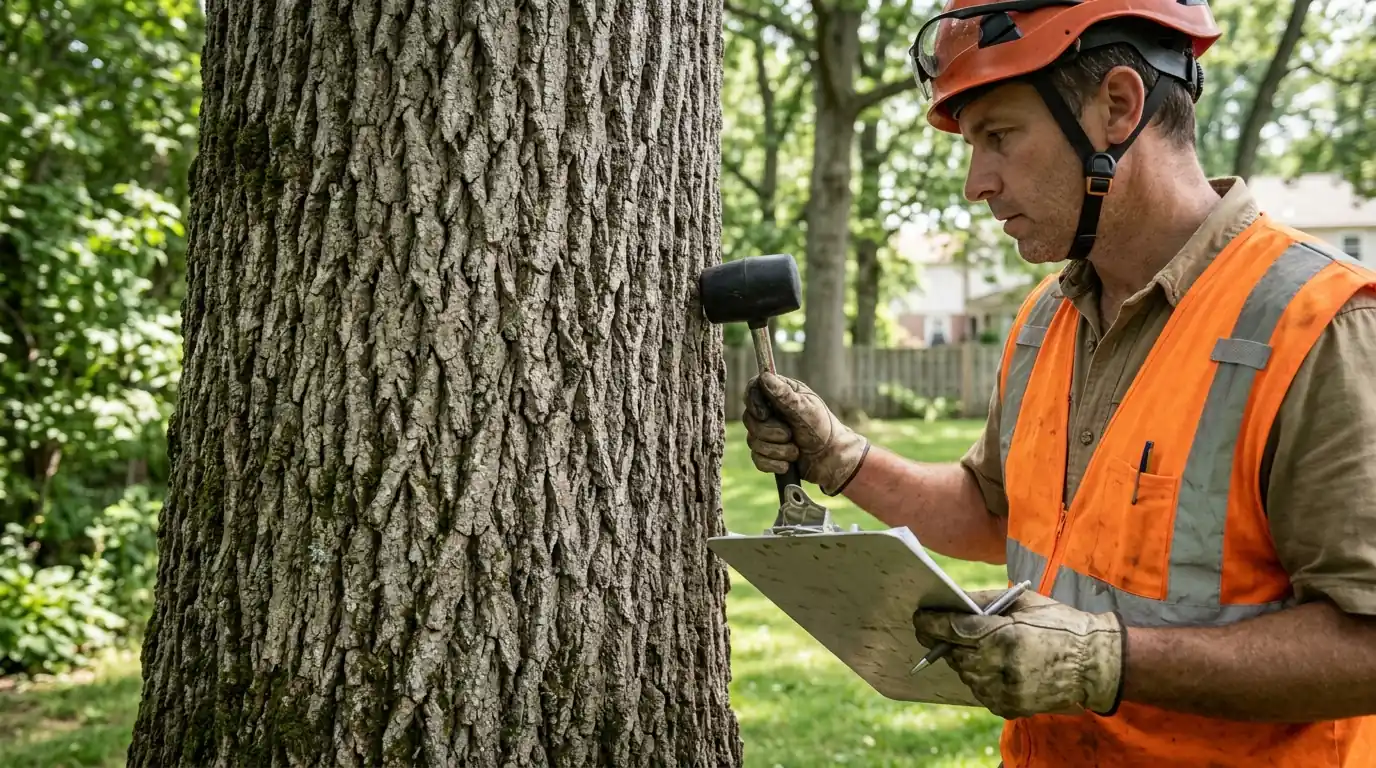
Emerald ash borer treatment is a trunk injection repeated every few years. Purdue puts the cost at about $10 per diameter inch, roughly $300 per cycle for a 30-inch ash treated every 3 years. It works on ash that still hold most of their crown. Trees that have lost much of their canopy are usually better removed.
How treatment keeps an ash alive
Borer larvae feed in the thin layer just under the bark, cutting the channels that carry water and sugar. A trunk injection places a systemic insecticide in the sapwood near the root flare, and the tree's own sap flow carries it up to where the larvae feed.
Timing matters. Injections go in after leaf-out, when the tree is moving water well, and do little for a tree that has already lost its plumbing. So the real decision is which trees to keep. An ash with a thin, dying top belongs on the ash removal list, and our save-or-remove guide for ash lays out the tradeoffs in more depth. An ash that is stressed but worth saving sometimes benefits from loosening and feeding a compacted root zone alongside injections.
Trunk injection
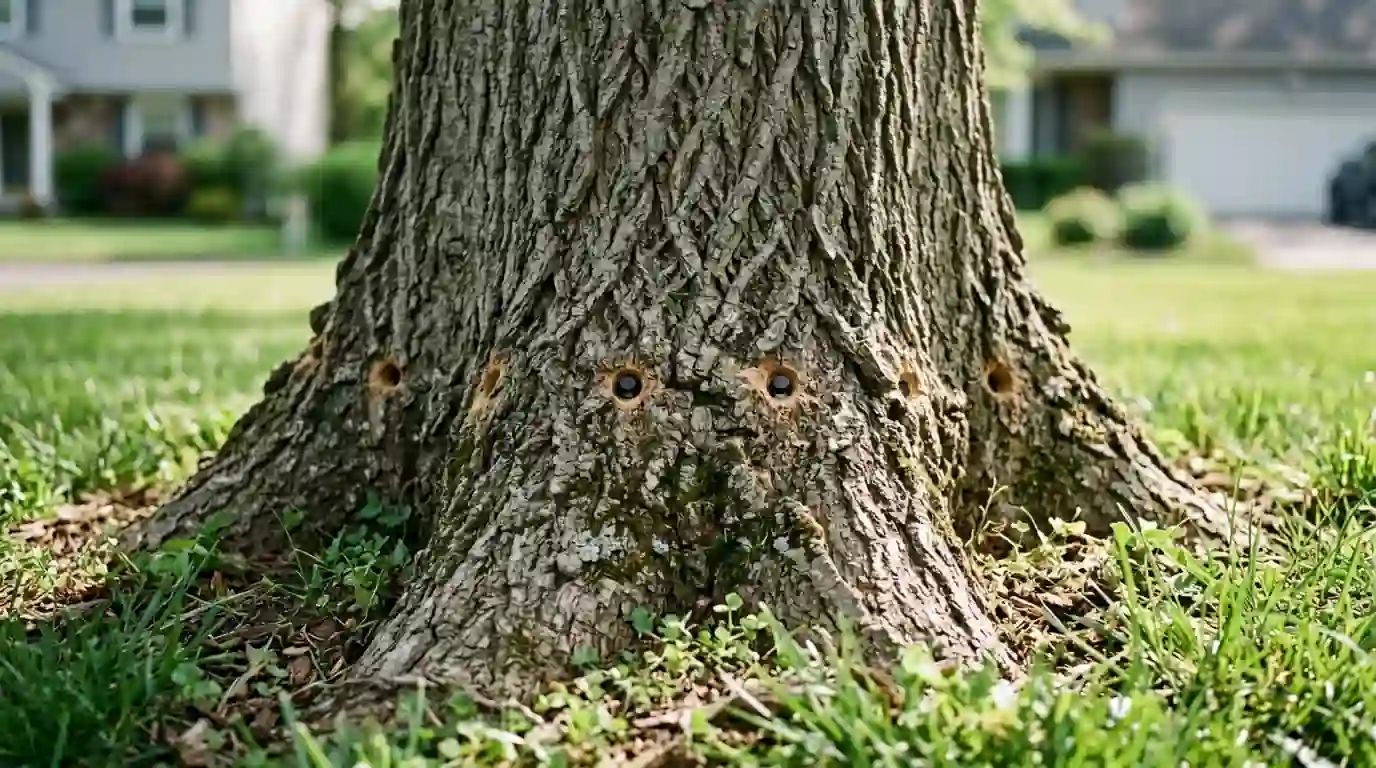
Small holes are drilled just into the sapwood, spaced evenly around the base of the trunk, and a measured dose goes into each under low pressure. On a mid-size ash the visit is short. Late spring, once leaves are fully out and the soil holds moisture, gives the strongest uptake. HomeAdvisor's general tree-injection range is $50 to $200 per tree, and ash pricing tracks trunk size.
Choosing which ash to save
With several ash on a lot, treating all of them rarely makes sense. We look at each tree's crown, size, position and what it does for the property: shade on a south wall, screening, presence on the street. A big healthy ash shading the house is a strong candidate. A crowded, thin ash at the back fence is often better removed while it is still safe to climb.
Retreatment schedules
One injection protects for a limited period, not for life. Purdue's example assumes a cycle every 3 years, with the cost repeating each time. We log the date and trunk diameter so the next visit is quick, and you should keep a note too. Skipping a cycle while the borer is still around lets larvae back in, and a gap of a few years can undo earlier treatments.
Signs the borer is already in an ash
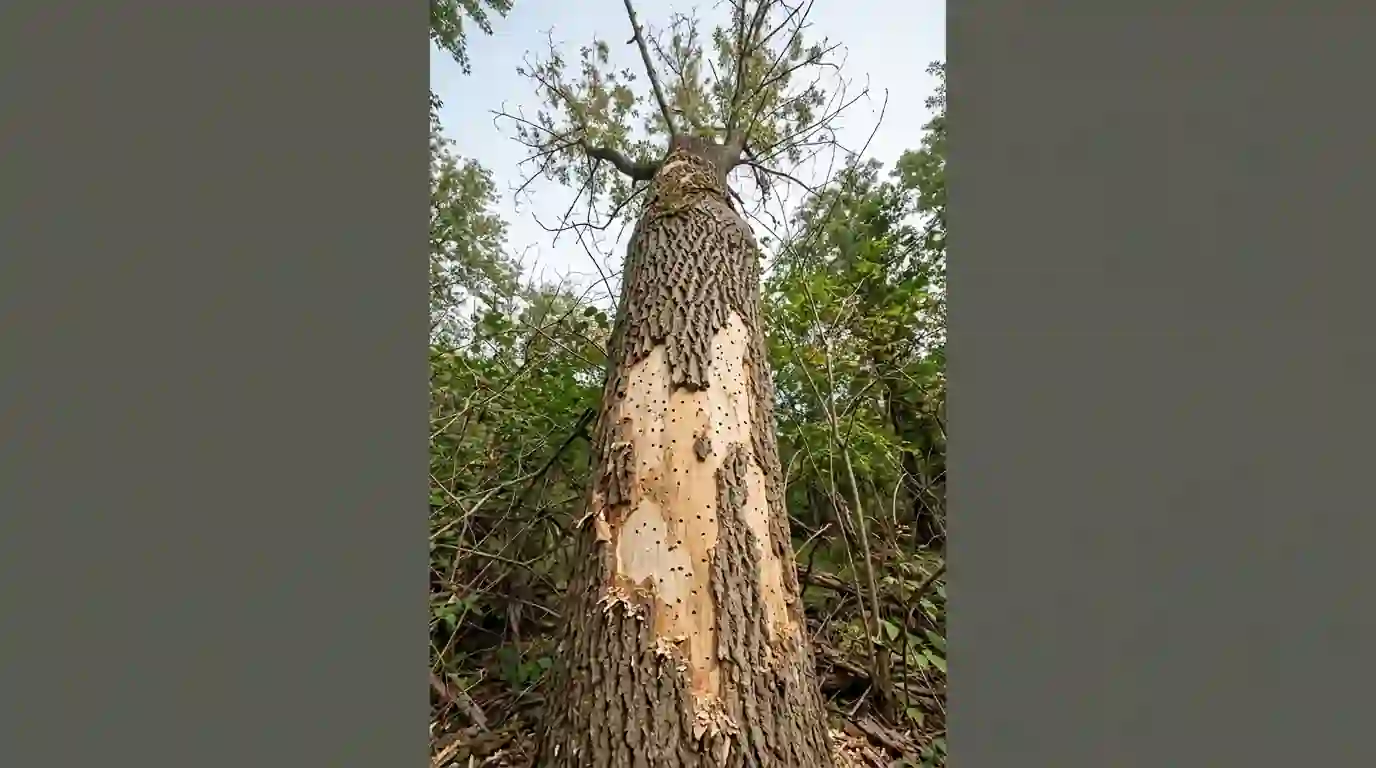
- Thinning at the top of the crown
Sparse leaves and bare twigs starting in the upper third.
- D-shaped exit holes
Small holes in the bark, flat on one side.
- Bark flaking off in patches
Woodpeckers stripping outer bark to reach larvae, leaving pale blond patches.
- Sprouts low on the trunk
Clusters of new shoots from the trunk or base as the crown fails.
- Vertical splits in the bark
Cracks opening over the winding tunnels underneath.
- Woodpeckers working one tree
Heavy pecking on an ash in winter while nearby trees stay quiet.
How the borer moved through the region
Emerald ash borer reached the Philadelphia area around 2012 and spread county by county, with Delaware County among the last infested; an infested ash can die within three to four years. In Middletown Township, Tyler Arboretum identified close to 900 hazardous ash, and its first removal phase of about 584 trees was expected to top $500,000. New Jersey confirmed its first detection on May 21, 2014, and ash there typically die three to five years after infestation begins. That arboretum bill shows what waiting costs once ash turn hazardous.
How an ash treatment visit runs
Measure the trunk
Diameter taken at chest height to set dose and price.
Judge the crown
Share of thinning estimated to decide treat or remove.
Check the bark
Exit holes, splits and woodpecker damage noted.
Wait for leaf-out
Injection booked for late spring, when sap flow carries it.
Drill and inject
Shallow holes around the base, each given a measured dose.
Log the date
Diameter and treatment date recorded for the next cycle.
Recheck the canopy
Crown looked at again next summer to confirm it is holding.
Which ash are worth treating?
| Tree condition | Treat it | Remove it |
|---|---|---|
| Full crown, no symptoms | Yes, the strongest case for injection | Only if the tree does not matter to you |
| Under a third of the crown thinning | Usually, and the canopy often recovers | If it is small or poorly placed |
| Half or more of the crown dead | Rarely, injection comes too late | Yes, before the wood turns brittle |
| Dead ash near a house or walk | No | Yes, often from a lift, since dead ash is risky to climb; see dead tree removal |
Treatment is ongoing. If you will not keep it up, removing the ash now while it is sound is simpler and safer than removing it dead later.
What ash borer treatment costs
Injection pricing follows trunk size, and the real cost is the repeat cycle. Five things decide what you spend over time.
- 01
Trunk diameter. Dose and price scale with inches across, so a 30-inch ash costs about three times a 10-inch one.
- 02
How many ash you keep. Each tree is its own injection, so narrowing the list saves the most.
- 03
Years of treatment. Cycles repeat for as long as you want the tree protected.
- 04
Crown condition. A tree already losing canopy may need removal instead, a different and larger cost.
- 05
The ones you skip. Untreated ash die and turn brittle, and early removal is simpler than late.
| Job | Published range | Source |
|---|---|---|
| Emerald ash borer injection | about $10 per diameter inch | Purdue Landscape Report, 2023 |
| Tree injection | $50 to $200 per tree | HomeAdvisor, 2026 |
Planning numbers from published surveys, not our prices. We price after seeing the tree.
Ash borer treatment questions
If more than half the crown is bare, usually yes. Ash with full or lightly thinned crowns still respond well, and the call should be made one tree at a time.
Late spring into early summer, after the leaves are fully out. Injections given in drought or dormancy move poorly through the tree.
For as long as the borer is around and you want the tree, yes, on a cycle every few years. Stopping lets the borer back in.
Soil-applied treatments exist and suit smaller ash. On large trees, injection puts the dose straight into the sap flow and is the usual choice.
A healthy, well-placed ash is a mature shade tree that takes decades to replace. We put a decade of treatment side by side with removal plus a replacement so you can choose.
Related ash and tree health work
Ash Tree Removal
Ash trees killed or failing from emerald ash borer, removed before they shed.
Tree Inspection & Risk Assessment
A walk-around look at decay, cracks, lean and roots, with a straight answer on what needs doing.
Spotted Lanternfly Tree Treatment
Protecting the trees lanternflies hammer and removing the host trees they breed on.
Deep Root Fertilization
Feeding and loosening compacted root zones around stressed city and suburban trees.
Have an ash still worth keeping?
Call and tell us about it. We will look at the crown, measure the trunk, and tell you whether treatment or removal makes more sense.