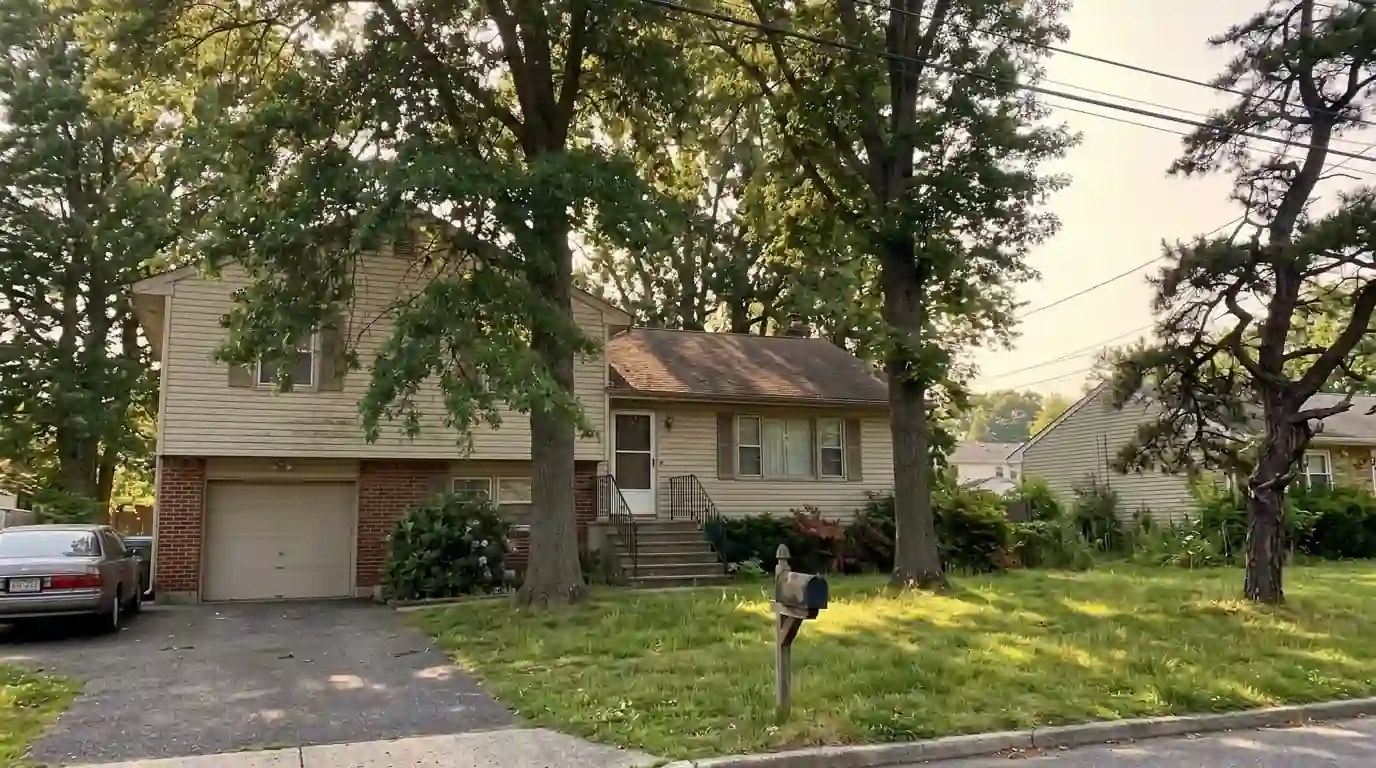
Quick answer
Yes, we trim and take down trees throughout Moorestown. Two rules shape every job. Trees in the curb strip between sidewalk and road are township trees, and touching one needs a Public Works permit. Trees on your own lot fall under Chapter 160, which since 2024 limits how many you can remove in a rolling five years before the township gets involved.
6,200 township trees in the curb strip
Moorestown counts more than 6,200 street trees. Under local ordinance, any tree in the right-of-way strip between the sidewalk and the road is a township tree, managed by the Department of Public Works, even though it stands in front of your house.
Since the 2018 ordinance, removing, trimming or otherwise changing one of those trees needs a Public Works permit, and owners who skip it face fines, fees and replacement costs. That covers a quick cut to get a limb off your roof or out of the driveway too. So before anyone touches a curb-strip limb, the question goes to the township, and the trees behind the sidewalk are where our tree trimming work starts.
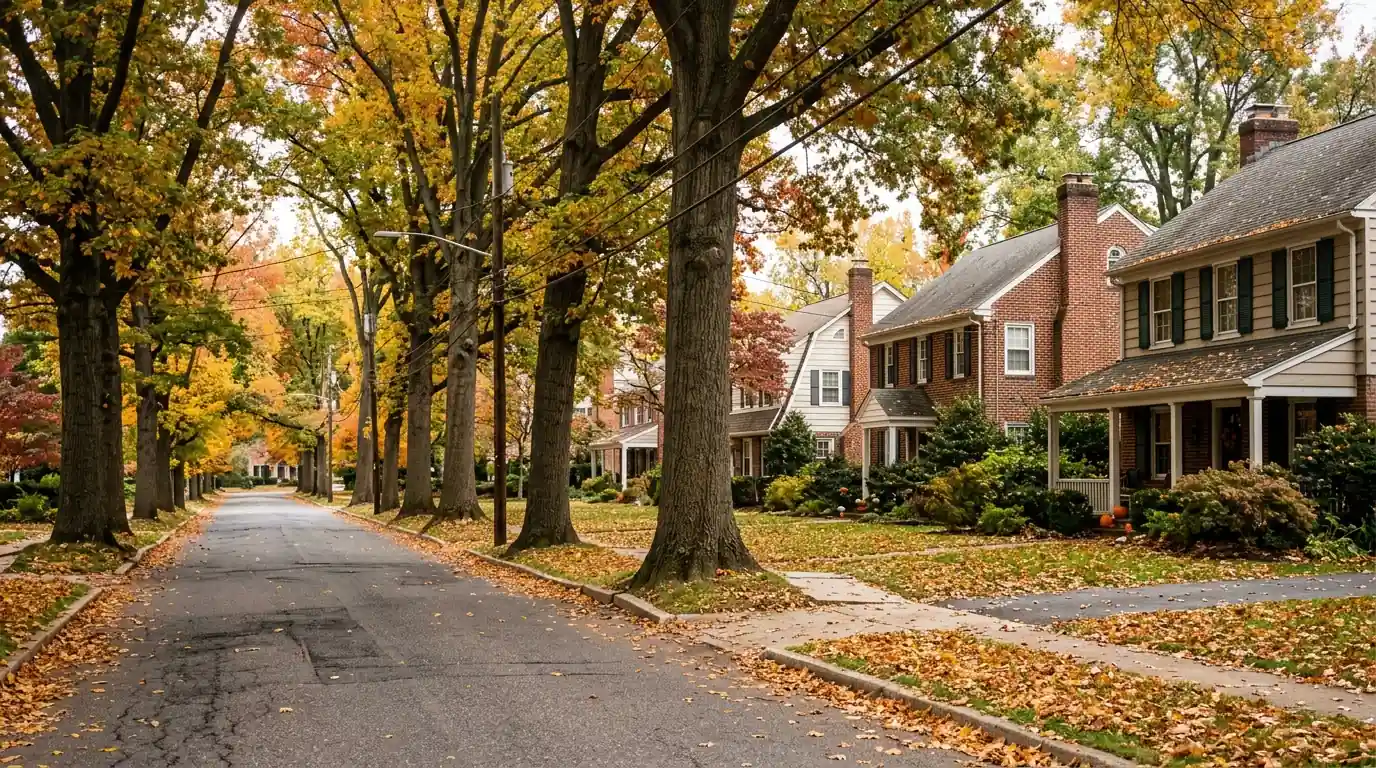
Moorestown work that fits inside the rules
Private-lot jobs here get planned around the Chapter 160 count, while curb-strip trees go to Public Works first.
- Tree TrimmingPruning yard trees over roofs, drives and patios, with curb-strip limbs left to the township permit.
- Tree RemovalYard removals counted against the four-per-acre, five-year allowance.
- Tree Inspection & Risk AssessmentDeciding which of several aging trees to remove first when the five-year count is tight.
- Crown ReductionShrinking a big crown over the house when a removal would use up part of the allowance.
- Tree PlantingNew trees to fill the gap a removal leaves, set back from the house and wires.
Four trees per acre, five years, 36 inches
Private trees fall under Chapter 160. Ordinance 13-2024 narrowed the old residential exemption after the NJDEP found it too broad: residents may now remove fewer than four trees per acre of 36 inches DBH or less within a rolling five-year period. Before that, single- and two-family lots had been exempt outright.
In practice that means keeping a count. On a one-acre lot, two removals three years ago leave room for one more this year; a fourth inside the window would not fit. We ask about past removals on the first visit so the count is right before any cut, and our guide to South Jersey removal permits explains how town chapters like this one work.
Choosing between a trim and a takedown here
Because a removal now uses up part of a five-year allowance, the old habit of taking down anything inconvenient costs more than it used to. A big tree crowding the roof can often be kept with crown reduction and clearance pruning, which leaves the count untouched for a tree that really has to go.
When a tree is dead, split or leaning hard, removal is still the answer. The point is to spend the allowance on the trees that need it, and to know where you stand before the saw comes out.
Moorestown tree questions
Not without a Public Works permit. The curb-strip tree belongs to Moorestown, and trimming it without one can bring fines, fees and replacement costs.
Fewer than four per acre, each 36 inches DBH or less, in any rolling five-year period under the exemption as narrowed in 2024. Past that, the removal goes through the township.
The NJDEP found the old exemption for single- and two-family lots too broad. Ordinance 13-2024 replaced it with the per-acre, five-year limit now written into Chapter 160.
The township. Moorestown's Department of Public Works manages the more than 6,200 trees in the strip between sidewalk and road. If one looks dangerous, report it to Public Works.
Close to Moorestown
Have a Moorestown tree that needs work?
Call and tell us where it stands. We will check which rule covers it, look at the tree, and give you a price before cutting.