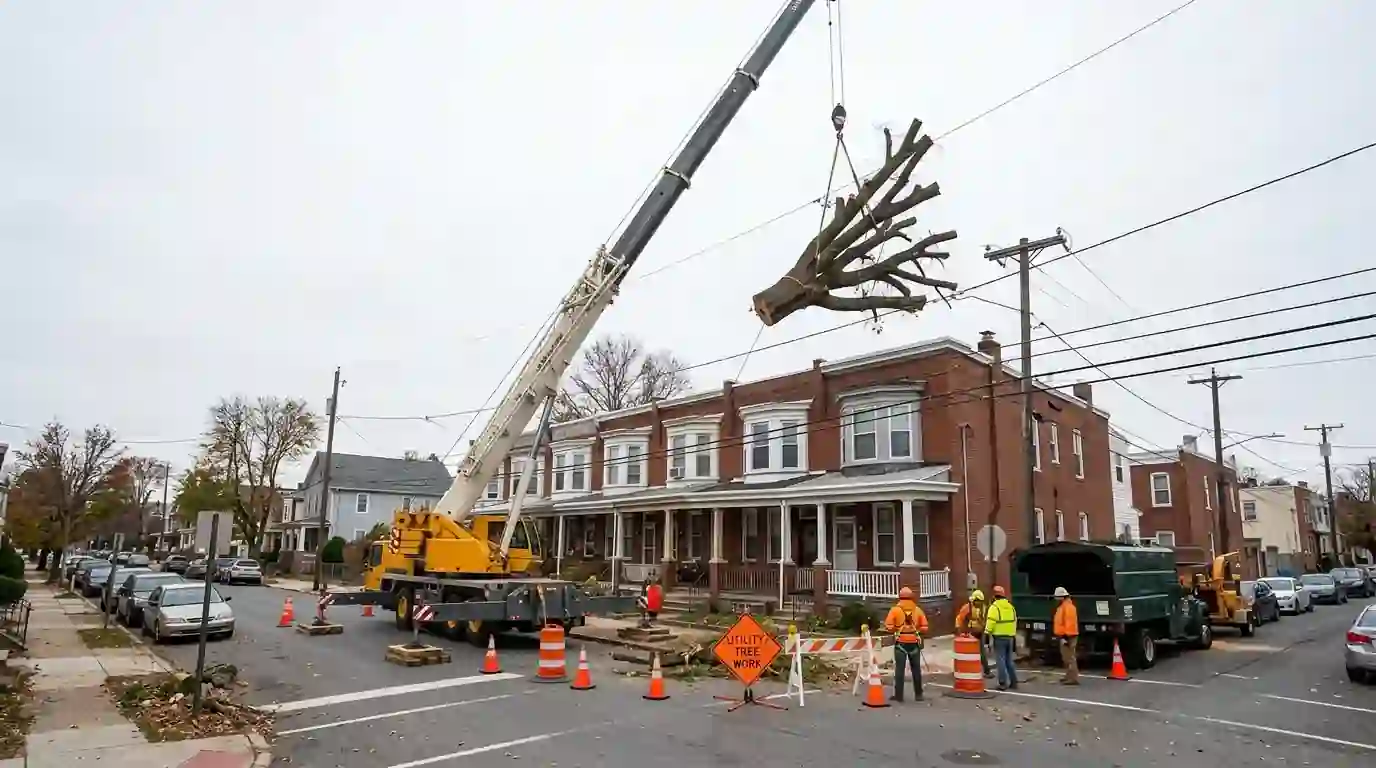
Tree work from the top of the crown to the last stump
The forty jobs on our tree services page range from one hanging limb to a wooded lot cleared for building, for homes, rentals, churches and businesses in Philadelphia and the nearby suburbs. They share one habit: before anyone starts a saw, we work out how each piece of wood comes down and how it leaves the property.
That habit matters in a city where nearly 60 percent of residents live in a rowhome. A lot of our work happens in walled yards, over slate roofs and beside the sidewalk strip, so rope rigging, hand carrying and the occasional crane pick are ordinary parts of the job rather than special requests.
From the first call to the last rake
A job follows the same order whether it is one dogwood or a storm-split oak.
- You call, at any hour, and describe what the tree is doing and what sits near it.
- We come and look at the lean, decay, cracks, wires, the roof next door and the path the wood will take.
- You get a price and a plan before anything is booked.
- Permits and utility make-safes are lined up when a job needs them, such as a Parks and Recreation permit for a city street tree.
- On the day, cones and ground protection go down, and the tree is lowered or pruned as planned.
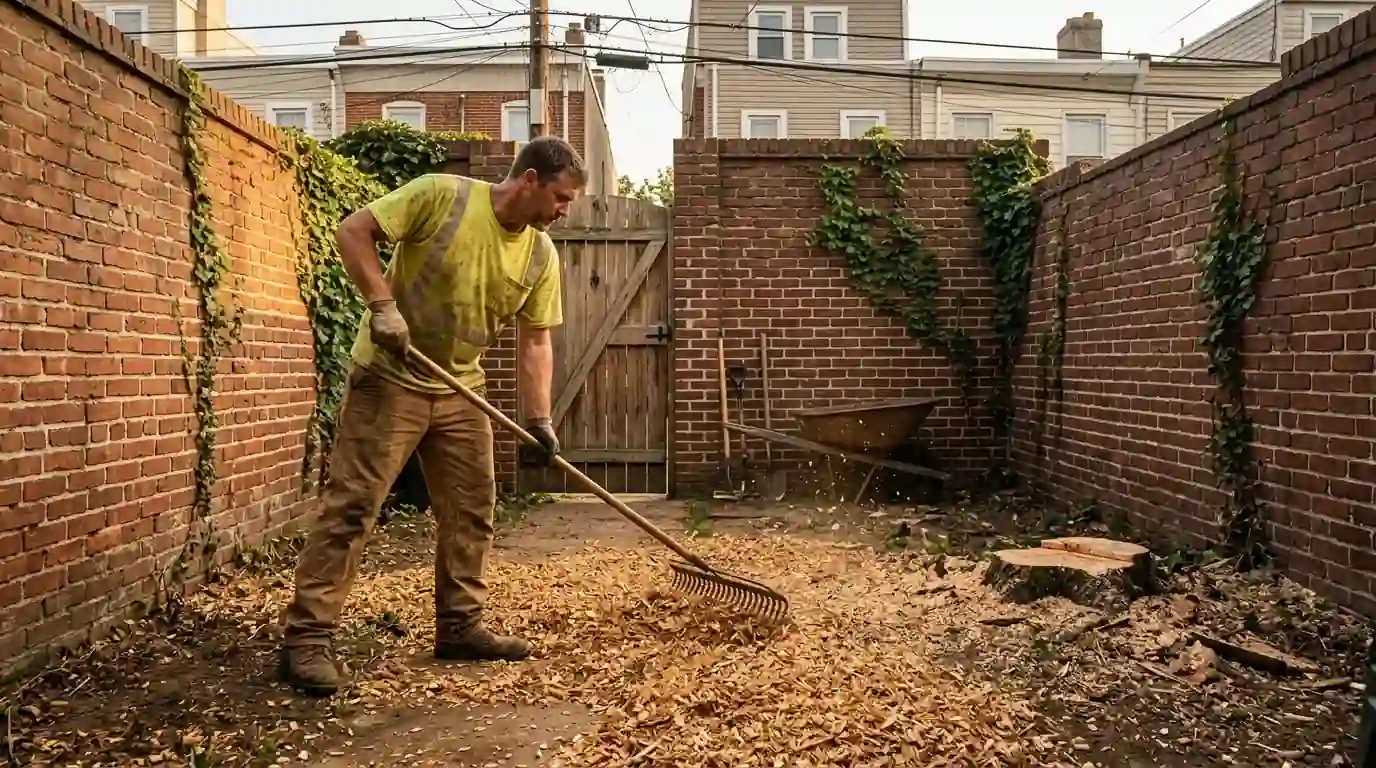
- Brush is chipped, logs are hauled or stacked, the stump is ground if it is part of the job, and the yard is raked before the truck leaves.
Why the office is in Burlington City
Our office is at 578 Washington Ave in Burlington, New Jersey. Burlington City sits on the river at the Burlington-Bristol Bridge, which crosses straight into Bristol in Bucks County, and a little downriver the Tacony-Palmyra Bridge lands in Northeast Philadelphia.
Working from the river means the area is shaped by those crossings rather than by a state line. It covers Burlington and Camden counties on this side and, across the water, Northeast, Northwest and West Philadelphia plus the Bucks, Montgomery and Delaware county suburbs. The service area page lists every town and neighborhood, along with where the regular area stops.
How a price gets set
Many of our service pages and guides show cost ranges. They come from published surveys, such as HomeBlue's Philadelphia data putting a typical city tree removal at $500 to $2,200, and they are there so you can plan. They are not our prices.
The real number comes after we have seen the tree. Height counts, but so does what sits under the canopy, whether the wood leaves by the driveway or through your house, and whether a permit or a PECO make-safe has to happen first. The Philadelphia cost guide walks through each of those.
Wanda McBride, Tree Advice Writer
Wanda McBride writes the tree tips on this site, from street-tree permits and PECO service lines to ash borer and stump questions. Each guide is built from public sources such as the City of Philadelphia, township codes, state agriculture departments and Penn State Extension, and it names where each rule or number comes from.
Questions people ask about us
A person who schedules and prices tree work, at any hour of the day or night. Tell them what the tree is doing, what is under it and how to reach it, and they will set a time to come and look.
Yes. Every job is priced after an in-person look, because access, rigging and what sits under the canopy change the work more than height alone does.
Yes, we take care of the Parks and Recreation permit step before working on a city street tree. For suburban township rules, we explain what your town usually asks for, and you confirm it with the town before work starts.
Strong wind, lightning and ice stop climbing and crane work. If the forecast turns, we call to move the day rather than work in conditions that put your house or the people on the job at risk.