Quick answer
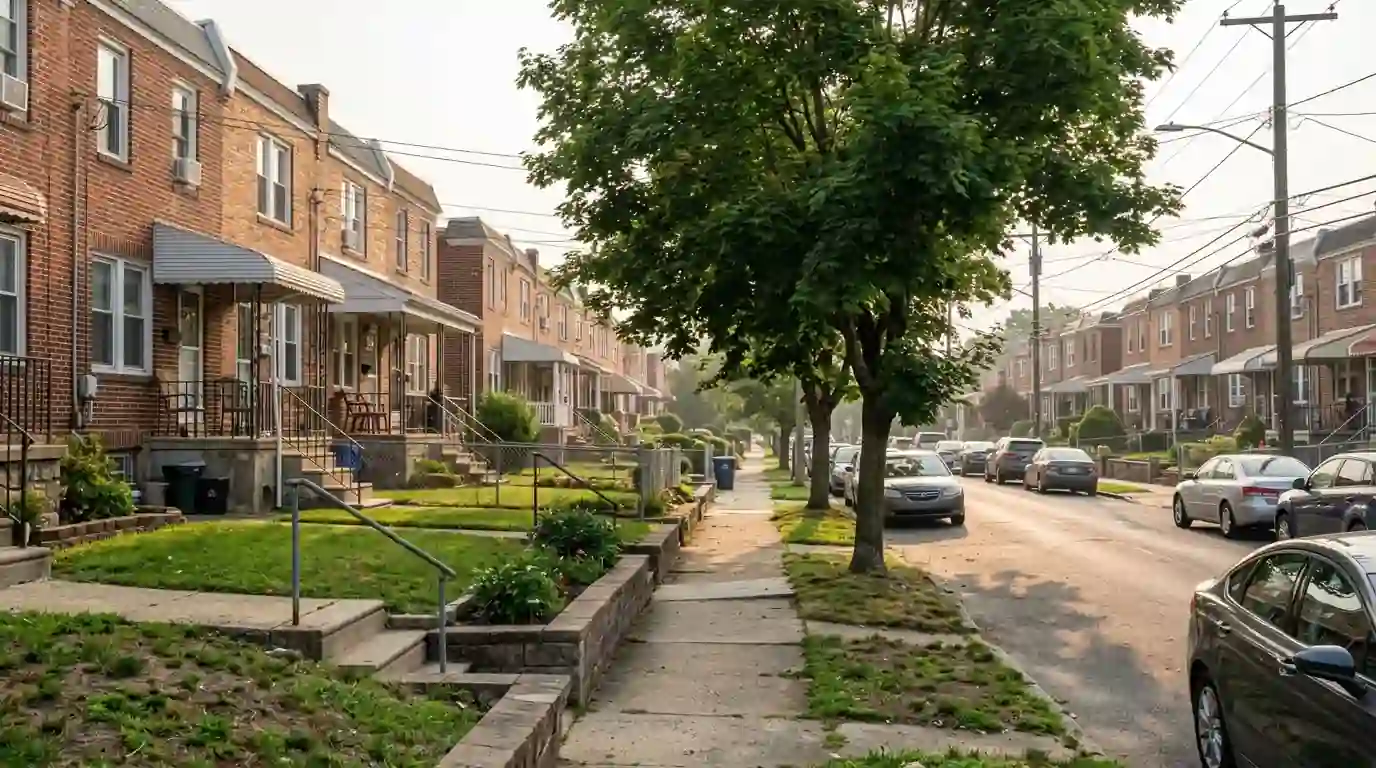
Yes. We prune, take down and clean up trees across Fox Chase, from yards on the Pennypack Park edge to the blocks around Burholme Park. Jobs here tend to involve a tree that is big for its lot, or limbs reaching over a back fence from the park woods, so most of the work is rigged and lowered rather than dropped. Phones are answered 24/7.
Backing onto the Pennypack Park woods
Pennypack Park runs right through Fox Chase: woodland, meadow and wetland strung along the creek, with the Pennypack Environmental Center out on Verree Road. People call the neighborhood the green heart of the Northeast, and anyone who has a yard against the park knows why.
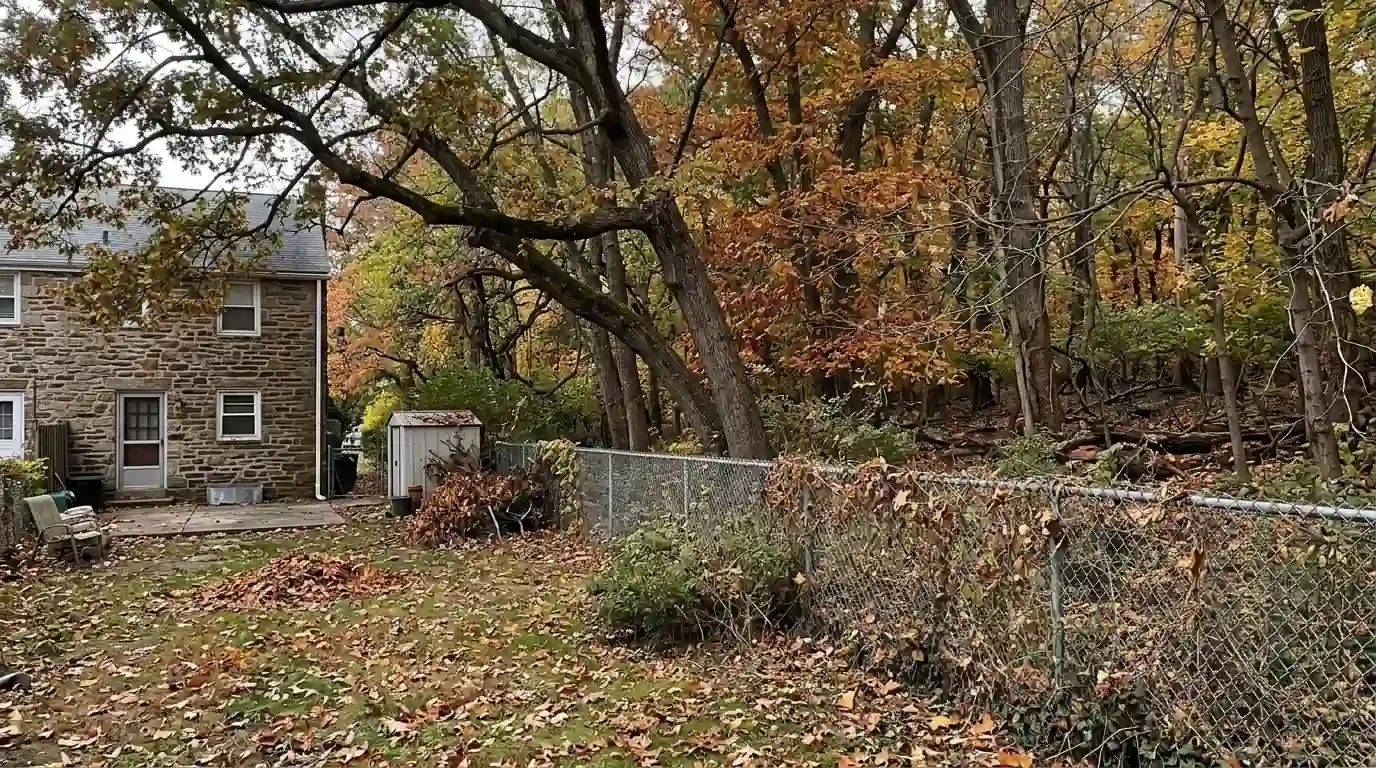
That back fence is where most of the hard questions come from. Limbs from the woods reach over lawns and garage roofs, and a dead trunk just inside the treeline can be tall enough to land on your side. Before we cut anything coming from the park direction, we confirm where the trunk stands, because that decides whose tree it is. On your side of the line the usual work is cutting back overhanging limbs, taking out dead trees at the woodland edge, and clearing the saplings and brush that creep in from the trees.
Tree work Fox Chase owners usually call about
Between the park, the hill and the older estate lots, these are the jobs that come up most in Fox Chase.
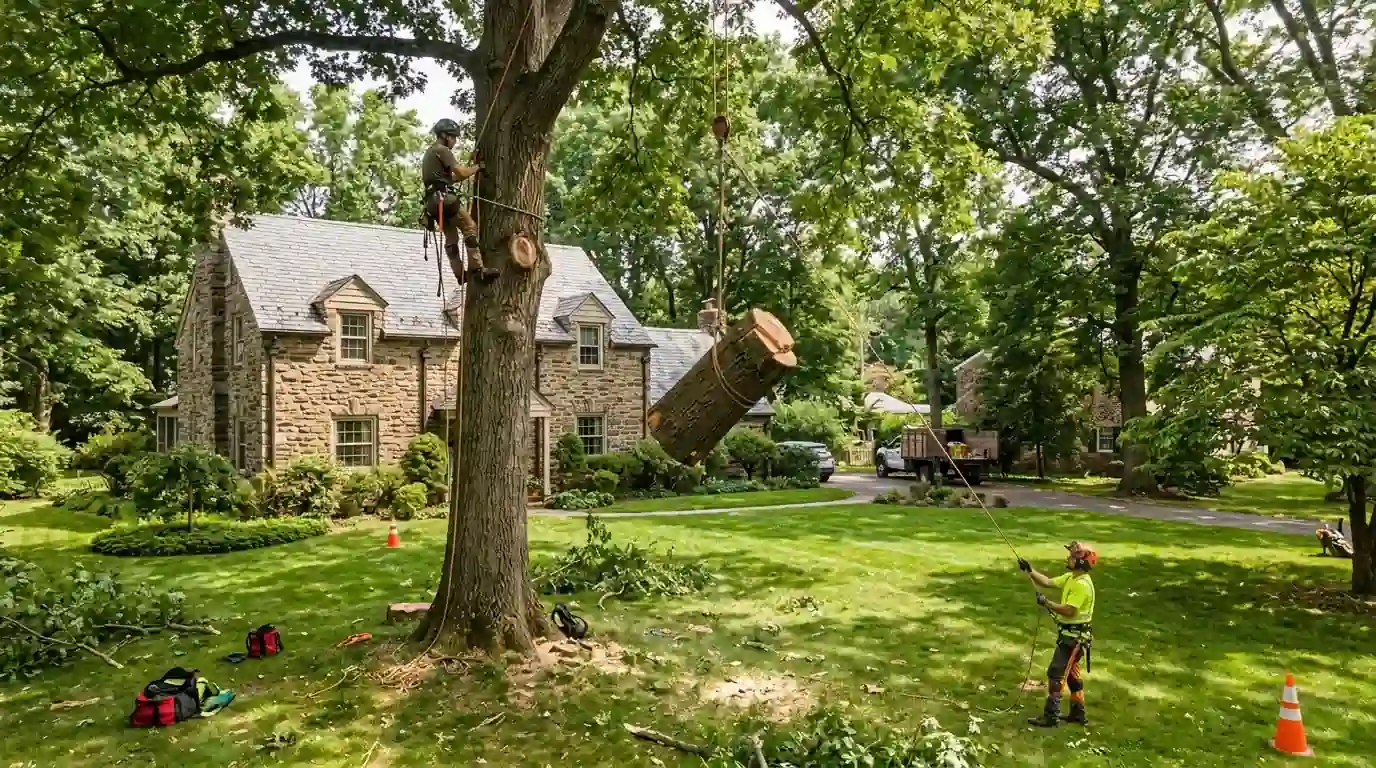
- Large Tree RemovalBig trees on older, roomier lots that are too tall to fell and have to come down in rigged sections.
- Tree TrimmingLimbs reaching over back fences and garage roofs from the Pennypack Park woods, cut back to your line.
- Tree Inspection & Risk AssessmentA check on tall trees standing on the exposed high ground near Burholme Park before storm season.
- Crane Tree RemovalA large tree between the house and the street with no drop zone, lifted out in pieces.
- Brush & Overgrowth ClearingSaplings and overgrowth spreading into yards that meet parkland or the farm edge.
Wind on the high ground around Burholme Park
The 1859 Ryerss Mansion looks out over Burholme Park from one of the highest vistas in Philadelphia. Ground that high catches wind the lower streets never feel, and a tall tree on an exposed rise takes the full load of it.
The Isaias tornado of August 2020 showed what that load can do. Its EF2 track ran about 20 miles from Northeast Philadelphia to Doylestown with peak winds near 115 mph, snapping or uprooting trees along the way, some close to 100 years old. If a big tree on your lot has a split fork, a dead top or a lean toward the house, the calm months are the time for a proper look at it.
Railroad estates and the farm at the county line
Fox Chase was part of Lower Dublin Township until 1854. After the railroad arrived in 1876, wealthy Philadelphians built country houses here, William Rhawn's 1879 summer house by Frank Furness among them. Where one of the larger lots from that era still has a big tree close to the house, it rarely has room to fall, so it comes down limb by limb on ropes or, with no safe drop zone at all, by crane.
Up on Pine Road, Fox Chase Farm keeps 112.3 acres working at the Montgomery County line. The city bought it in 1975, the School District of Philadelphia runs it, and its buildings date to 1822. It means one edge of the neighborhood is open farmland rather than another block of houses, and the yards along it deal with field-edge brush more than street trees.
Fox Chase tree questions
We can trim the part that crosses into your yard, working from your side of the line. Before we start, we confirm where the trunk stands, since that tells us whose tree it is.
Exposed trees take more wind than sheltered ones, so a tall tree on a rise is worth checking after every big storm for splits, dead tops and fresh lean.
Often, if there is a street or driveway close enough to set up. A crane parked on a Philadelphia street needs a Streets Department closure permit, which is part of planning the job.
Yes. Homes near the farm are part of our Fox Chase work, and so are jobs a short way over the line in Montgomery County.
Next door to Fox Chase
Big tree in a Fox Chase yard?
Call and describe it. We will come out, look at the lean, the roofline and the way out for the wood, and price it before anything starts.