Quick answer
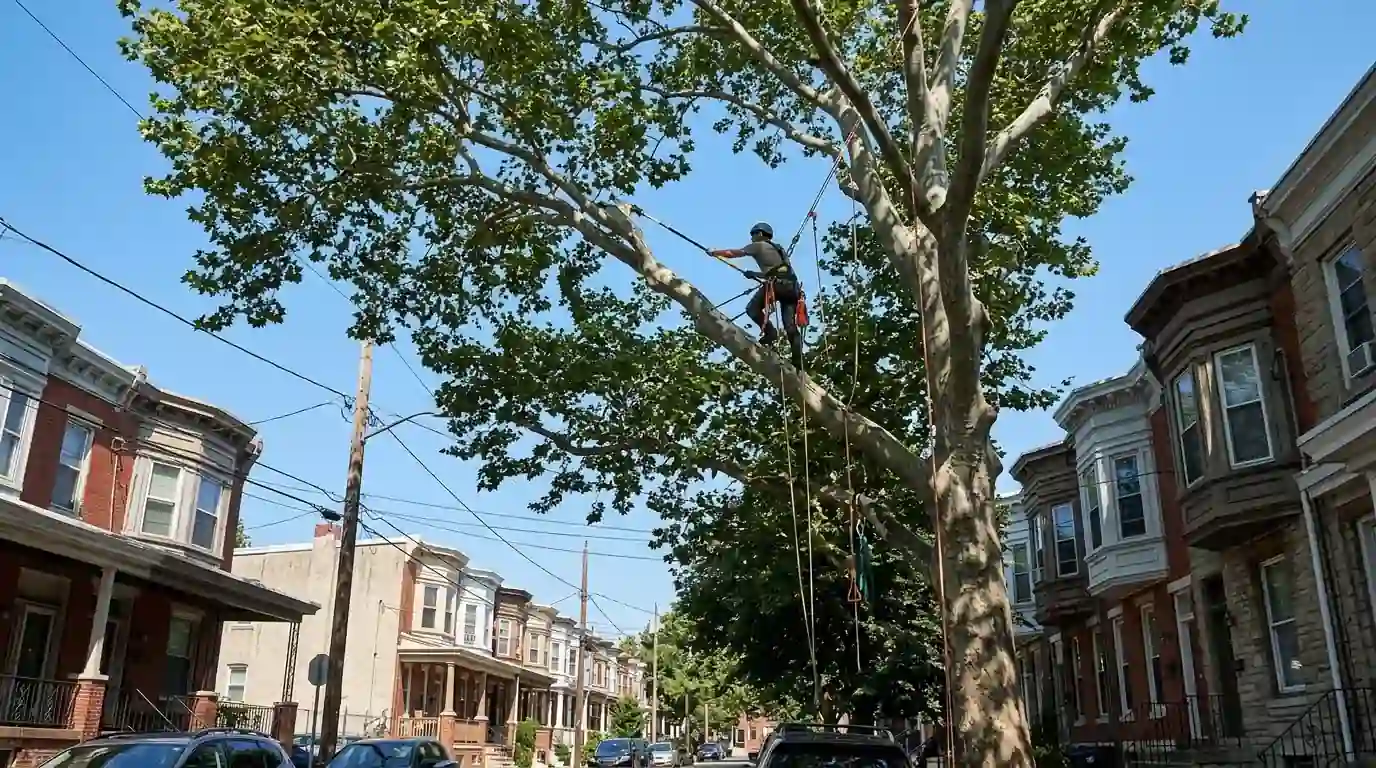
Deadwood removal means climbing the tree and cutting out the dead, dying and broken branches, back to the live collar, without touching healthy growth. On a mature shade tree it usually sits inside the trimming band LawnStarter publishes, $430 to $640 per tree on average. That is a small bill next to the roof, car or person a falling limb finds.
Why dead branches come out before anything else
Dead wood dries out, sheds its bark and turns brittle. Wind, ice or a squirrel can drop a limb that has been dead for two summers, and it lands wherever it hangs: the walk, the car, the porch roof.
Deadwooding is the narrowest kind of pruning. We take out dead, dying and broken branches and leave the live crown alone. It pairs well with a full trimming visit, and if most of the crown is already bare, ask whether the whole tree should come down instead. A trunk wrapped in ivy hides dead limbs from the ground, which is when cutting the vines back first earns its place.
Dead branches over walkways
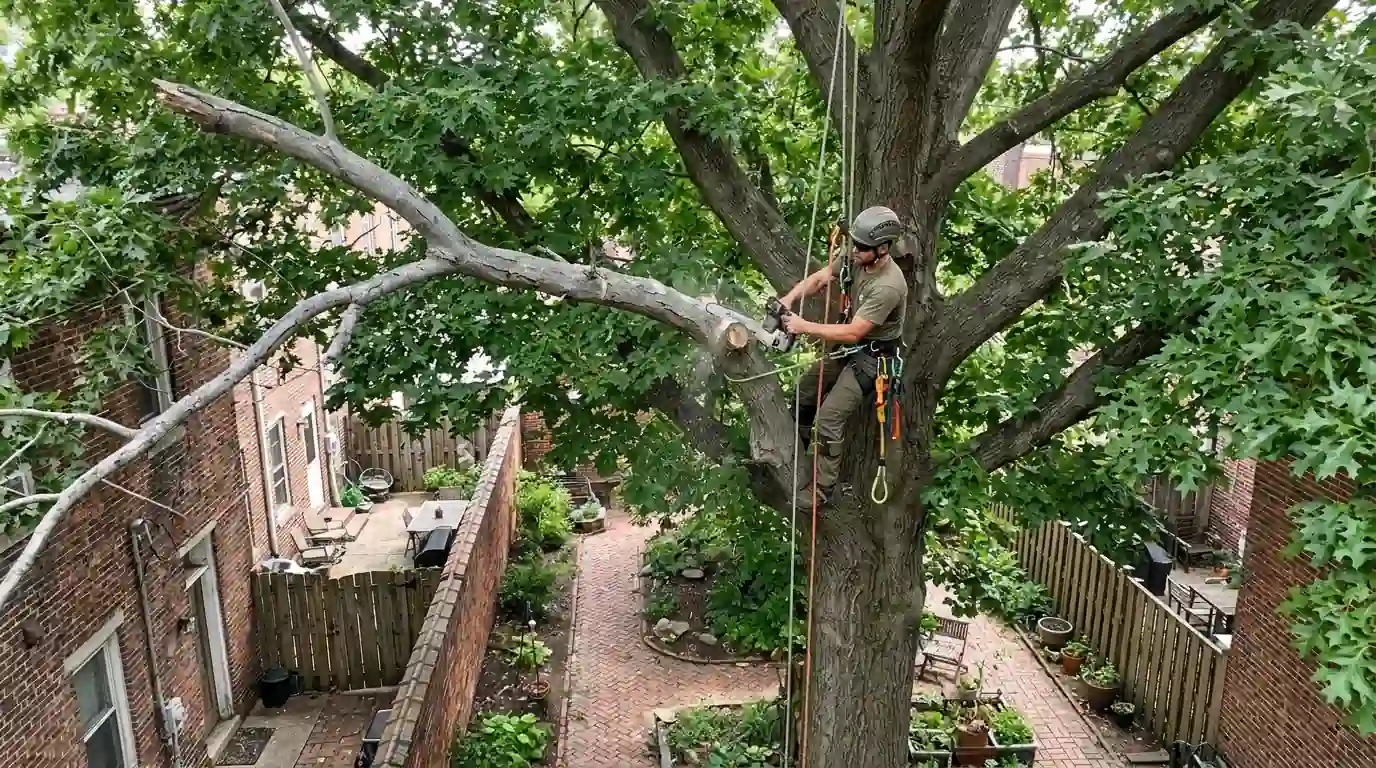
The limbs that matter most hang over places people stand: the front walk, the steps, the spot where you park. You notice them in summer, bare while the rest of the crown leafs out. We take those first and lower anything heavy rather than dropping it on concrete. A sidewalk-strip tree is a street tree, so read how street tree permits work before anyone climbs it.
Deadwood in mature oaks
Big oaks shed interior branches as the crown shades itself, and an old pin oak can carry dozens of dead limbs as thick as your leg. Oak deadwood stays strong for a while, then lets go all at once. We climb from tie-in points in live wood and lower the heavy pieces. Live cuts on oaks wait for the dormant season where possible, since fresh spring wounds draw the beetles that spread oak wilt.
Deadwood checks after a storm
After a hard wind the danger is often the branch that cracked and stayed up. A month later its leaves brown while the rest of the crown stays green. A post-storm check catches those cracked stubs before the next blow. Anything hanging over a roof or a wire right now is urgent, and our page on broken limbs stuck in the canopy covers it.
How to spot deadwood from the ground
- Bare limbs in a full crown
A branch with no leaves in July while everything around it is green.
- Bark peeling or gone
Smooth gray or bleached wood where the bark has fallen off in plates.
- Dry twigs on the lawn
Twigs that snap cleanly and litter the grass after every breeze.
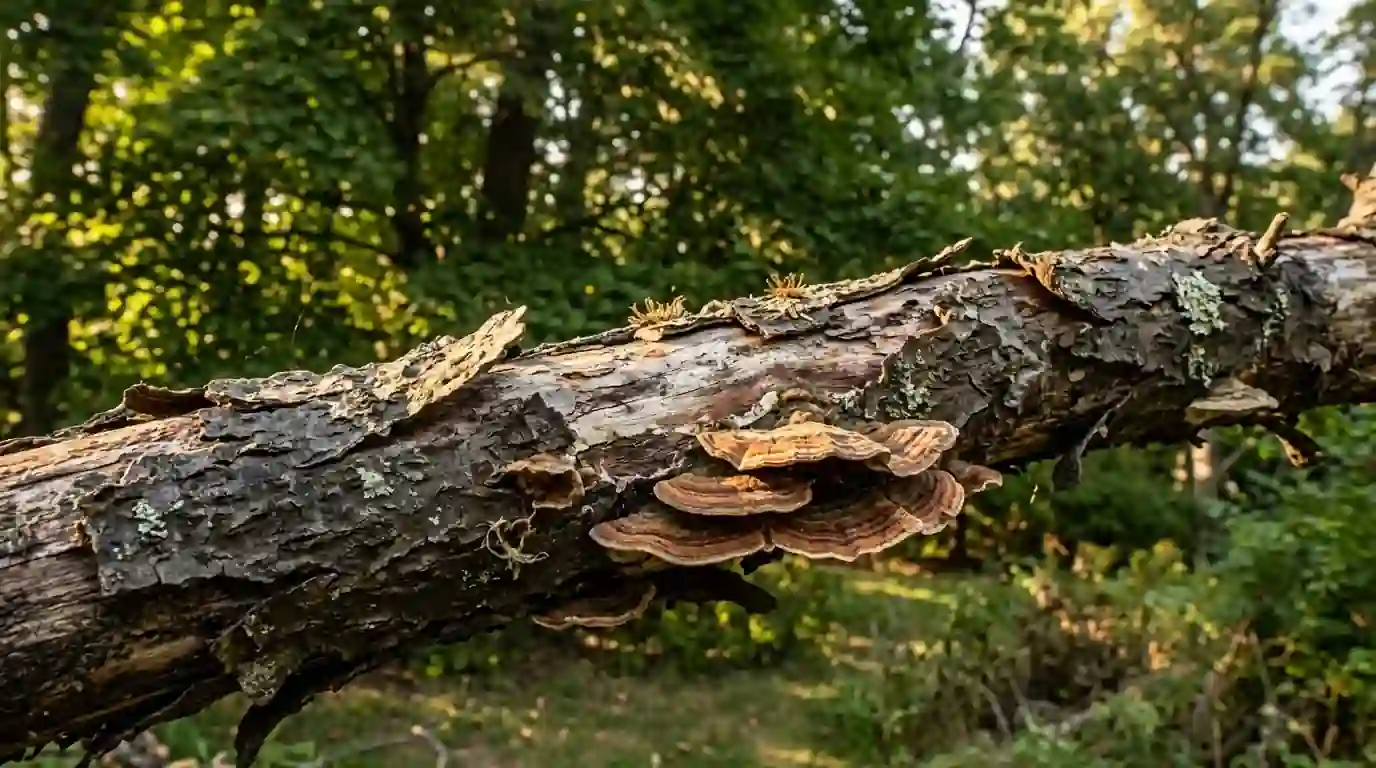
- Fungus on a branch
Shelf-shaped conks or soft brackets mean the wood inside is decaying.
- Brown leaves that hang on
Leaves that browned in summer and cling into winter mark a limb that died mid-season.
- Banded or scorched leaves
Dark bands between beech leaf veins, or oak leaves browning at the edges, often come before dieback.
Two diseases adding dead wood to local trees
Two diseases are adding to the deadwood we cut on both sides of the river. Beech leaf disease reached Philadelphia in 2022, by then in 65 of Pennsylvania's 67 counties, and New Jersey had it in 12 of 21 counties by September 2022. Banded leaves come first, then thinning and branch dieback. In New Jersey oaks, bacterial leaf scorch browns leaf edges from mid-summer into early fall and kills branches over several years. There is no cure, and the NJ Forest Service advises pruning well below the affected leaves.
How a deadwooding visit runs
Ground walk-around
We scan the crown with binoculars and mark the dead limbs.
Set the drop zone
Cones around walks, plants covered, cars moved from under the work.
Climb on live wood
The climber ties in on a sound limb, never on deadwood.
Cut back to the collar
Each dead branch is cut just outside its collar.
Lower the heavy pieces
Thick dead limbs are tied off and let down slowly.
Point out problems
Cracks, cavities and fungus we find get shown to you.
Chip and clean
Brush goes through the chipper and the walks are blown off.
Cutting dead branches yourself, or calling us
Small dead twigs within reach are a fair weekend job. Above head height it changes.
| Doing it yourself | Having us do it | |
|---|---|---|
| Reach | A pole saw handles dead twigs you can reach from the ground. | A climber on rope reaches the whole crown, roof side included. |
| Weight | A dead limb can swing back into the ladder or drop straight onto you. | Heavy pieces are tied off and lowered. |
| Where to cut | Flush cuts and long stubs both let decay into live wood. | Each cut sits just outside the branch collar. |
| What else is wrong | Cracks and cavities are easy to miss from a ladder. | We tell you what we find up in the crown. |
What deadwood removal costs
No survey prices deadwooding on its own, so trimming figures are the nearest planning numbers.
- 01
How much is dead. A handful of dead limbs is a short climb; a crown full of dieback is a long day.
- 02
Tree size. A 70-foot oak takes rigging and time that a 25-foot crabapple never needs.
- 03
What sits below. Limbs over a slate roof or a parked car come down on a rope in smaller pieces.
- 04
Getting to the trunk. Gear has to reach the base and the brush has to get back out to the chipper.
- 05
Work added on. Thinning done on the same visit costs less than a second trip later.
| Job | Published range | Source |
|---|---|---|
| Tree trimming, per tree | $430 to $640 | LawnStarter, 2026 |
Planning numbers from published surveys, not our prices. We price after seeing the tree.
Deadwood questions homeowners ask
Every three to five years suits most healthy shade trees. Trees over a walk, a roof or a play area deserve a look every year or two.
Not necessarily. Shaded interior limbs die off naturally. Dieback spreading down from the top, or across the whole crown, is the pattern to worry about.
Over walks, roofs and parking spots we take dead limbs down to about an inch thick. Elsewhere we focus on the heavier ones.
Yes. Dead wood can come out any time, and summer is when it shows most clearly against the leaves. Live cuts on oaks are what we plan around.
It closes a path for decay into the trunk and stops broken stubs tearing bark when they fall. It cannot cure whatever killed the branch.
Other work we do up in the crown
Tree Trimming
Cleaning, thinning and shaping that keeps a shade tree healthy and out of the way.
Crown Reduction
Shortening a crown back to healthy side branches instead of topping it.
Broken & Hanging Limb Removal
Snapped branches hung up in the crown, brought down before they drop on their own.
Tree Inspection & Risk Assessment
A walk-around look at decay, cracks, lean and roots, with a straight answer on what needs doing.
Dead limbs hanging over your walk?
Call and describe the tree. We will look at the crown, show you what is dead, and price the work before anyone climbs.