Quick answer
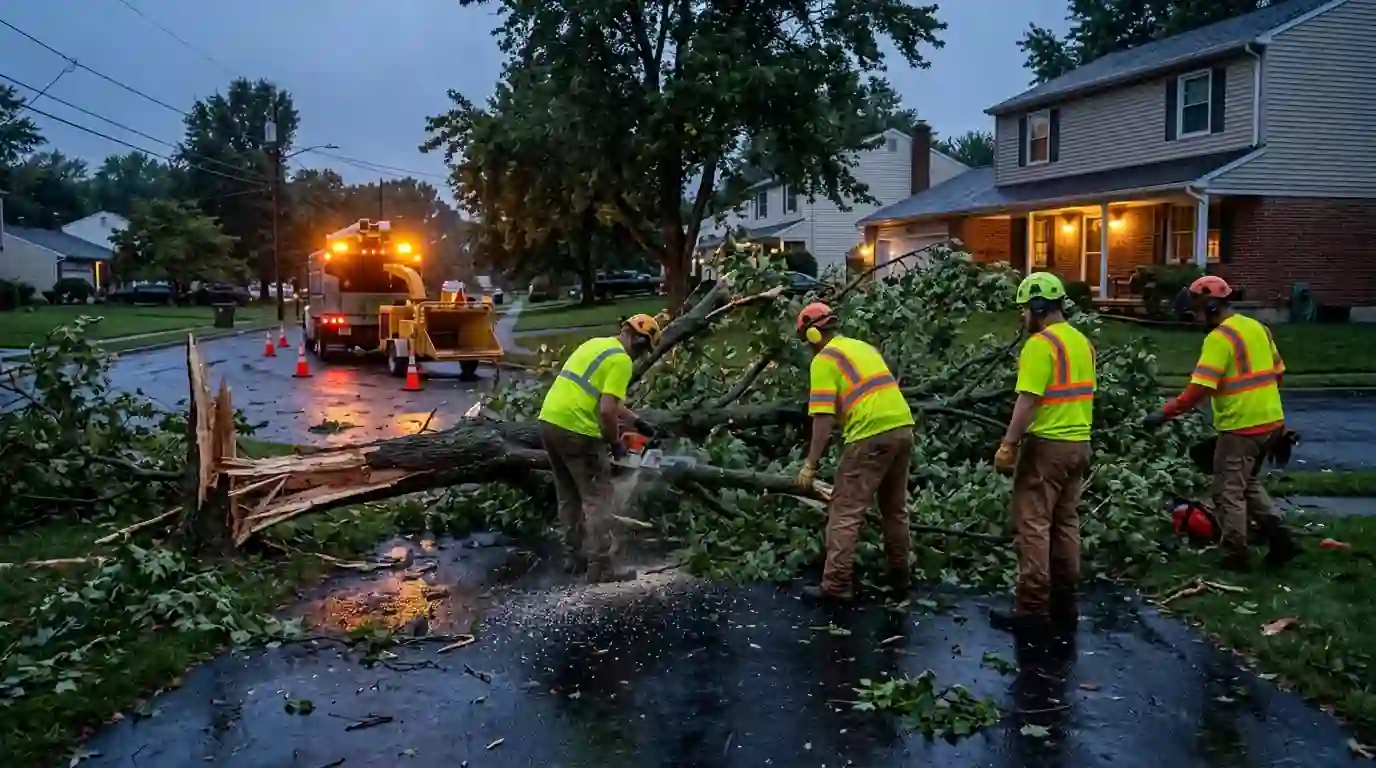
Storm cleanup starts overhead, not on the lawn: before anyone drags a branch, the canopy gets checked for broken limbs still caught up there. Then fallen wood is cut to size, brush goes through the chipper, and logs are hauled or stacked. Most yards are a half day to a full day, depending on how much came down.
Why storm cleanup starts by looking up
The pile on the ground is the obvious part. The risk is what the wind left above it: snapped limbs wedged in the crown, a leader cracked but still attached, a branch draped over the service drop. Dragging brush out from under those is how people get hurt in the days after a storm, so we clear the canopy first.
After that it is steady work: cutting tangles apart in the right order, feeding the chipper and moving wood. If a whole tree is resting on the house, that becomes an emergency takedown before it is a cleanup. If the cutting is already done and only the pile is left, hauling off the logs and brush is a shorter visit.
How a storm cleanup visit goes
Tell us what came down
Number of trees, rough size of the pile, and anything it landed on.
Check the canopy
We look for broken limbs still caught up high before working below.
Clear the hangers
Loose and cracked limbs come down on ropes first.
Cut the tangle apart
Pieces come off the top of the pile so nothing shifts underneath.
Chip and buck
Brush goes through the chipper; logs are cut to length.
Haul or stack
Wood leaves on the truck or is stacked where you want it.
Rake out
Lawn raked, walks blown off, damage pointed out to you.
How long storm cleanup takes
A yard of downed limbs from one tree is often two or three hours. An uprooted tree plus debris on a fence can fill a day. The bigger variable is the calendar: after a regional storm, every crew is booked, so the safety work goes first and pure cleanup follows. If something is still threatening the house, say so when you call.
Downed limbs across the yard
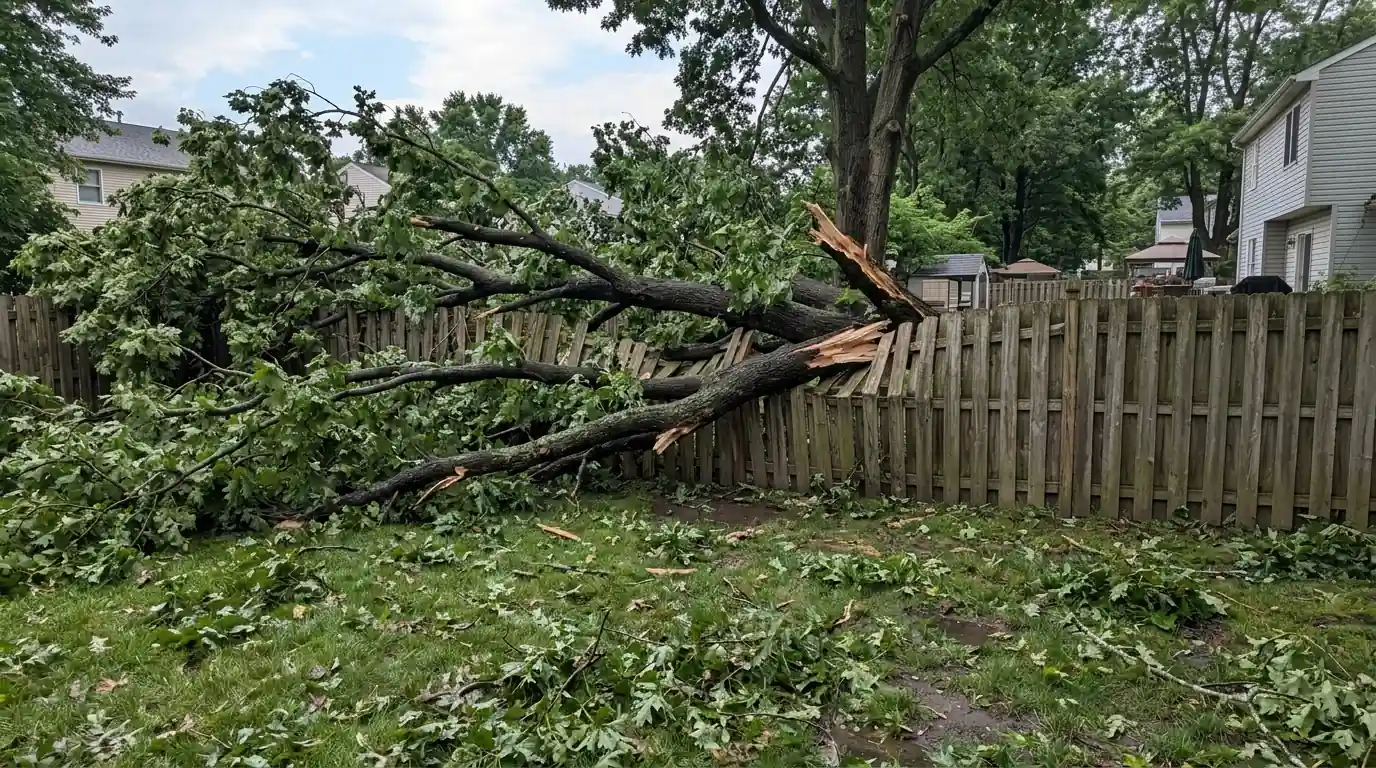
This is the most common call: a lawn buried in branches from one or two trees, none of it on anything important. We look up first for hangers, then cut the limbs into chipper lengths, keep logs you want for firewood, and rake the yard back to grass. A Philadelphia three-person crew runs $240 to $310 per hour in HomeBlue data, which is how many cleanups like this get priced.
Uprooted trees
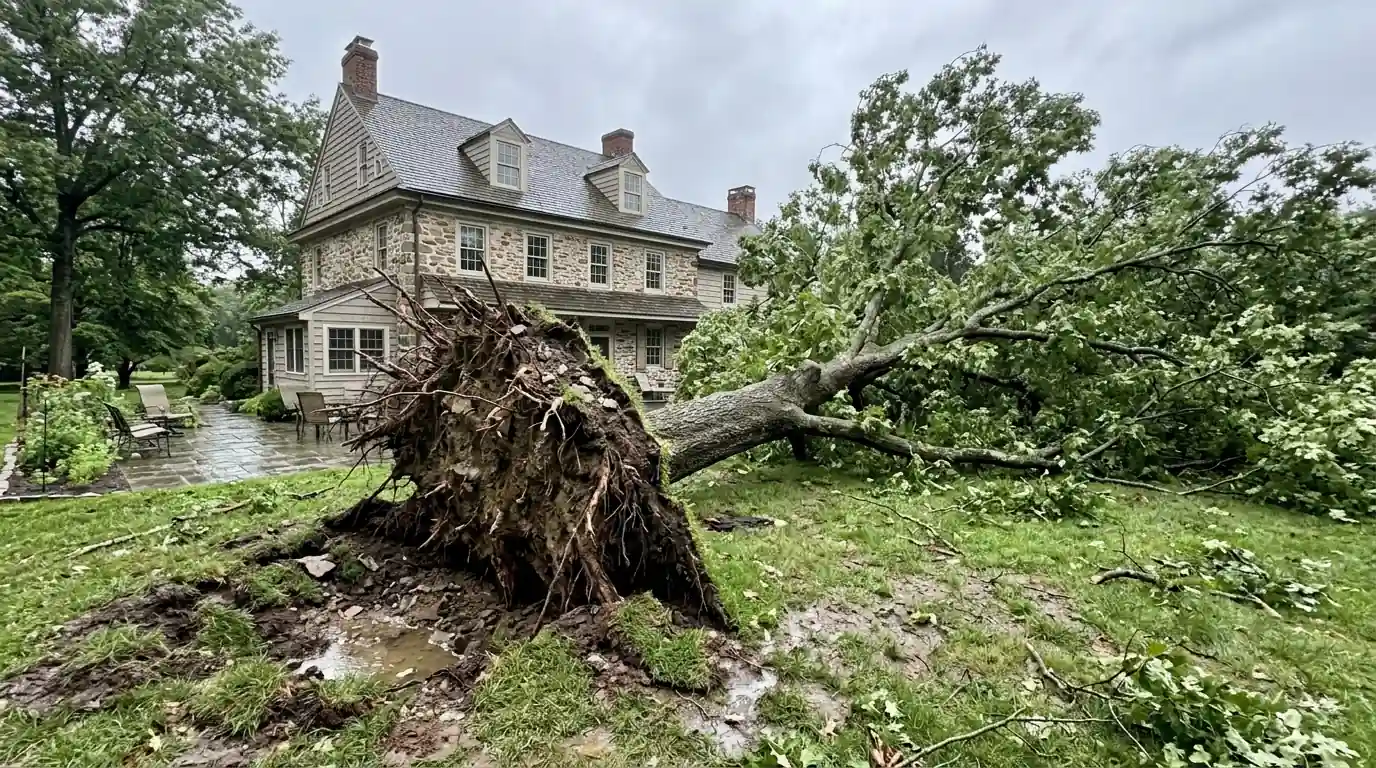
A tree that tipped with its roots attached leaves a raised plate of soil and a crater. The trunk is still connected to that plate, so cutting it free can make the stump stand back up with real force. We cut it in sections with the plate braced, then decide with you whether to grind out what is left or set it back and fill the hole.
Debris over fences and sheds
Limbs lying across a fence or a shed roof are usually holding some of their own weight off it. Pull one out and the rest drops onto the panels. We cut from the top of the pile down, lift pieces clear rather than sliding them, and photograph damage first so you have it for your insurer.
Recent storms that tested Philadelphia trees
In July 2026, severe storms with microbursts damaged trees across the city and in Lower Merion, and Philadelphia ran under a declaration of disaster emergency during recovery, with tree help mobilized in West and South Philadelphia. Five years earlier, Ida's remnants produced seven tornadoes in the region, including an EF-2 that ran from Fort Washington into Horsham and an EF-1 that crossed the Delaware from Edgewater Park to Bristol.
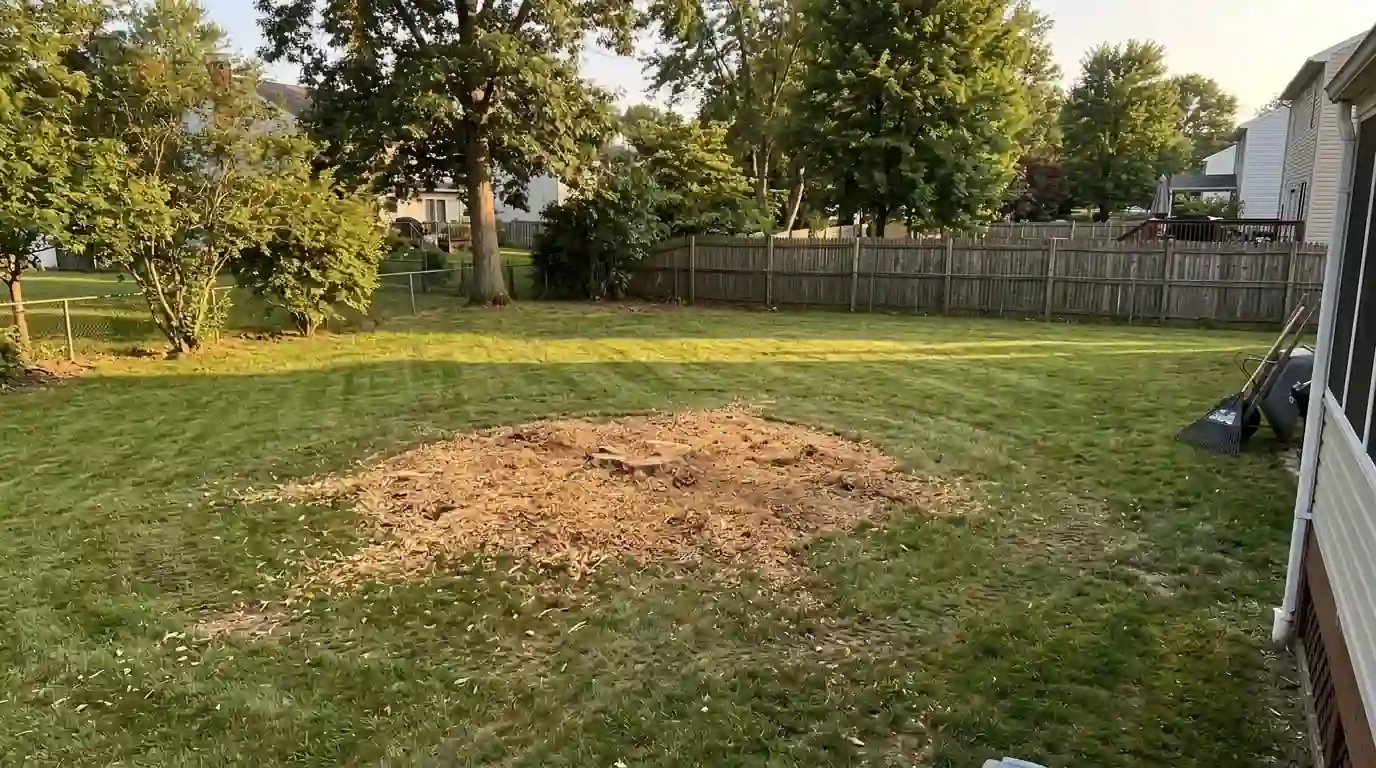
The finish line is a yard you can walk across again, with chips where the debris pile sat.
Call (916) 312-2373What a storm cleanup covers
- A look up into every damaged tree for hangers
- Broken limbs lowered from the crown
- Uprooted or snapped trunks cut into sections
- Debris lifted off fences, sheds and roofs
- Brush chipped on site
- Logs bucked and hauled or stacked
- Root plates braced, then ground or reset
- Photos of damage before anything is moved
- Yard raked and paths cleared
What storm debris cleanup costs
Cleanup is usually priced on time and volume rather than per tree. These five things move it.
- 01
How much came down. A few limbs is an hour or two; two broken trees is a full day.
- 02
Hangers left overhead. Climbing to clear broken limbs adds rigging time before ground work starts.
- 03
Distance to the chipper. A short drag to the street is quick; a long hand carry is not.
- 04
What it landed on. Debris on a fence, shed or roof comes off in lifted pieces.
- 05
Wood you keep. Stacking firewood on site leaves less to haul and shortens the day.
| Job | Published range | Source |
|---|---|---|
| Tree crew, Philadelphia hourly | $240 to $310 per hour | HomeBlue, 2025 |
| Tree removal, Philadelphia | $500 to $2,200 | HomeBlue, 2025 |
Planning numbers from published surveys, not our prices. We price after seeing the tree.
Questions after a storm hits the yard
Debris from trees on private property is left to residents to clear, so whole limbs and trunks need hauling. Our guide on who is responsible for a fallen tree covers the rest.
Only small loose ones well away from the tree. Look up first. Anything still caught in the crown above you, or lying on a wire or fence, should wait.
Yes. We can cut logs to stove length and stack them where you want. Wet storm wood needs a season or more to dry before it burns well.
Not always. A clean break on a healthy tree can be pruned back to a sound point. A tear that runs into the trunk usually means removal.
Policies often cover debris removal when a tree hits a covered structure and less when it only lands on the lawn. Take photos before cleanup and ask your insurer.
When the storm did more than drop limbs
Emergency Tree Removal
A tree cracking, leaning hard or blocking the way out. We answer around the clock and make it safe first.
Fallen Tree Removal
Rigging a trunk off a roof, car or garage without making the damage worse.
Broken & Hanging Limb Removal
Snapped branches hung up in the crown, brought down before they drop on their own.
Log & Debris Haul-Away
Logs, brush piles and storm debris loaded up and hauled off the property.
Yard buried after the storm?
Call and tell us what came down. We will start overhead, then clear the ground.