Quick answer
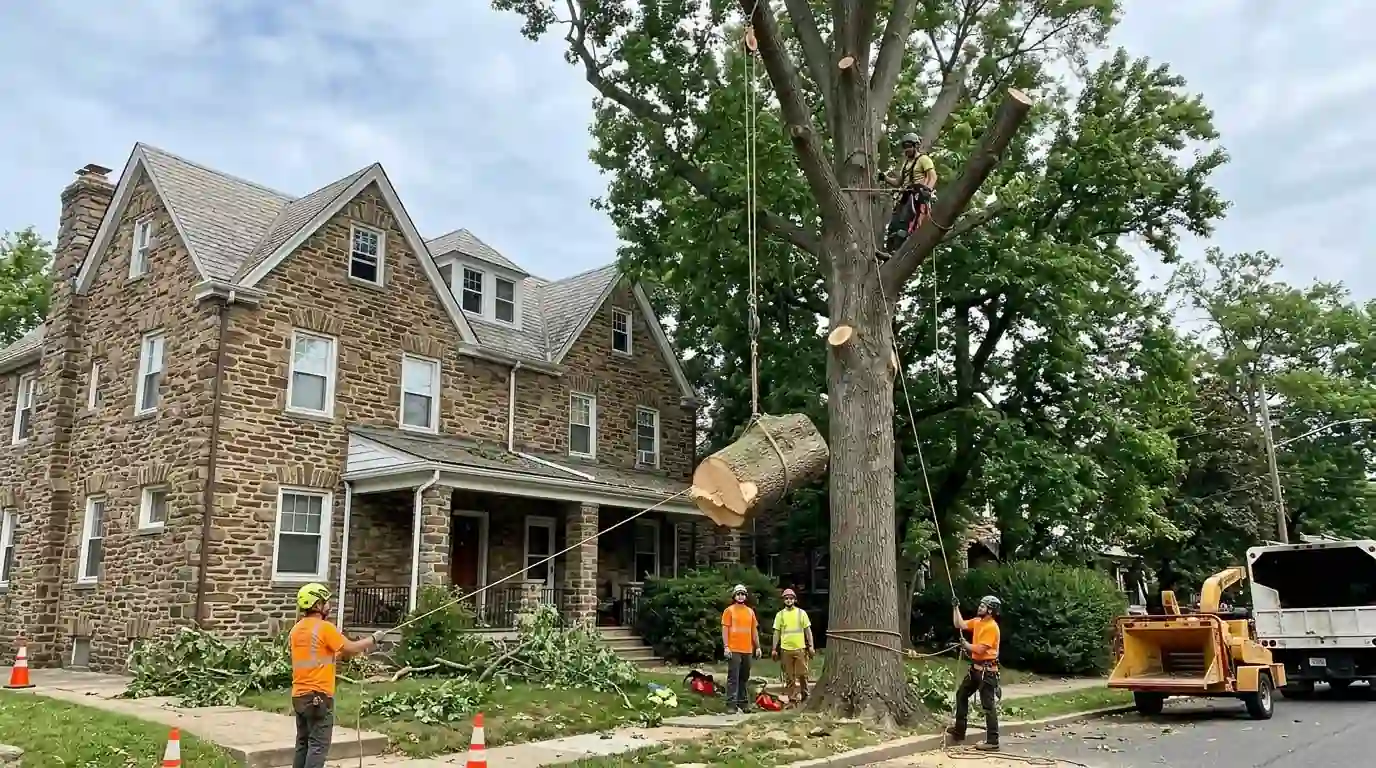
A crane removal works by attaching each section of the tree to the crane's line before it is cut, then lifting it over the house to the street, where it is chipped or loaded. HomeAdvisor lists a crane line item of $250 to $600 per day, while complex crane jobs can reach $6,000 to $7,000. A Philadelphia street setup also needs a closure permit.
How a crane pick actually works
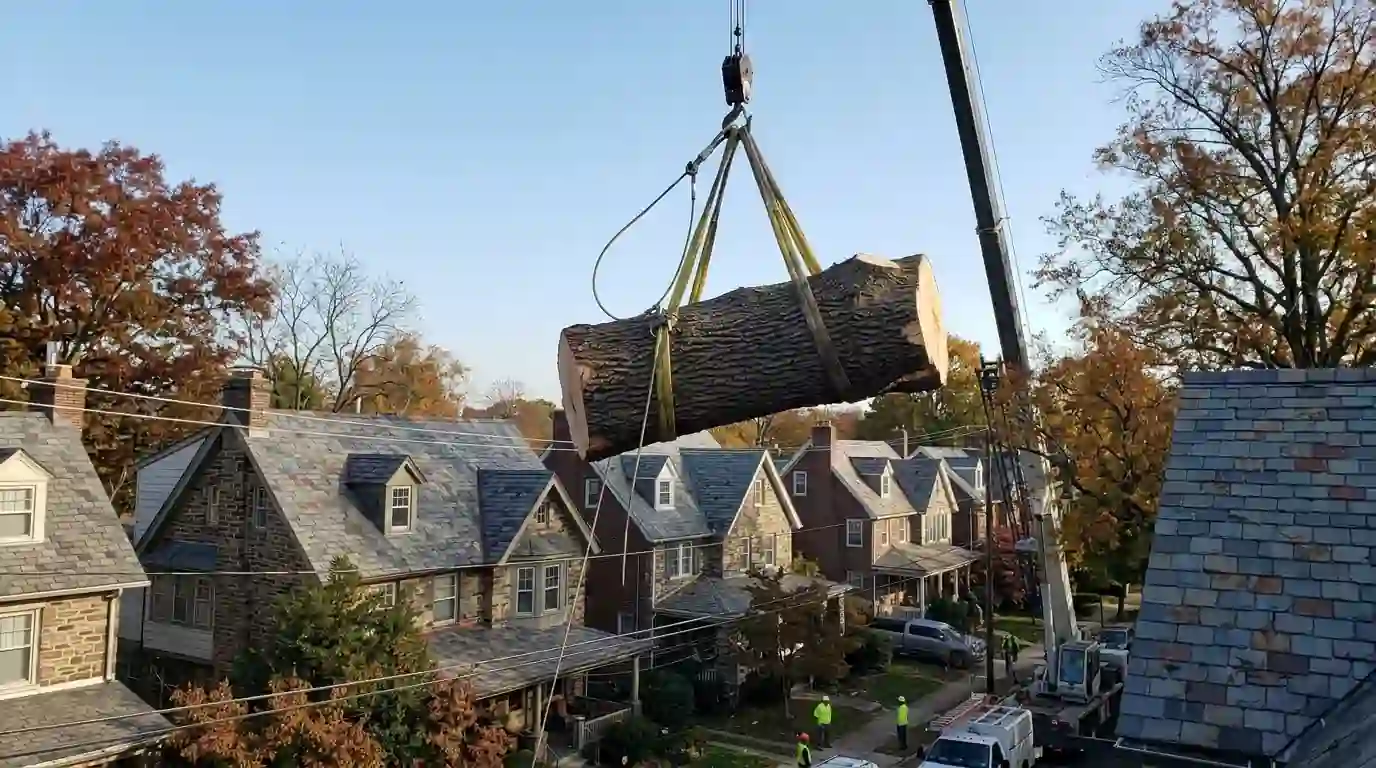
A climber goes up, sets the crane's sling around a section, and signals. The operator takes the weight, the climber makes the cut, and the piece swings free over the roof and down to the ground crew out front. Nothing is dropped, and nothing is dragged through the house.
A crane is not always worth it. If wood can be lowered into the yard and carried out, rigged sectional removal usually costs less. The crane earns its fee when there is no landing zone, the tree is too brittle to climb safely, or it is leaning hard toward a house.
What crane tree removal costs
A crane adds a day rate but can cut labor sharply. These five things set the total.
- 01
Crane size and reach. A tree far behind the house needs a bigger crane with more reach.
- 02
Street setup. A closure permit and a tight block add planning time.
- 03
Number of picks. A big oak may be a dozen picks; a poplar fewer but heavier.
- 04
Tree condition. Decayed wood needs smaller, more careful picks.
- 05
Wood handling out front. Chipping and loading on the street keeps the block moving.
| Job | Published range | Source |
|---|---|---|
| Crane for tree removal | $250 to $600 per day | HomeAdvisor, 2026 |
| Very large tree removal, over 80 ft | $1,000 to $2,000 | HomeAdvisor, 2026 |
| Tree removal, Philadelphia | $500 to $2,200 | HomeBlue, 2025 |
Planning numbers from published surveys, not our prices. We price after seeing the tree.
Street crane setup and closures
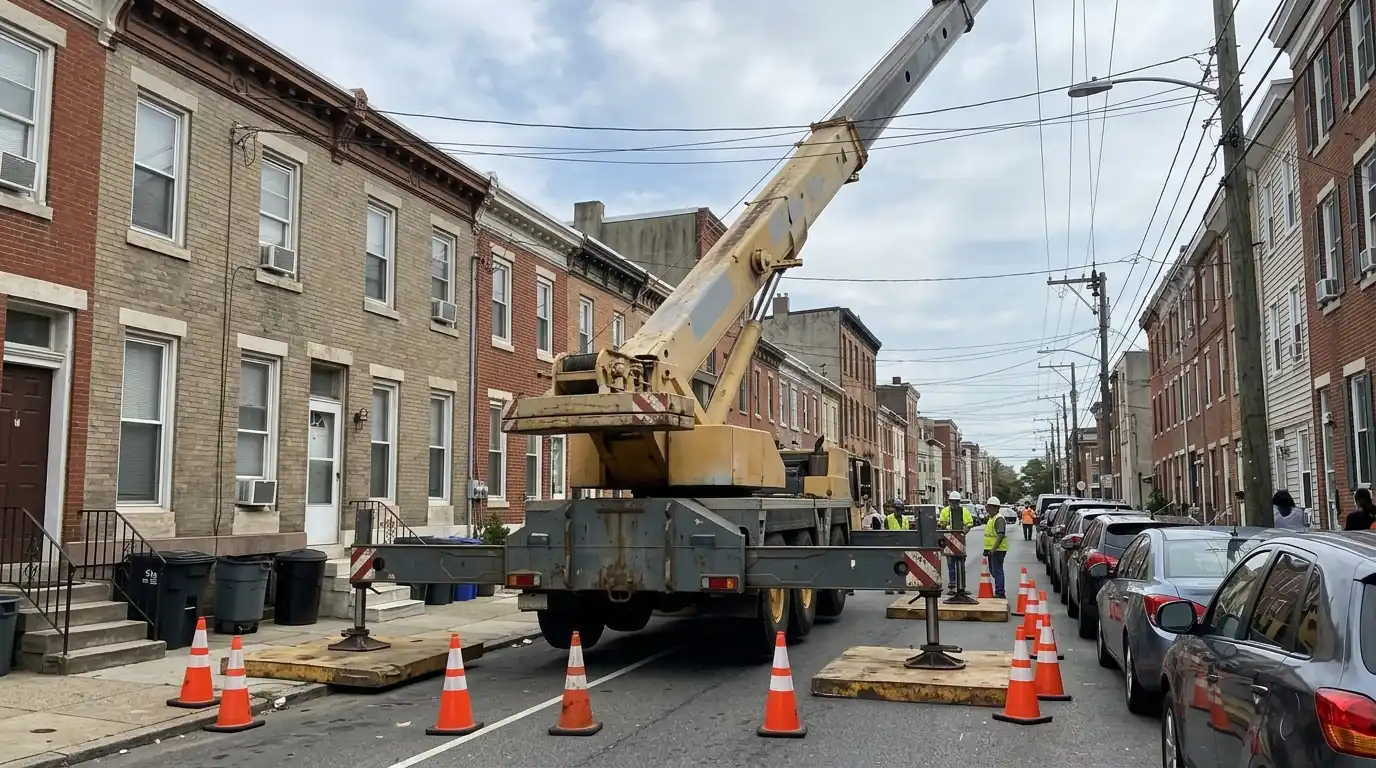
The crane needs a firm, level spot on the street in front of the house, outriggers spread, and room for the boom to swing. On a narrow city block that usually means closing part of the street or the parking lane. We handle the closure step and plan the setup so neighbors know when cars have to move.
Crane picks over rowhomes
A tree behind a rowhome with no alley has no other way out. Every log would otherwise go through the house by hand. With a crane, sections fly over the roofline in a few hours instead of days of carrying. The boom has to clear chimneys, wires and the house next door, so the operator and climber plan each pick before the first cut.
Crane removal of trees leaning on houses
A tree resting on a roof has its weight on the structure. A crane can take that weight before any cut, lifting the trunk away instead of letting it slide or drop. That is often the gentlest way to free a damaged roof. For a tree that just fell, our fallen tree removal page covers the first steps.
What a crane removal includes
- A site visit to plan crane position and reach
- The street closure permit step
- Pads under outriggers to protect the street
- Climber rigging each section before the cut
- Picks over the roof to the ground crew
- Brush chipped at the curb
- Logs loaded and hauled
- Street and sidewalk swept
- Stump ground if it is part of the job
Why Philadelphia needs so many crane removals
Rowhomes make up about 70 percent of the city's housing units, and nearly 60 percent of Philadelphians live in one, a higher share than in any other U.S. city. That is why so many big backyard trees here have no way out but up and over the roof. Getting the crane into position has its own paperwork: setting one up on a Philadelphia street requires a street closure permit through the Streets Department, which publishes a crane closure guide for contractors.
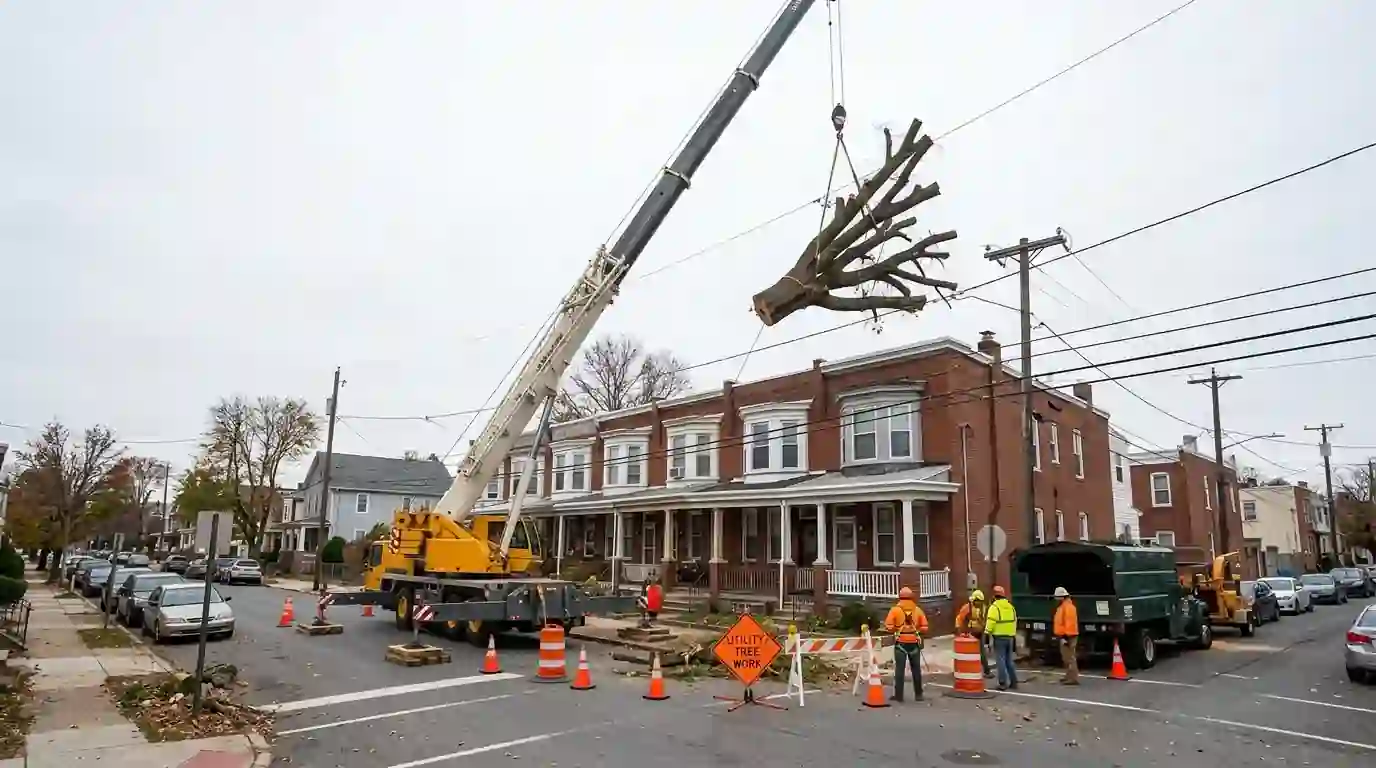
Over the roof and onto the truck: no logs carried through the house.
Call (916) 312-2373A crane removal day, start to finish
Site visit
We measure reach and plan where the crane sits.
Closure permit
Street closure arranged before the date.
Set up the crane
Outriggers on pads, boom raised, area coned off.
Climber rigs the first pick
Sling set on a top section before cutting.
Cut and fly
Each piece lifted over the roof to the street.
Process out front
Brush chipped, logs loaded as they land.
Break down and sweep
Crane packed up, street and yard swept clean.
How long a crane removal takes
The picks themselves are often a few hours, much faster than climbing the same tree out piece by piece. Setup and breakdown add an hour or two. The planning ahead takes longer: the site visit, the closure permit and lining up the crane date usually mean the job is scheduled, not done the day you call.
Crane removal questions
Outriggers sit on wide pads that spread the load. On soft ground or old pavers we add more matting. A crane is not set up on a surface that can't carry it.
Often, yes, for the crane's footprint and swing. The closure permit covers the street, and we give neighbors notice of the date.
Sometimes. Reach depends on the crane's size and how heavy the pieces are at that distance. We measure it on the site visit.
For decayed or leaning trees, often yes, because the crane holds each piece before it is cut. For a sound tree with room to lower, climbing is fine.
The crane's day rate and the permit add cost. But it can replace days of hand carrying, so on some rowhome jobs the total comes out close.
Related removal work
Large Tree Removal
Tall shade trees taken down in rigged sections, the way mature Philadelphia trees need.
Tight-Access Backyard Tree Removal
Rowhome and twin yards with no alley, worked by rope and by hand.
Tree Removal
Sectional takedowns sized to the yard, with the wood, brush and cleanup handled.
Leaning Tree Removal
A tree that shifted in the last storm, checked at the root plate and taken down under control.
No way out but over the roof?
Call and describe the yard. We'll come measure and tell you if a crane fits.