Quick answer
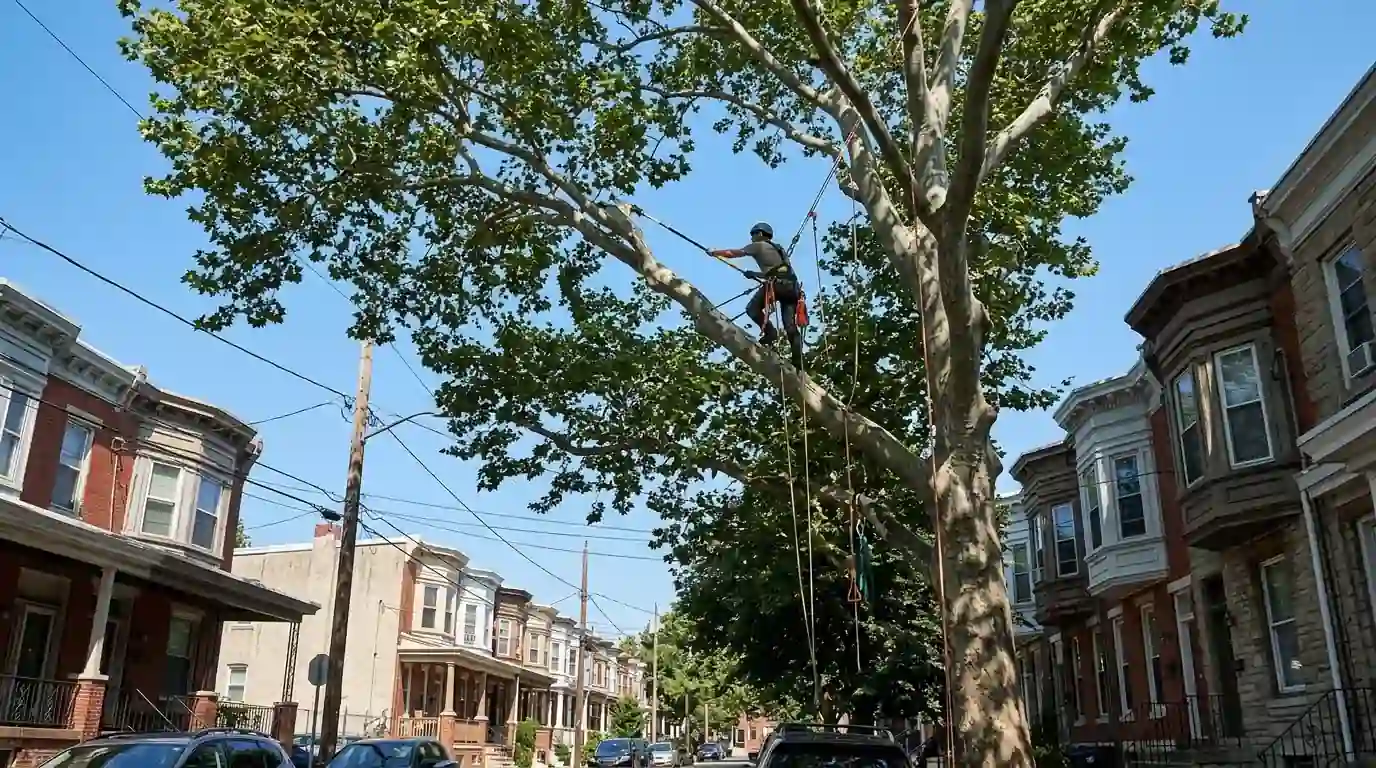
Crown reduction shortens a tree's height or spread by cutting limbs back to side branches at least a third the size of the piece removed, so the crown keeps a natural shape. It is priced like other trimming: LawnStarter's national average runs $430 to $640 per tree, with large trees well above that. It is never topping.
Reduction versus topping: why the cut location matters
Topping cuts limbs off at whatever height looks right and leaves stubs. The tree answers with dense clusters of fast, weakly attached sprouts, and the stubs rot back into the main limbs. Within a few years it is as tall as before and less safe.
Reduction picks each cut. A limb is shortened to a side branch big enough to take over, so the wound is smaller and the new tip already exists. When the real problem is dead branches rather than size, a routine crown cleaning is the simpler fix. Our guide to when a big tree becomes a risk helps you judge which you have.
What crown reduction costs
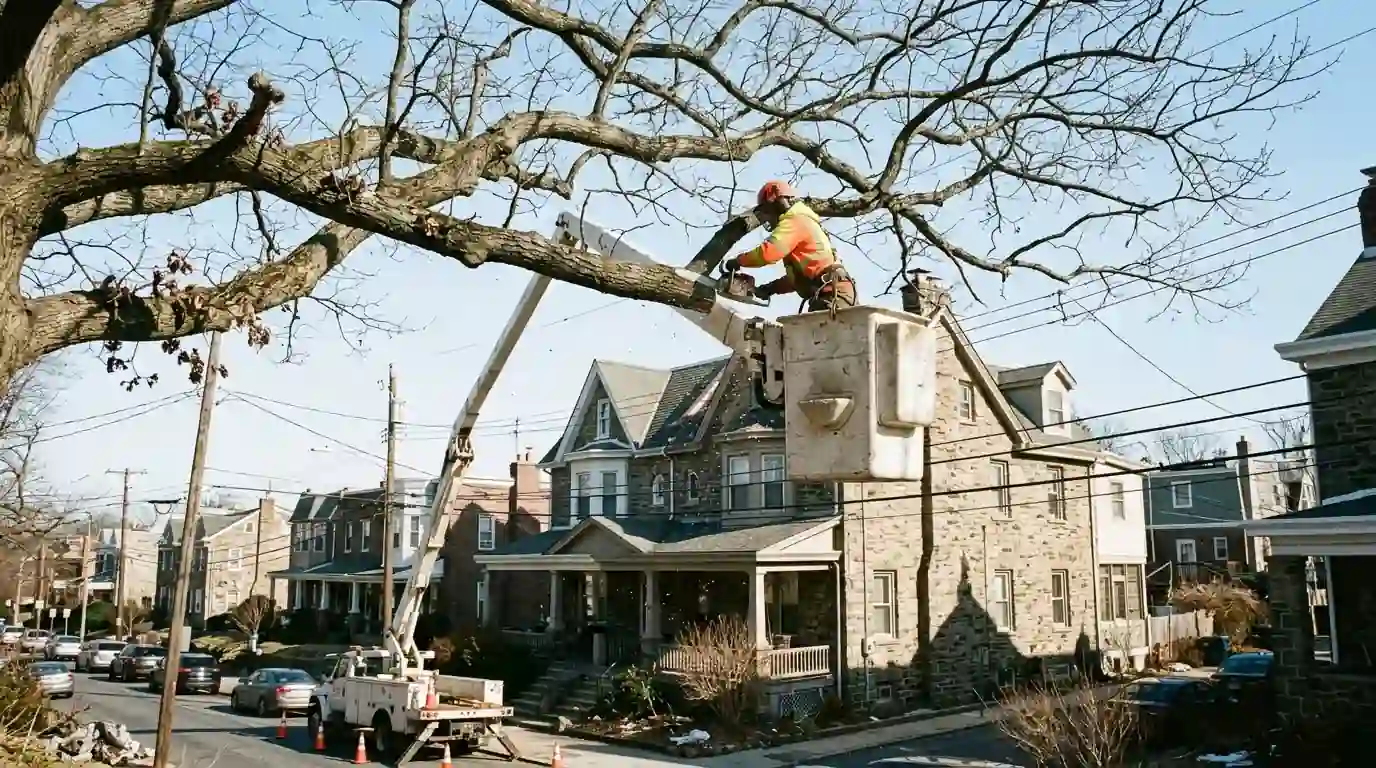
Reduction is priced as trimming, and often runs above a basic cleaning because every cut is high in the crown and roped down.
- 01
Tree height. Cuts at 60 feet take longer to reach and rig than cuts at 30.
- 02
How much comes off. A few feet off one side is a short visit; a full-crown reduction can fill a day.
- 03
What sits below. Roofs and wires mean every section is lowered by rope.
- 04
Species. Some trees need a lighter reduction spread over two visits.
- 05
Cleanup. Long limbs make a lot of brush to chip and haul.
| Job | Published range | Source |
|---|---|---|
| Tree trimming, per tree | $430 to $640 | LawnStarter, 2026 |
| Tree crew, Philadelphia hourly | $240 to $310 per hour | HomeBlue, 2025 |
Planning numbers from published surveys, not our prices. We price after seeing the tree.
Reduce, thin, top or remove?
| Approach | What it does | Fits when |
|---|---|---|
| Crown reduction | Shortens height or spread back to side branches | The tree is healthy but too big for its spot |
| Crown thinning | Removes some inner branches and keeps the size | The crown is dense, not oversized |
| Topping | Cuts limbs to stubs at a set height | Never; it breeds weak regrowth and decay |
| Removal | Takes the whole tree down | The tree is failing, or reduction would strip too much |
Can crown reduction be a do-it-yourself job?
On a small ornamental you can reach from the ground, yes. On a shade tree, every cut is at the top, where the hazard is.
| Doing it yourself | Having us do it | |
|---|---|---|
| Choosing cut points | Cutting to a twig too small to take over leaves a stub in effect. | Each cut goes to a side branch at least a third the size of what comes off. |
| Working height | The cuts sit at the outer top of the crown, past ladder reach. | A climber on ropes or a lift reaches the tips. |
| Long limbs falling | Cut limbs swing back into the trunk, the roof or the person cutting. | Each section is tied off and lowered. |
Height reduction
A tree that has outgrown a small yard or towers over a rowhome can come down by several feet without topping. Each leader is cut back to a strong upright side branch, so the crown stays rounded at a lower height. Not every species takes it well: beech and some older oaks handle heavy reduction poorly, so on those we keep the cuts modest or suggest another plan.
Reducing limbs over a house
A limb stretched across the roof fills the gutters, scrapes shingles in wind, and is the piece most likely to come through an upstairs ceiling in a storm. Reducing it back toward the trunk removes length and weight while keeping the tree. We rope each section and lower it clear of the roof, then check what remains for cracks. For limbs just brushing the house, clearance trimming may be enough.
Taking weight off long limbs
Long horizontal limbs on old silver maples, oaks and sycamores grow heavy at the end, and that weight works on the joint every time wind or ice loads them. Shortening the limb to an inward side branch cuts the leverage sharply. Where the limb also sits on a weak fork, reduction can be paired with a support cable to share the load.
Canopy, snow and big crowns around Philadelphia
Big crowns cluster where the canopy is heaviest. A 2021 Inquirer analysis put Chestnut Hill's tree cover at about 60 percent, with Mount Airy, Roxborough and the Wissahickon area at 40 percent or more. Snow is the other half of the picture. Philadelphia saw only 8.1 inches in winter 2024-25 and averaged 11.3 inches over the last five winters, roughly half the long-term norm, yet the city recorded 78.7 inches in 2009-10 and 68 inches in 2013-14. Limbs that lengthened through mild winters still have to hold up in a heavy one.
How we reduce a crown
Tell us the goal
Lower height, less reach over the roof, or less weight.
Look at the tree
Species, health and structure set how much it can lose.
Mark the cut points
Each limb gets a side branch picked as the new tip.
Climb or lift in
Ropes or a lift reach the outer crown.
Cut and lower
Sections tied off and lowered clear of the house.
Check the shape
We step back, look from the ground and balance it.
Chip and clean up
Brush chipped, wood hauled, yard raked.
Crown reduction questions
It depends on species and health, but most trees should lose no more than about a quarter of their leaves at once. Bigger changes are spread over seasons.
No. Topping cuts limbs to stubs anywhere; reduction cuts back to side branches that become the new tips. The difference shows within two growing seasons.
It grows, but slowly and in a natural shape. Most reduced trees need a light touch-up every several years to hold the new size.
Late winter, while the tree is dormant, is easiest on most species and shows the branch structure clearly. Avoid heavy cuts just as spring leaves come out.
Sometimes. A healthy tree that is simply too big for its space often can be kept. One with decay, a bad lean or a split trunk usually cannot.
Pruning that pairs with reduction
Tree Trimming
Cleaning, thinning and shaping that keeps a shade tree healthy and out of the way.
Crown Raising & Clearance Pruning
Lifting low limbs off sidewalks, driveways, parked cars and the lawn.
Roof & House Clearance Trimming
Branches pulled back from roofs, gutters, siding and chimneys.
Tree Cabling & Bracing
Steel cables and rods that support weak unions in trees worth keeping.
Tree getting too big for its spot?
Call us and describe it. We will tell you how much it can safely lose, show you where the cuts go, and price it first.