Quick answer
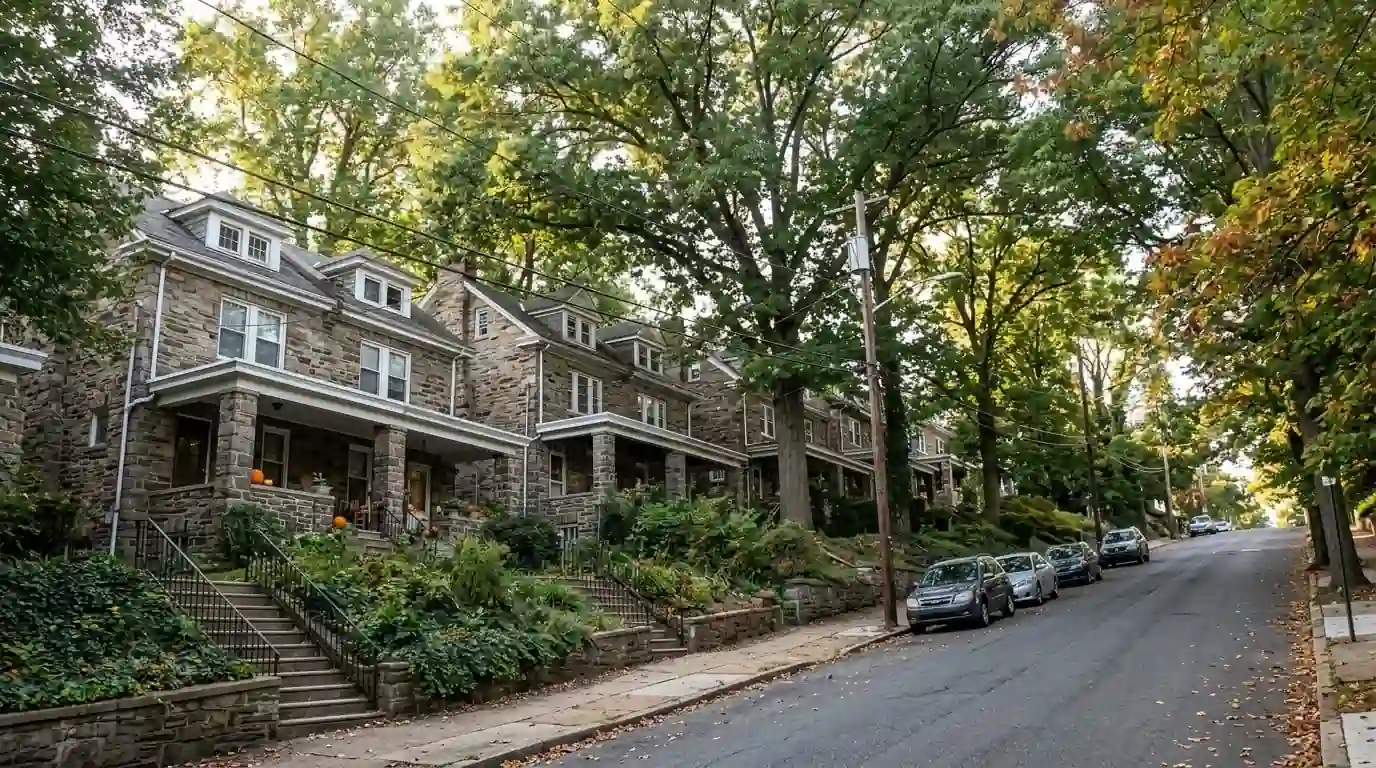
Yes, we work in Chestnut Hill, and the trees themselves are usually the story. The neighborhood measured about 60 percent canopy in a 2021 Inquirer analysis, the highest in the city, so jobs tend to involve tall trees standing close to houses. Lots that back onto the Wissahickon Gorge or the Cresheim Valley add slope and a woodland edge to the planning.
Sixty percent canopy, and a lot of it over a roof
A 2021 Inquirer look at 47 Philadelphia ZIP codes put Chestnut Hill at the top, with roughly 60 percent of the ground under canopy. Parts of Kensington and Fishtown sat near 7 percent in the same study. That gap shows up in the work: here the job is rarely one small yard tree on open lawn.
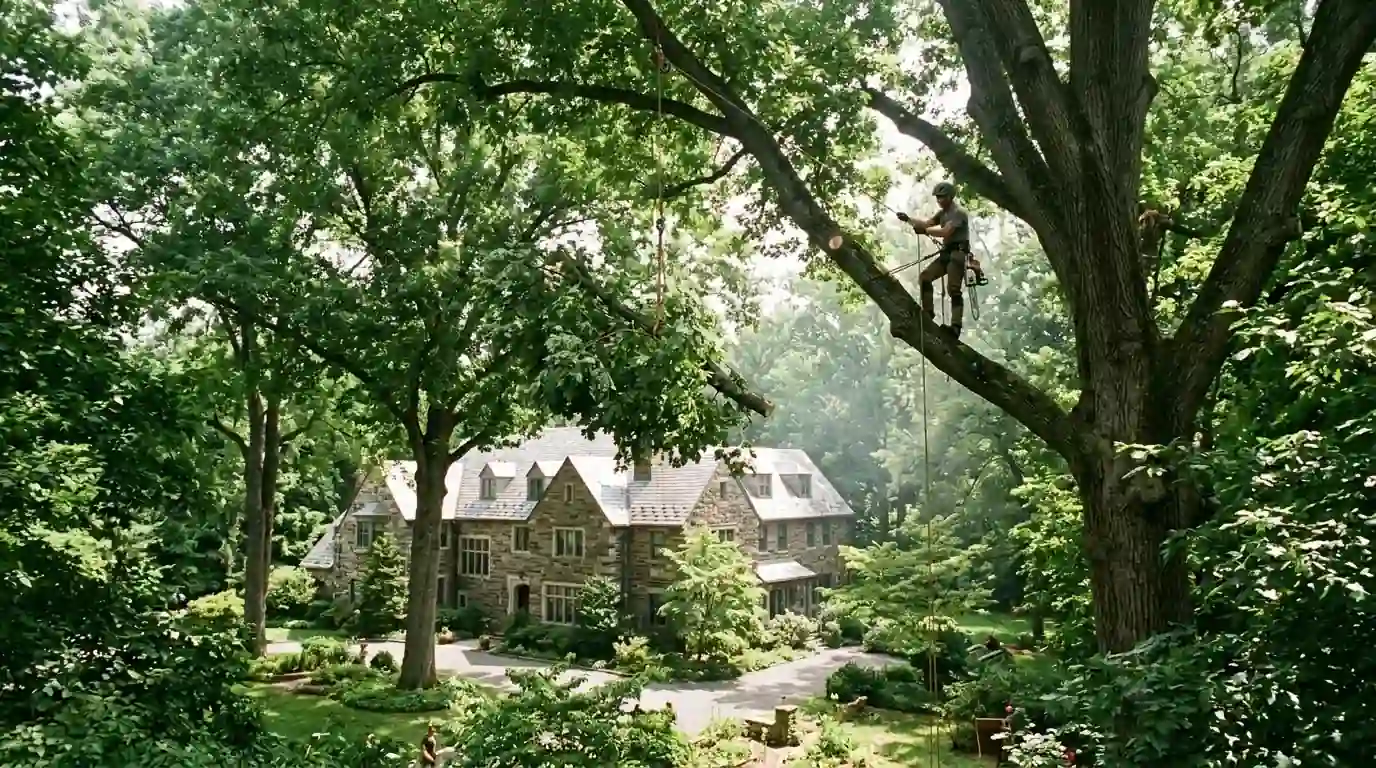
When most of a lot is shaded, one removal changes the light, the view from the street and the wind load on every tree left standing. We often suggest shortening the heavy limbs before a full takedown. When a tree does have to go, it comes down in rigged pieces over the house instead of one long fall.
The canopy along the shopping street is planned, too. The Re-tree the Avenue campaign set out to fill gaps on Germantown Avenue and Bethlehem Pike, with plantings in more than 70 spots, a deliberate species mix and $50,000 left over from the Green Space Initiative.
Tree jobs that fit Chestnut Hill properties
Given the canopy and the valley edges, these are the services that line up with Chestnut Hill lots most often.
- Large Tree RemovalTall trees close to big houses come down in rigged sections, each piece lowered so nothing lands on the roof or the garden beds below.
- Crown ReductionShortening heavy limbs over the house keeps the shade and cuts the leverage that wind gets on a tall crown.
- Broken & Hanging Limb RemovalAfter a blow, broken limbs caught high in the canopy come down before they drop on a walk, a porch or a parked car.
- Stump GrindingOn a back lot that slopes toward the park, grinding the stump instead of pulling it leaves the roots holding the soil.
- Tree Inspection & Risk AssessmentA close look at lean, decay and root plate on big woodland-edge trees before anyone decides what stays.
Back lots on the Wissahickon Gorge and Cresheim Valley
The Wissahickon Gorge forms Chestnut Hill's western edge and the Cresheim Valley its southeastern one. Both wooded valleys belong to the city's park system, so a good number of back yards end at a wall of park woodland instead of a fence and another yard.
That edge changes a removal day. A tree on your side may lean out over the drop, and limbs from the woods can reach your roof. We cut only what stands on your property, aim every piece away from the slope, and lower wood back toward the level ground near the house. If you are not sure a tree is sound, our guide to signs a tree is getting ready to fail is a good first read.
Storm nights on West Southampton Avenue
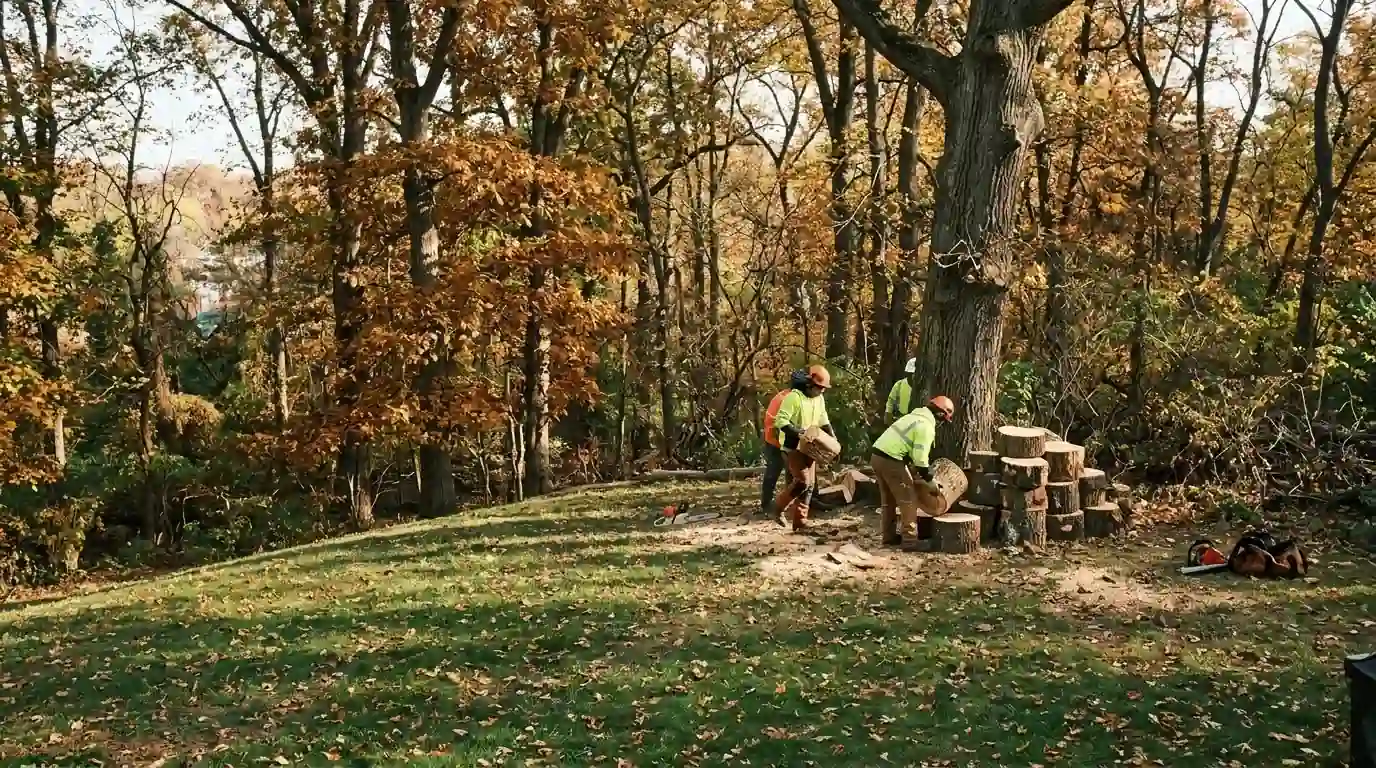
Wind is the other half of the Chestnut Hill workload. On a Sunday night in June, a storm with strong winds and heavy rain dropped a tree onto a house and a utility pole on the unit block of West Southampton Avenue. The pole split, a transformer was damaged, and PECO reported several more tree-related outages across this corner of the city.
In February 2011, gusts above 40 mph left broken branches, downed trees and toppled fence sections across Chestnut Hill and Mount Airy. Under a canopy this thick, even a moderate blow leaves split leaders and hangers caught high in the crown. Our phones are answered 24/7, and when a tree is on the house we make the roof safe first and clean up after.
Slope and street tree rules on a Chestnut Hill job
Philadelphia wrote steep slope protections into its code in 2012, aimed mostly at the hilly Northwest neighborhoods, Chestnut Hill among them. Earth disturbance on slopes of 25 percent or more is prohibited, and lesser steep slopes need Planning Commission approval, so we plan stump work and equipment routes on a hillside lot with that rule in mind.
Street trees are a separate question. Before pruning or removing a tree in the sidewalk strip, a contractor needs a tree work permit from Parks and Recreation Street Tree Management.
Chestnut Hill tree questions
Yes, if the trunk stands on your property. We lower the wood back toward your yard rather than dropping it into the woods. Trees growing on park land are the city's to manage.
It can. Trees that grew up sheltered by a neighbor catch more wind once it is gone. We look at the trees left standing and may suggest light pruning on them at the same visit.
Yes. A tree in the sidewalk strip is city-managed, and the contractor needs a Parks and Recreation tree work permit before pruning or removing it. We take care of that step before any cut.
Sometimes. City code prohibits earth disturbance on slopes of 25 percent or more, so on a steep bank we may cut the stump flush and leave the roots holding the soil instead of grinding deep.
More of Northwest and West Philadelphia
Big tree over the house in Chestnut Hill?
Call any hour. We will look at the tree, the slope and what sits under it, then explain how it comes down and what it costs.