Quick answer
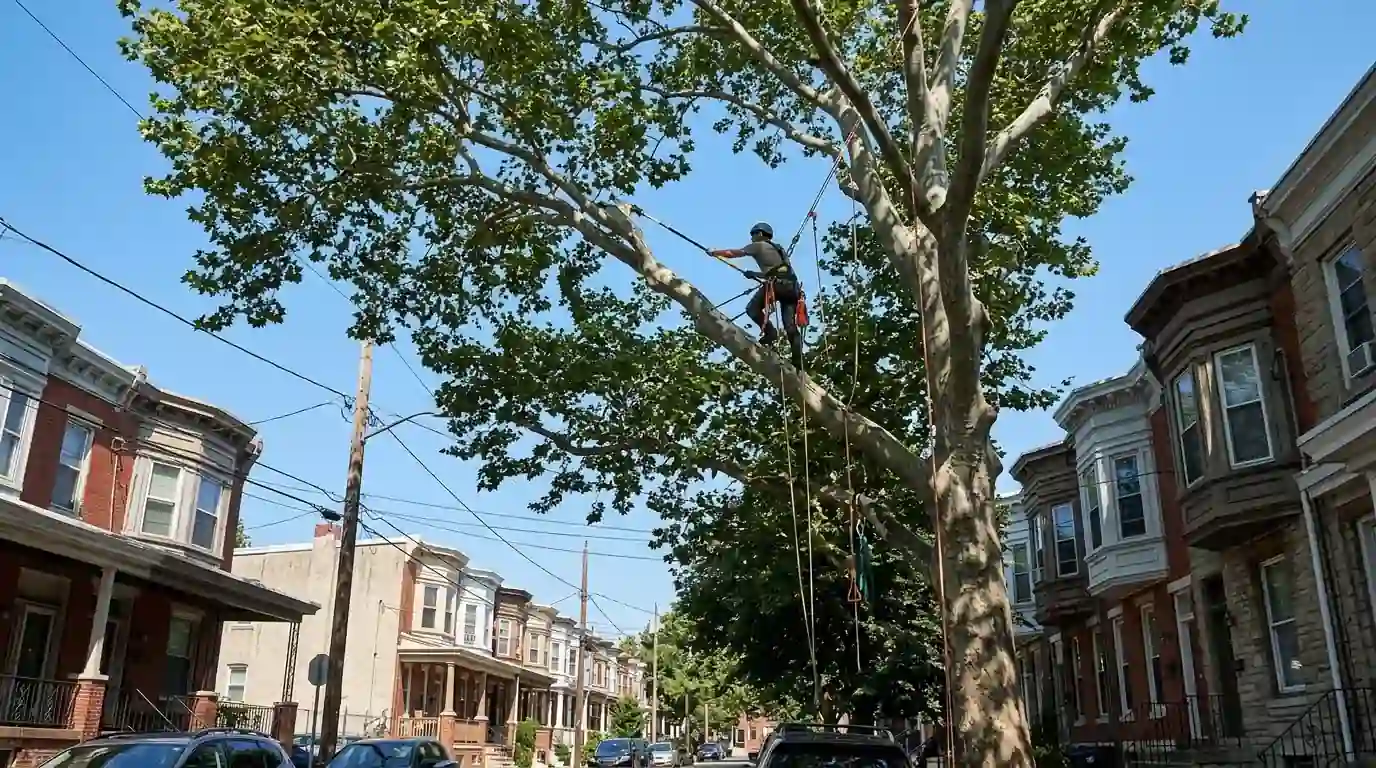
Trimming a tree costs about $430 to $640 on average in LawnStarter's national figures. Trees under 30 feet run $85 to $415, and trees over 60 feet run $475 to $1,835. Most shade trees need it every three to five years, and late winter, while the tree is dormant, is the easiest season on it.
What a proper trim does to a tree
Every cut is a wound the tree has to seal, so the aim is to take the right branches and as few as possible. Cuts go just outside the branch collar, the slight swelling where a limb meets the trunk, so the wound can close. Flush cuts and stubs both invite decay.
A routine trim removes dead and broken wood, branches that cross and rub, and limbs heading for the roof or wires, rarely more than a quarter of the leaves in one visit. Where height is the problem, shortening the crown is its own job, and pulling limbs back from the house can be done alone. Our note on when to trim trees in Philadelphia covers timing. Townhome associations and landlords usually book trimming on a cycle; tree work for HOAs and property managers covers how that runs.
What tree trimming costs in Philadelphia
Published per-tree averages are a starting point. The trim itself decides where yours lands. Privet and arborvitae screens are priced differently, on our hedge and shrub trimming page.
- 01
Tree height. A 25-foot ornamental is quick; a 70-foot oak keeps a climber in the crown for hours.
- 02
Time since the last trim. A tree left ten years carries far more deadwood and crossing limbs.
- 03
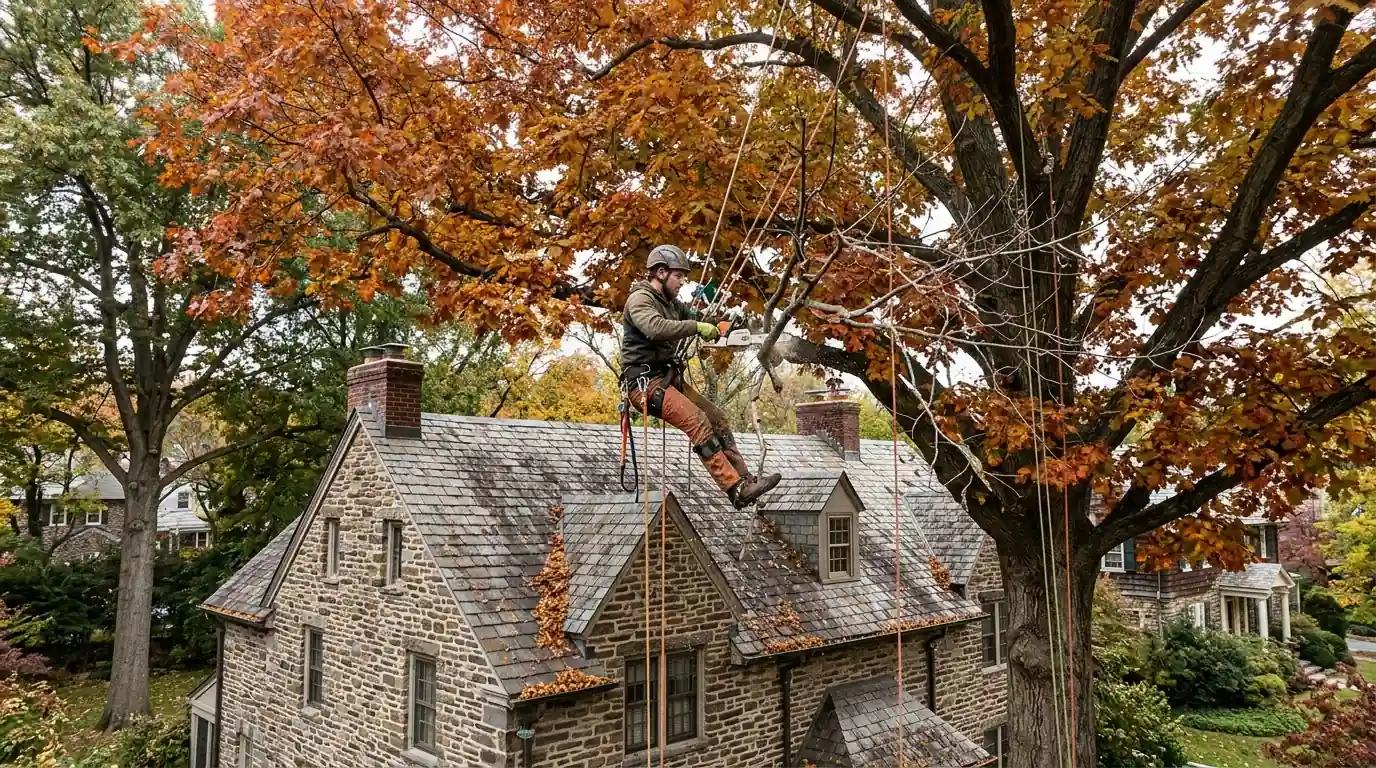
What is under the crown. Roofs, wires and fences mean limbs get roped down instead of dropped.
- 04
Scope. Cleaning alone costs less than cleaning plus thinning and clearance.
- 05
Cleanup. Chipping and hauling are standard; keeping the firewood trims the bill.
| Job | Published range | Source |
|---|---|---|
| Tree trimming, per tree | $430 to $640 | LawnStarter, 2026 |
| Tree crew, Philadelphia hourly | $240 to $310 per hour | HomeBlue, 2025 |
Planning numbers from published surveys, not our prices. We price after seeing the tree.
Trimming your own trees, and where to stop
Branches you can reach from the ground are fair game with a sharp pruning saw. The trouble starts above shoulder height.
| Doing it yourself | Having us do it | |
|---|---|---|
| Ladder work | A chainsaw on a ladder is a classic way homeowners get hurt. | Climbers tie in on ropes, both hands free for the saw. |
| Cut placement | Flush cuts and stubs lead to decay years later. | Each cut sits at the collar so the wound closes. |
| Heavy limbs | A big limb tears bark down the trunk if not undercut first. | Heavy limbs are rigged and lowered in pieces. |
| Wires | A branch touching the service wire can carry current to you. | A utility make-safe is booked before cuts near the drop. |
Crown cleaning
Crown cleaning is the basic trim: dead, diseased, broken and hanging branches come out across the whole crown, along with water sprouts and crossing limbs. You notice the need when twigs keep landing on the patio or the car. The tree's size and shape do not change; it just loses wood that was going to fall anyway. For trees 30 to 60 feet tall, LawnStarter publishes $215 to $790, in national figures.
Crown thinning
Thinning takes some live branches from the outer crown so light and wind pass through. It suits a dense maple or linden that shades out the lawn or catches wind like a sail. Cuts are spread evenly so the tree does not end up with bare inner limbs and tufts at the tips, a shape that weakens branches. Too much thinning in one visit stresses the tree, so we keep it light.
Shade tree trimming
Philadelphia has plenty of big oaks, maples, lindens and London planes standing beside houses built long before the trees got large. They need cleaning and clearance every few years and closer attention as they age. We trim them by rope from inside the crown and lower heavy limbs over roofs and fences. Trees over 60 feet fall in LawnStarter's published $475 to $1,835 band.
What a tree trimming visit includes
- A walk around the tree to agree on what comes out
- Dead, broken and hanging branches removed
- Crossing and rubbing limbs cut back to a sound fork
- Clearance from the roof, gutters and chimney
- Low limbs lifted over the walk or driveway as needed
- Cuts at the branch collar, with no stubs or flush cuts
- No climbing spikes on a tree that is staying
- Brush chipped, and wood hauled or left for firewood
- Lawn and beds raked clean before we go
Trimming duties for Philadelphia owners
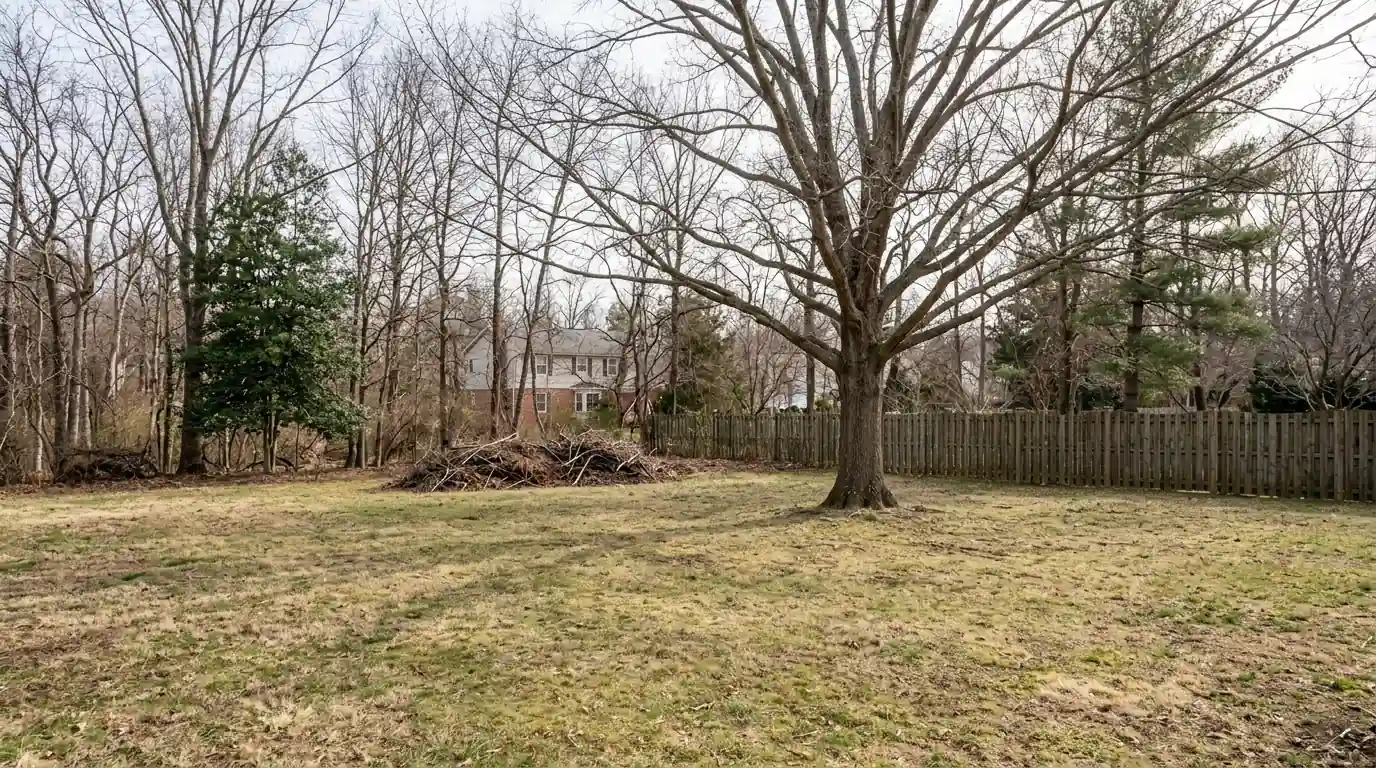
Trees on private land in Philadelphia are the owner's responsibility, overhanging branches included. Violations can bring a $150 to $300 fine, owners usually get 30 days for non-emergency problems, and unpaid city work can become a lien. A neighbor may cut back branches that cross the line at their own expense but may not come onto your property without permission. The housing stock matters too: about 40.3 percent of the city's homes were built before 1940, against about 22 percent across the wider region, so a lot of trimming here happens around old roofs and chimneys.
How a trimming visit goes
Tell us about the tree
Species, height, and what bothers you about it.
Agree on the cuts
We walk the tree and say what comes out and why.
Set up
Ropes in the crown, tarps over beds, cars moved.
Deadwood first
Dead and broken branches come out before anything live.
Thin and clear
Crossing limbs and clearance cuts, spread through the crown.
Lower heavy pieces
Big limbs over roofs ride down on ropes.
Chip and rake
Brush chipped and the yard raked clean.
Tree trimming questions
Every three to five years for most, sooner for fast growers close to the house. Young trees do better with lighter structural cuts more often.
Light trimming and deadwood removal are fine in summer. Heavy cuts are easier on the tree in late winter, and oaks are safest pruned while dormant.
In Philadelphia, yes, back to the property line and at their own expense. They cannot come onto your land to do it without your permission.
Proper thinning cuts do not. Topping and heavy heading cuts do, because the tree pushes out clusters of weak sprouts below each stub.
Not on a tree that is staying. Spikes wound the trunk with every step, so we climb on ropes and keep spikes for removals.
Other pruning work
Crown Reduction
Shortening a crown back to healthy side branches instead of topping it.
Crown Raising & Clearance Pruning
Lifting low limbs off sidewalks, driveways, parked cars and the lawn.
Deadwood Removal
Dead branches cut out of the crown before they drop on someone.
Roof & House Clearance Trimming
Branches pulled back from roofs, gutters, siding and chimneys.
Tree due for a trim?
Phone us and describe it. We will walk the tree with you, agree on what comes out, and quote the trim up front.