Quick answer
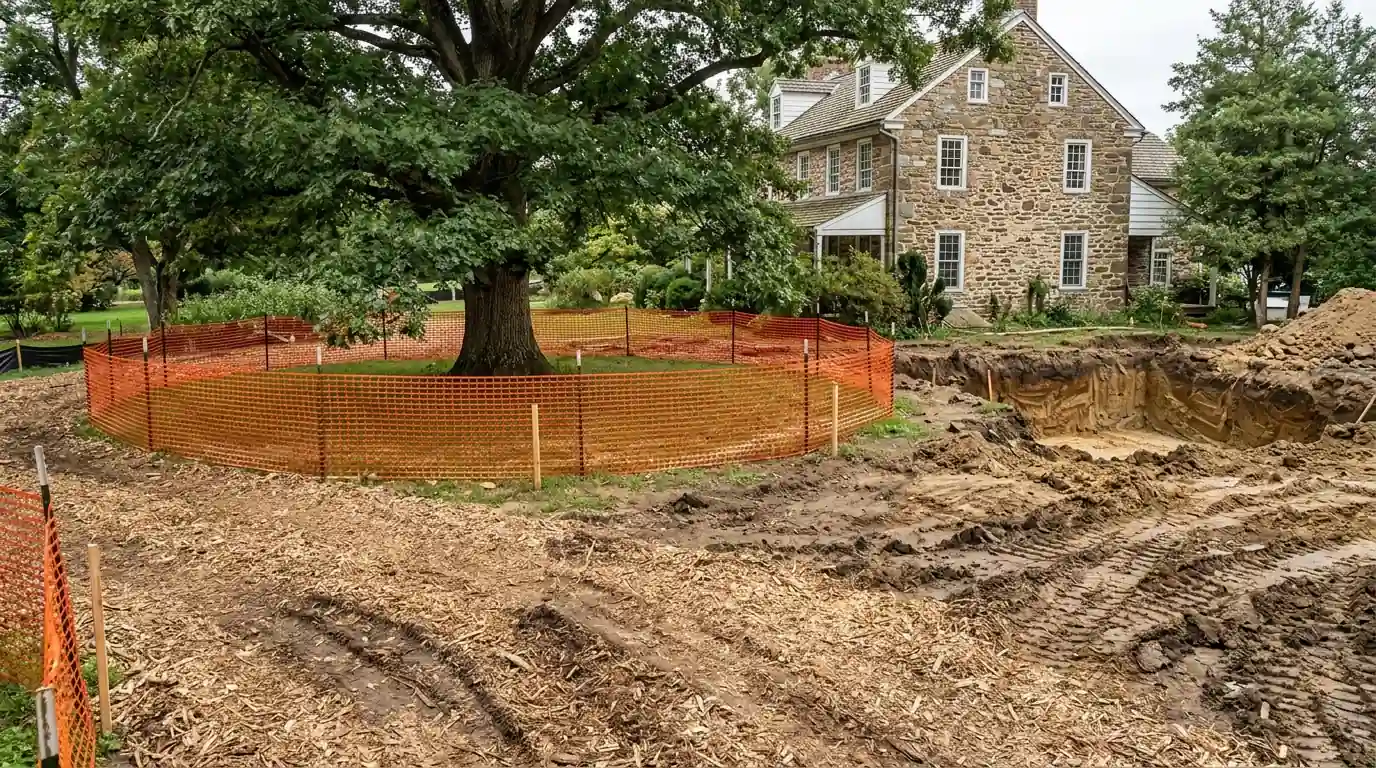
Protect a tree from construction by fencing off its critical root zone, roughly 1 to 1.5 feet of radius for every inch of trunk diameter, before any machine arrives. Keep trucks, stockpiles and grade changes outside that fence, and reroute or tunnel trenches that would cut major roots. Prune low limbs for clearance first.
Where construction actually hurts a tree
Most of a tree's absorbing roots live in the top foot of soil and spread well past the drip line. A loaded truck parked there for a month crushes the pore space roots breathe through, and two inches of fill does the same. One sewer trench can sever a third of the root system in an afternoon.
None of it shows right away. The tree leafs out next spring, then the crown thins from the top over the following years. Fencing, ground cover and smarter trench routes cost far less than taking down a dead oak later, and cutting roots cleanly ahead of hardscape beats letting a bucket tear them.
What we set up before the builders arrive
- A walk of the site plan with trees, trench lines and access marked
- Trunk diameters measured to size each root zone
- Sturdy fencing staked at the root zone edge
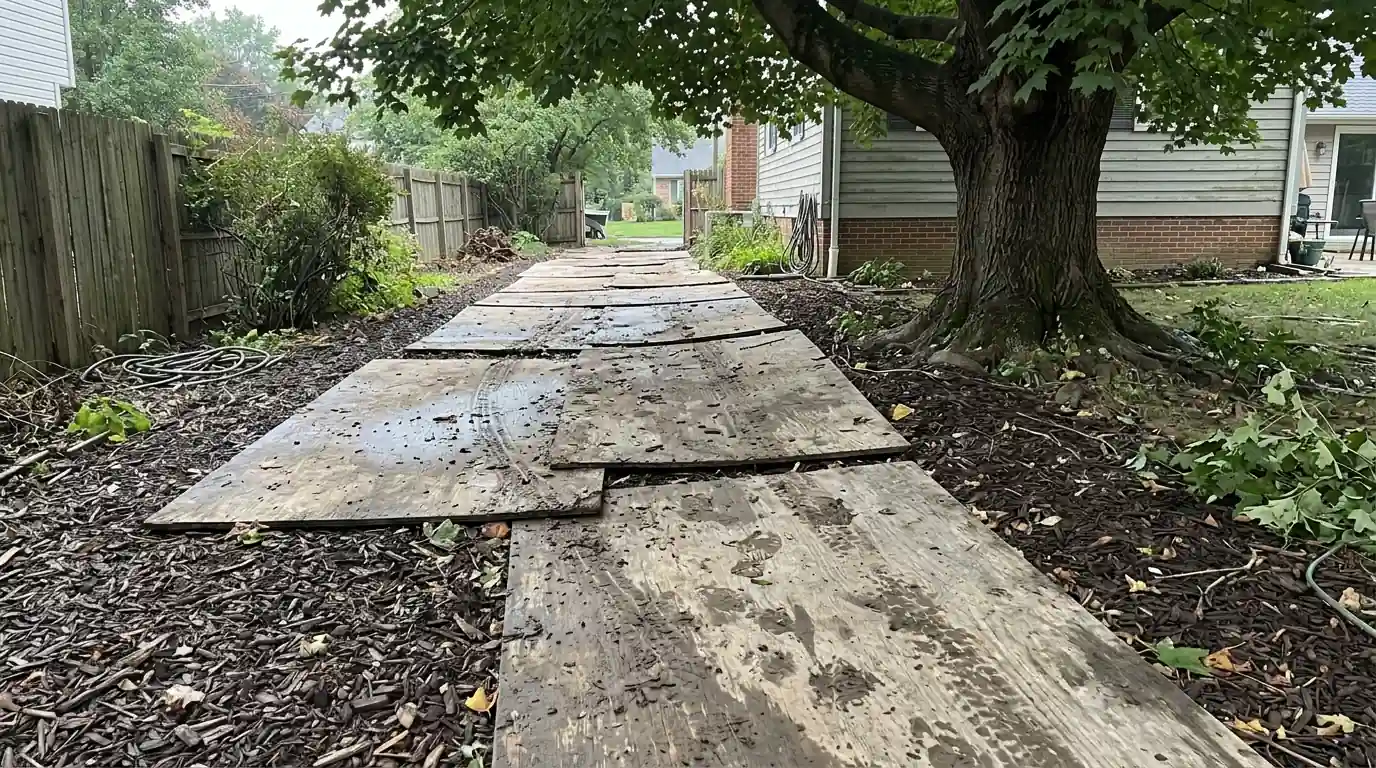
- Wood chips and plywood on any path that must cross roots
- Low limbs lifted so machines and trucks clear the crown
- Clean cuts on roots that must go, before the trench
- Trunk wrap on trees right beside the work
- Notes for the builder on where stockpiles cannot go
- A watering plan for dry spells while the site is open
Root zone fencing
Caution tape around the trunk protects nothing. The fence has to sit at the edge of the critical root zone and be sturdy enough that nobody shoves it aside to park a skid steer. On tight city lots that radius often reaches the house, so we fence what we can and lay thick chips and plywood on the paths workers must cross. It stays up until final grade.
Pruning before construction
A limb snapped by equipment leaves a ragged tear that decays. Lifting low branches before the job gives the excavator arm, a concrete truck or a dumpster drop room to work, with cuts made at the branch collar where they seal. A stressed tree should not be pruned hard, so we take only what clearance needs, the same work as crown raising for clearance, timed for the build.
Tree checks after construction
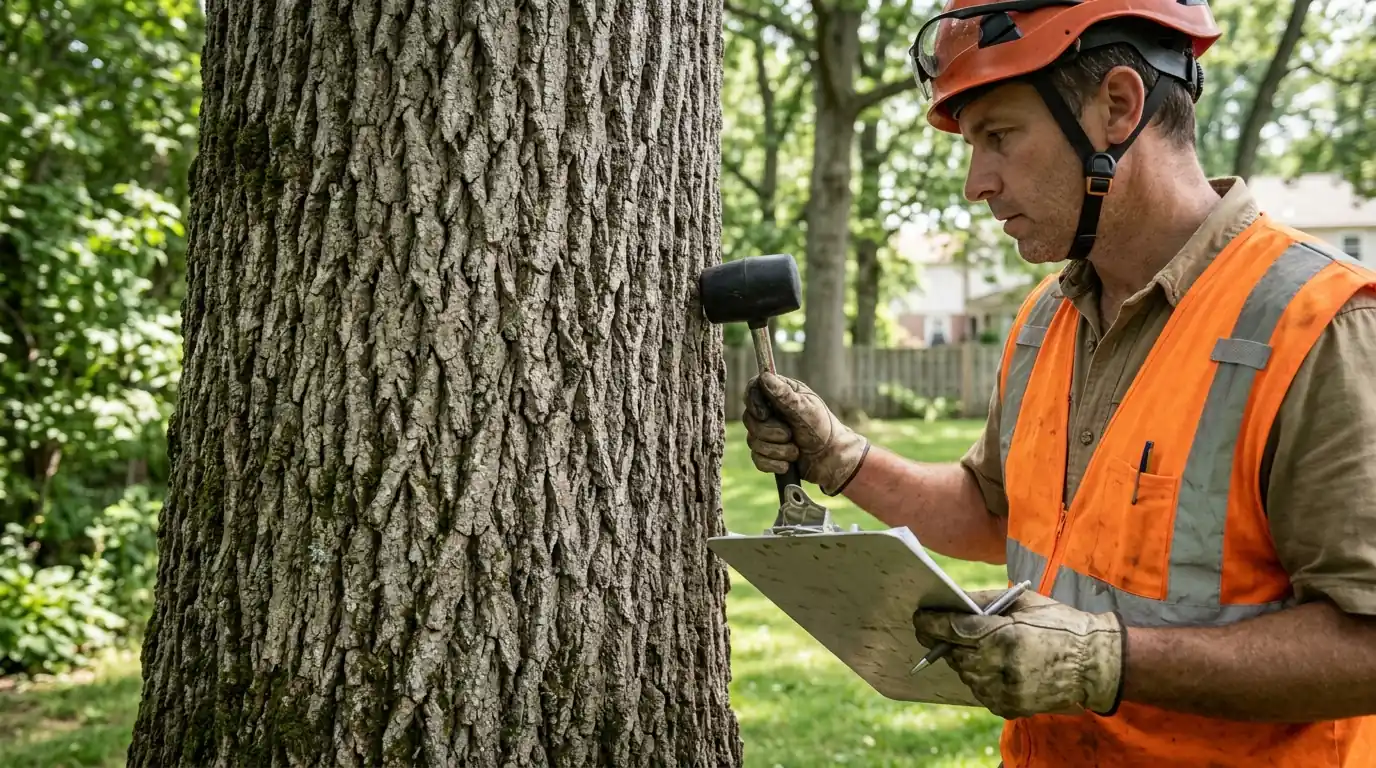
When the fence comes down, we look for trunk wounds, compacted soil, buried root flares and fill against the bark. Thinning crowns, small yellowed leaves and dead tops can follow over a few seasons. A follow-up tree inspection a year later shows whether the tree is recovering or declining. Published inspection ranges run $75 to $150 nationally.
How long the protection work takes
Setup takes a few hours to a full day, depending on how many trees sit near the work and how much pruning they need. It has to happen before the excavator date, because fencing cannot go in once machines are parked on the roots.
The fence then stays for the whole project, a few weeks for a driveway or months for an addition. Damage often takes years to show, so book a check a season or two later.
Old houses, big roots and replacement rules
About 40.3 percent of Philadelphia's homes were built before 1940, nearly double the share of about 22 percent across the wider DVRPC region. Old houses mean sewer laterals, porches, foundations and rear additions getting rebuilt right beside trees that have grown with them for decades. In New Jersey, the township next door to our office adopted a tree removal and replacement chapter on April 23, 2024: it covers non-street trees 6 inches or larger, exempts residents removing fewer than four per acre in five years, charges a $100 fee, and asks for one to four replacements or $50 to $250 per tree in lieu.
How a protection job runs from plan to final grade
Send us the plan
A site plan or a sketch of the addition, trench or driveway.
Site walk
Trunks measured, root zones marked, conflicts flagged.
Agree on routes
Access path, stockpile spot and trench line kept off roots where possible.
Prune and cut roots
Clearance limbs lifted, unavoidable roots cut clean.
Fence and cover
Fencing staked, chips and plywood on crossings.
Check in mid-build
A look for moved fences, fill or parked equipment.
Final look
Wounds, grade and soil checked as the fence comes down.
What tree protection on a job site costs
Protection is usually a small line beside the construction budget. National figures for the inspection and pruning pieces are below.
- 01
Number of trees near the work. One maple by a driveway is a short visit; a wooded edge beside an addition is a day of fencing.
- 02
Size of each root zone. A 30-inch oak needs a fence ring three times wider than a 10-inch tree.
- 03
Clearance pruning. Low limbs over the access route are quick; limbs over a roof take rigging.
- 04
Root cutting. Clean cuts along a planned trench add time, far less than repairing damage later.
- 05
Follow-up visits. Mid-project checks and a later look are priced as separate visits.
| Job | Published range | Source |
|---|---|---|
| Arborist tree inspection | $75 to $150 | HomeAdvisor, 2026 |
| Tree trimming, per tree | $430 to $640 | LawnStarter, 2026 |
Planning numbers from published surveys, not our prices. We price after seeing the tree.
Questions builders and homeowners ask about protecting trees
As a rule of thumb, stay outside 1 to 1.5 feet of radius per inch of trunk diameter. When a line must pass closer, boring under the roots does far less harm than an open trench.
Avoid it. A few weeks of stockpile compacts the soil, and fill left on top buries roots that need air. Pick a spot outside the fence.
Before any machine, dumpster or delivery truck reaches the site. Damage done on day one cannot be undone by fencing put up on day two.
Not always. Healthy trees often tolerate losing roots on one side if the cuts are clean and the rest of the root zone stays untouched and watered.
Watch for thinning at the top, smaller leaves, early fall color and dead branch tips in the seasons after the work. Bark wounds are early clues.
More ways to keep a tree healthy
Root Pruning
Cutting problem roots cleanly so a sidewalk can be fixed without killing the tree.
Tree Inspection & Risk Assessment
A walk-around look at decay, cracks, lean and roots, with a straight answer on what needs doing.
Deep Root Fertilization
Feeding and loosening compacted root zones around stressed city and suburban trees.
Tree Planting
Planting replacement trees, including the replacements some towns require.
Building near a tree you want to keep?
Call before the site work begins. We will mark the root zones, set the fencing and prune for clearance. Soil that ends up compacted anyway may respond to decompaction and deep root feeding.