Quick answer
To get ivy off a tree, cut every vine at shoulder height and again at the ground, then pull the lower section and clear a ring two to three feet out from the trunk. Leave the upper vines in place: they die and loosen within months, and tearing them down strips bark.
Why vines are a problem for the tree, not just its looks
English ivy does not feed on a tree, but it competes with it. In the branches, its evergreen leaves shade the canopy and add weight that ice and wind can turn into a broken limb or a tree pulled over. Ivy at the base also hides rot, cracks and girdling roots you would otherwise see.
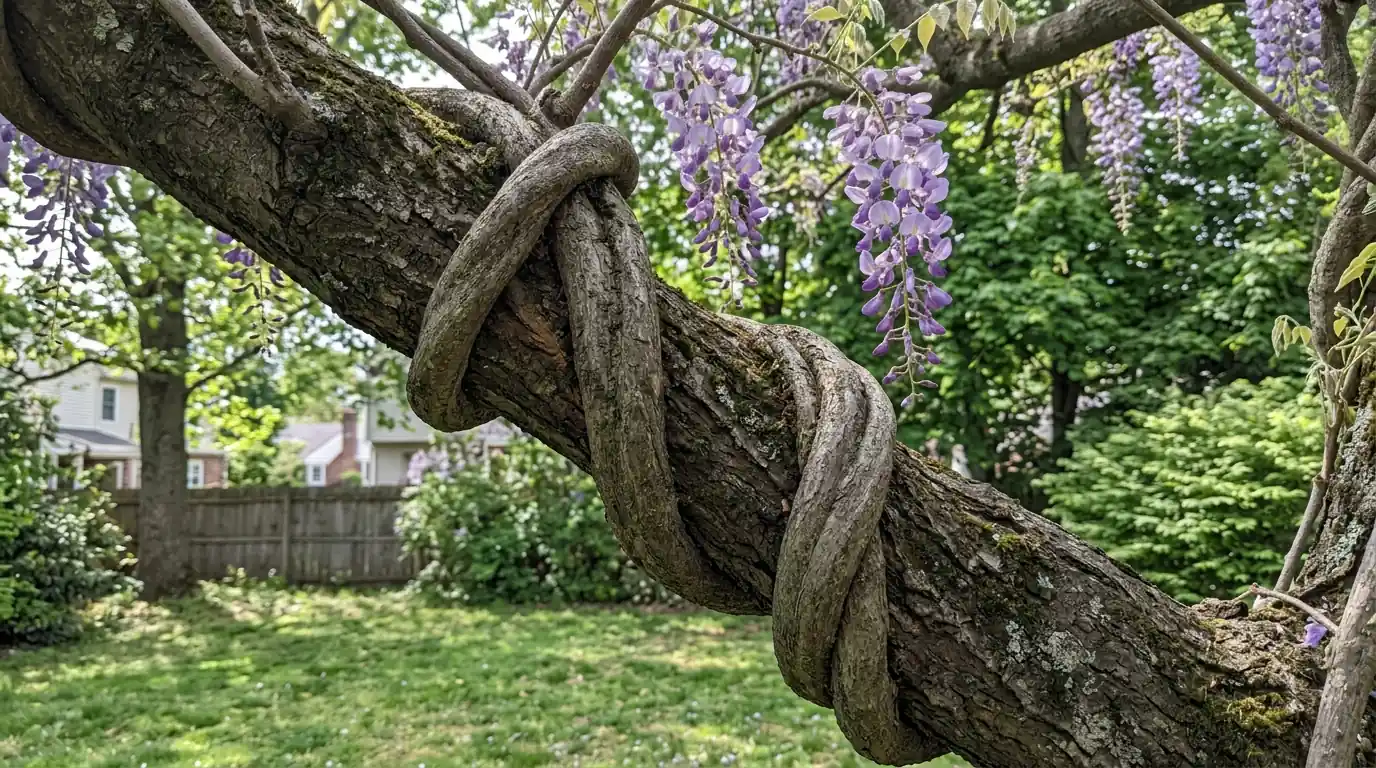
Twining vines are worse. Wisteria and oriental bittersweet wrap around trunks and branches, and as the tree grows the coil tightens and cuts into the bark. Where a vine has hidden decay for years, a walk-around tree inspection after clearing tells you whether the tree is still sound.
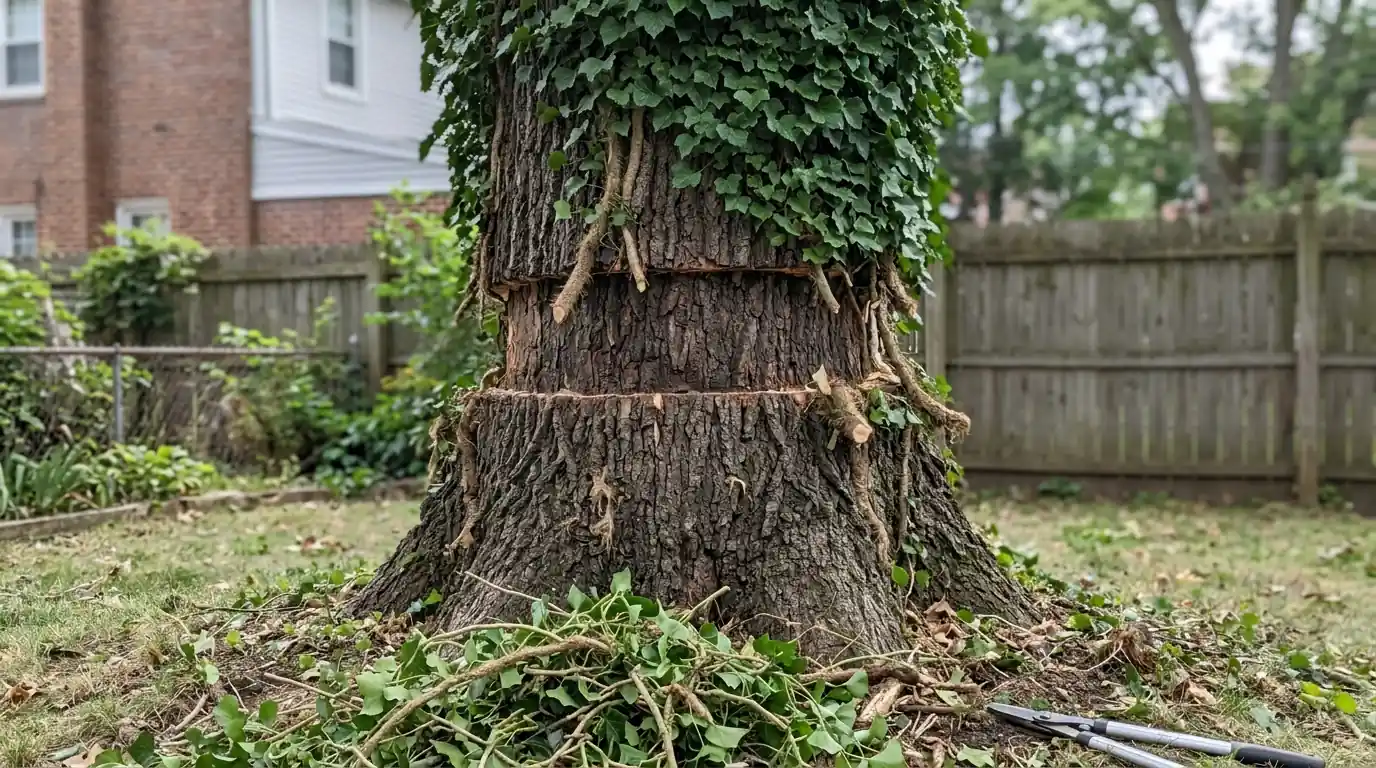
Ivy on tree trunks
Ivy rooted at the base and climbing the trunk is the usual case. We cut every stem at about shoulder height and again at the soil, peel off the section between, and pull ground ivy back so the root flare can breathe. The vines above brown out over a season; anything left hanging over a walk can come out later with a deadwood pruning visit.
Wisteria and bittersweet
These are the vines that strangle. A wisteria trunk can grow thick enough to need a saw, and its coils often bite deep into a branch. We cut each stem at the base, free the coils that are girdling, and treat the stumps, since both resprout hard from roots. Birds keep spreading bittersweet berries, so expect new seedlings for a few seasons.
Vines on fences and walls
On a fence, vines add weight that leans posts and rusts mesh. On brick, rootlets work into old mortar, and ripping a live vine off can take the pointing with it. We cut wall ivy at the base and let it dry for several weeks before pulling. Thick growth tangled with saplings along a fence is handled as overgrowth clearing.
Signs vines are hurting a tree
- Green leaves in winter
A deciduous tree that looks leafy in January is carrying ivy in its crown.
- Vines as thick as your wrist
Woody stems that size have climbed for years and carry real weight.
- Bark hidden at the base
You cannot see the root flare or lower trunk through the leaves.
- Spiral grooves in the trunk
A twining vine is tightening as the tree grows.
- Thinning canopy above the vines
The tree's own leaves are sparse where ivy took the light.
- Orange berries or purple flowers up high
Bittersweet or wisteria has reached the crown.
Why ivy spreads so easily in the city
Philadelphia is built close together, and vines take advantage of it. Brick rowhome walls, shared fences and back alleys connect one property to the next, so ivy rooted in a neglected yard can climb a shared wall or creep under a fence into a tree you thought was clear. Birds carry bittersweet seed from overgrown lots into every hedge they perch in. On old brick with soft mortar, ivy goes up far more easily than it comes off, so wall vines here should be cut and left to dry before anyone pulls them.
How we take vines off a tree
Tell us what is climbing
Which vine, which trees, and how high it reaches.
Look at the tree underneath
Bark, lean and decay checked as the base is uncovered.
Cut at two heights
Every stem severed at shoulder height and at the ground.
Clear the root flare
Lower vines peeled off, ground ivy pulled back.
Free girdling coils
Twining stems cut where they bite into wood.
Treat resprouting stumps
Wisteria and bittersweet cut ends treated.
Haul the vines
Cut material bagged or chipped and taken away.
Removing ivy yourself versus calling us
Ivy on a single small trunk is a fair weekend job. Bigger vines, ladders and poison ivy mixed in change that.
| Doing it yourself | Having us do it | |
|---|---|---|
| Cutting the base | Loppers and a pruning saw handle ivy; a wrist-thick wisteria needs more | Saws sized to the vine, with cuts kept off the bark |
| Vines in the crown | Pulling them down tears bark and can drop dead wood on you | We leave them to die and cut out only what hangs over people or roofs |
| Poison ivy | Its hairy vines look like other ivy and the oil causes a rash for days | Spotted before cutting and handled without bare skin |
| Regrowth | Cut wisteria and bittersweet resprout from roots within weeks | Cut stumps treated and checked on a later visit |
What vine removal costs
Vine work is priced by the time it takes. The published Philadelphia crew rate below is a fair yardstick for planning.
- 01
How many trees. One ivy-covered maple is a short visit; a fence-line row is a day.
- 02
Vine type and thickness. Ivy cuts with loppers; an old wisteria trunk takes a saw.
- 03
Girdling coils. Freeing a vine grown into the bark is slow, careful work.
- 04
Walls and fences. Vines on brick or in chain-link add time beyond the trees.
- 05
Debris volume. Years of ivy make a large pile, and hauling it counts.
| Job | Published range | Source |
|---|---|---|
| Tree crew, Philadelphia hourly | $240 to $310 per hour | HomeBlue, 2025 |
Planning numbers from published surveys, not our prices. We price after seeing the tree.
Ivy and vine questions
Not directly, but it weakens them. Ivy in the crown shades the tree's leaves, adds weight that snow and wind exploit, and hides decay at the base.
No. Cut the vines at the base and leave the upper growth to die. Pulling live vines out of the crown strips bark and can bring dead branches down.
The leaves usually brown within a few weeks to a couple of months after the stems are cut. The dead vines loosen and fall over the next year or two.
Ground ivy regrows from roots and runners, which is why we clear a ring around the trunk. Pull new shoots before they reach the bark again.
On sound mortar it does less harm, but on old soft mortar the rootlets work into joints. Removing it means cutting it at the base and waiting before pulling.
Related yard and tree work
Brush & Overgrowth Clearing
Overgrown yards, fence lines and alleys cut back and hauled out.
Tree Inspection & Risk Assessment
A walk-around look at decay, cracks, lean and roots, with a straight answer on what needs doing.
Deadwood Removal
Dead branches cut out of the crown before they drop on someone.
Hedge & Shrub Trimming
Hedges, screens and overgrown shrubs cut back to clean, even lines.
Vines taking over a tree you like?
Call and describe what is climbing. We will cut it free, clear the trunk and let you see the tree again.