Quick answer
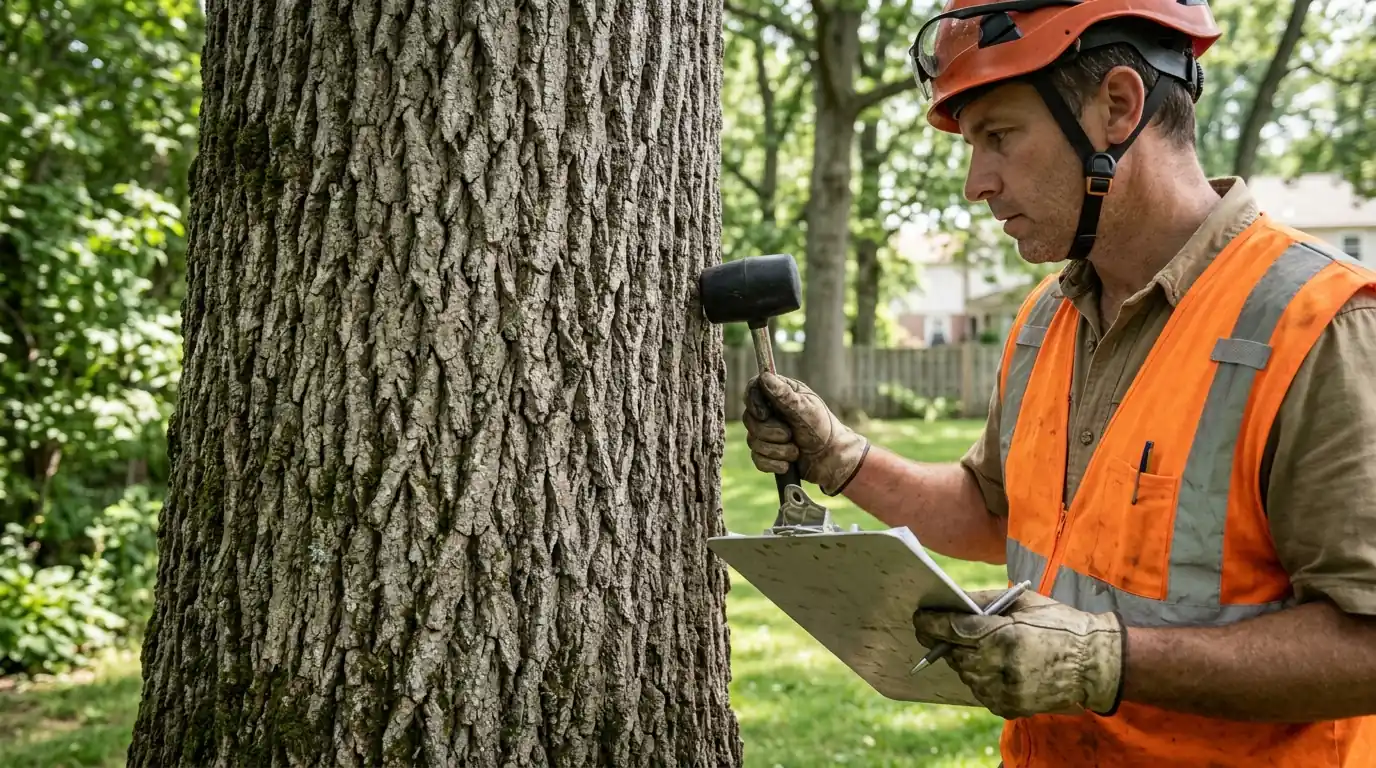
A tree inspection is a visual check of the roots, trunk and crown for the defects that make trees fail. HomeAdvisor puts a general inspection at $75 to $150 nationally, with formal written reports up to $700. It answers two questions: how likely is this tree to fail, and what would it hit if it did?
What a risk check actually looks at
Trees rarely fail without warning. Most breaks trace back to decay, cracks, weak forks, root damage or a lean that changed. A risk check is an organized hunt for those defects, weighed against the target: a tree over a shed and one over a bedroom are different problems.
We start at the root flare, then sound the trunk and scan the crown. Findings turn into options, such as cutting out dead limbs, a cable for a weak fork, or removal. Our article on the signs a tree is getting ready to fail covers what you can spot yourself. If English ivy covers the bark, we may suggest ivy and vine removal before a closer look at the trunk.
What the walk-around covers
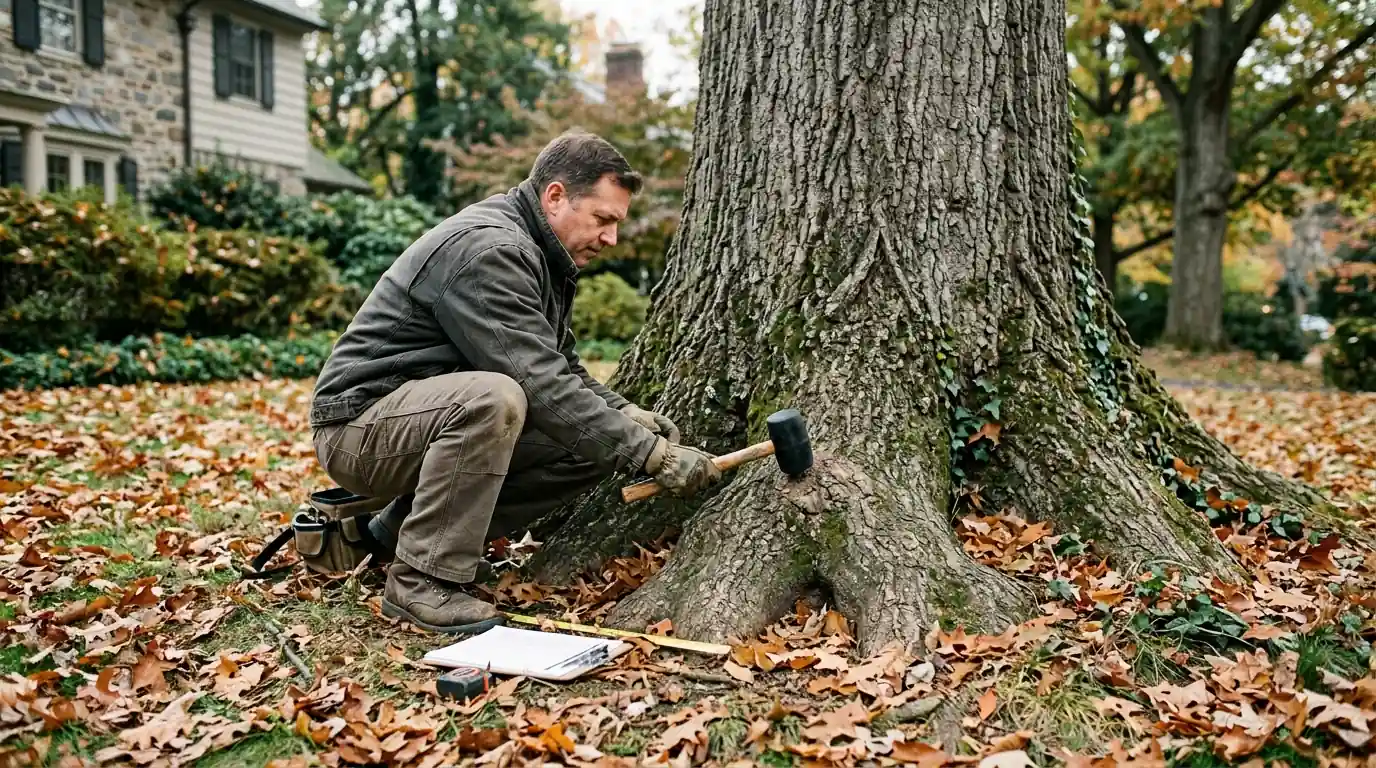
- Root flare checked for fungus, rot and soil cracks
- Girdling or severed roots noted at the base
- Trunk sounded for hollow or soft wood
- Cracks, seams and cavities measured
- Forks checked for included bark and splits
- Crown scanned for dead limbs and hangers
- Lean judged against fresh soil movement
- Targets noted: roof, walks, cars, wires
- A plain list of what to do and how soon
Pre-purchase tree checks
Buying a house with big trees? The home inspector looks at the roof, not the oak hanging over it. A pre-purchase check flags trees that will need removal or heavy pruning soon, so the cost can go into the offer. We look at every tree near the house, garage and driveway, and note which are street trees, since those carry City permit rules.
Storm-risk inspections
Before storm season, or after a close call, owners want to know which trees are likeliest to shed limbs or go over. We focus on what wind exploits: heavy end weight on long limbs, codominant leaders with bark trapped between them, root plates that have shifted, and decay behind old pruning wounds. The answer is usually targeted work on one or two trees, not the whole yard.
Tree health checkups
Thin leaves, early fall color or twig dieback point to stress, disease or root trouble rather than an immediate structural risk. A checkup looks at leaves, bark and soil to sort out which. Some answers are simple, like mulch piled against the trunk; others, like a disease with no cure, change the long-term plan. When compacted soil is the issue, feeding and loosening the root zone may help.
When a tree is worth having checked
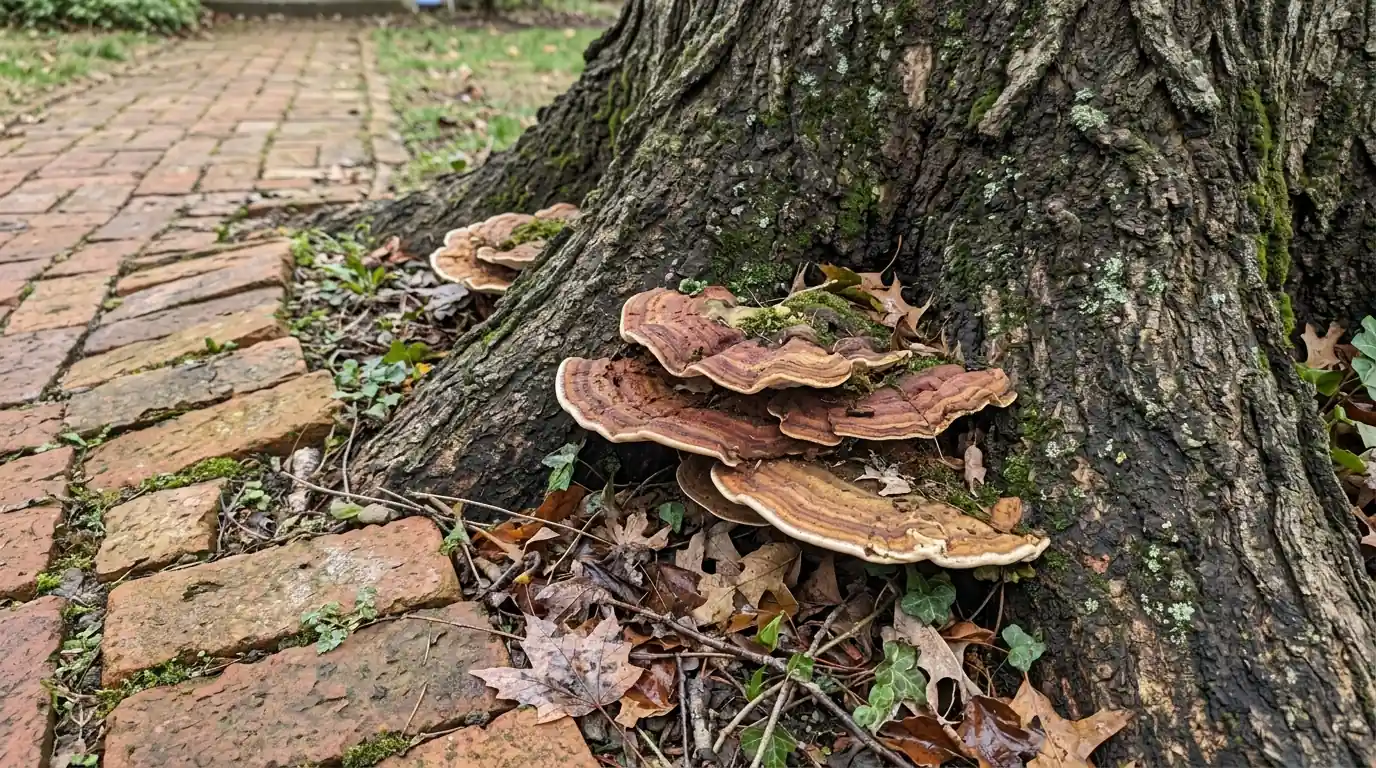
- Mushrooms or conks at the base
Fungal growth on roots or the lower trunk usually means decay inside.
- A crack that was not there last year
A vertical seam or split in the trunk or a main fork.
- A new or changing lean
Especially with soil lifted on the side away from the lean.
- Dead limbs high in the crown
Bare branches above a roof, walk or play area.
- Oak leaves browning from the edges
Scorched margins in late summer, year after year.
- Dark bands between beech leaf veins
Striped leaves, followed by a thinner crown.
Two diseases changing what we look for
Two diseases have shifted how local trees get judged. Beech leaf disease reached Philadelphia in 2022, and in New Jersey it was in 12 of 21 counties by September 2022; dark bands between the leaf veins come first, then crown thinning and branch dieback. In New Jersey oaks, bacterial leaf scorch browns leaf edges from mid-summer into early fall and kills branches back over several years until the tree dies. There is no cure, and the state Forest Service advises pruning well below affected leaves.
How an inspection visit goes
Tell us your worry
Which tree, what you noticed, what sits under it.
Look from a distance
Lean, crown shape and density against its neighbors.
Check the base
Mulch pulled back, flare checked for rot, heave and girdling.
Sound the trunk
Mallet taps and cavity probing to find hollow wood.
Scan the crown
Binoculars on forks, deadwood and hangers.
Weigh the targets
What it would hit and how often people are under it.
Talk it through
Findings on the spot and what we would do first.
What a tree inspection costs
Published inspection fees are modest. What moves them is how many trees and how much detail you need.
- 01
Number of trees. One worrying oak is a short visit; a wooded half-acre is a long walk.
- 02
Size and reach. Tall crowns over roofs take longer to scan from every side.
- 03
Written or verbal. A spoken walk-through costs less than a written report for a buyer or a neighbor dispute.
- 04
Digging at the base. Clearing a buried root flare adds time but often finds the real problem.
- 05
Follow-up work. Pruning or removal is priced separately after the visit.
| Job | Published range | Source |
|---|---|---|
| Arborist tree inspection | $75 to $150 | HomeAdvisor, 2026 |
Planning numbers from published surveys, not our prices. We price after seeing the tree.
Tree inspection questions
Every few years for a mature tree near the house, and after any storm that drops limbs nearby. Trees with known defects or disease deserve a yearly look.
Often. A mallet reveals hollow sound, and probing cavities shows how much sound wood remains. Unclear cases may need instrument testing, which we would explain first.
If large trees stand near the house, yes. A dying oak or a cracked fork can mean a costly removal soon after closing, and that belongs in the negotiation.
No. Most end with keeping the tree and doing targeted pruning or support. Removal comes up when decay, cracks or disease leave no sound option.
Tell the neighbor in writing and keep a copy. A written inspection gives you something concrete to show them, and branches over your line can be cut back at your expense.
Work that often follows an inspection
Tree Cabling & Bracing
Steel cables and rods that support weak unions in trees worth keeping.
Deep Root Fertilization
Feeding and loosening compacted root zones around stressed city and suburban trees.
Deadwood Removal
Dead branches cut out of the crown before they drop on someone.
Dead Tree Removal
Brittle dead wood taken down from a lift or by rope instead of climbing it.
Not sure about a tree?
Call and tell us what you have noticed. We will come walk it and give you a straight answer on whether it needs anything.