Quick answer
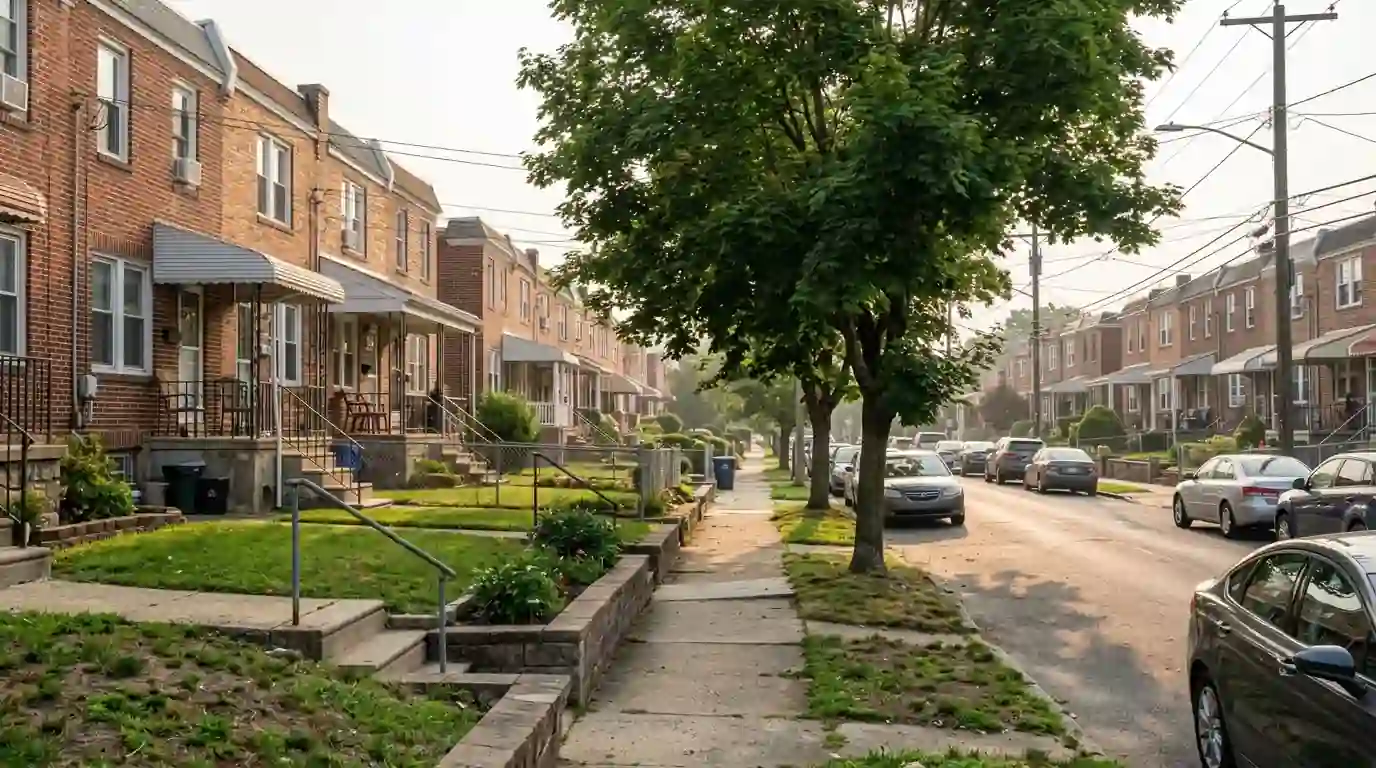
Yes. We work all over Rhawnhurst, from the blocks near Cottman Avenue up to the Pennypack Park edge. Most jobs are on twins and ranchers built after the war: a yard tree crowding a roofline, a tree on the line between two halves of a twin, or street-tree roots lifting the sidewalk out front. Phones are answered 24/7.
Farmland in 1940, twins and ranchers by 1960
As late as 1940, the land between Pennypack Park and Cottman Avenue west of Roosevelt Boulevard was unsubdivided farmland. Houses came after the war and kept coming into the 1960s; Rhawnhurst Elementary opened in 1948 and Farrell Elementary in 1959. Most of what went up were twins, with some ranchers and duplexes, many by the local builder A.P. Orleans, and the shopping streets grew along Castor, Bustleton and Cottman avenues.
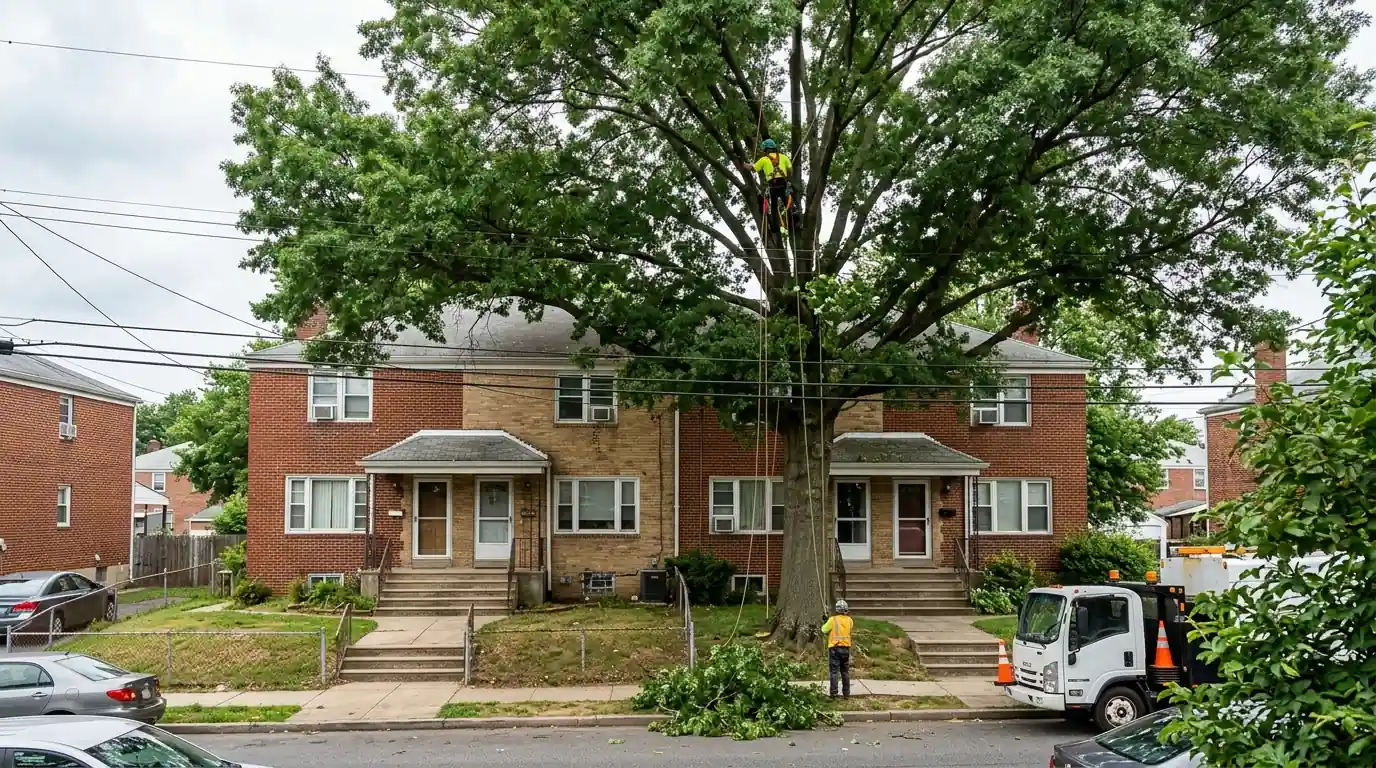
That makes Rhawnhurst young by city standards. About 40.3 percent of Philadelphia's homes were built before 1940, and almost none of Rhawnhurst's were. Its tree problems are a generation's worth of growth rather than a century's: a shade tree planted in the 1950s is now full size beside a house that was never planned around it. The crown spreads across both roofs of a twin and the roots reach the foundation. Much of that can be fixed with crown reduction instead of a removal.
Jobs we see on Rhawnhurst streets
Sixty-year-old trees on lots built for young ones drive most of the work in Rhawnhurst.
- Crown ReductionShortening a big crown that now spreads over both halves of a postwar twin, without taking the tree.
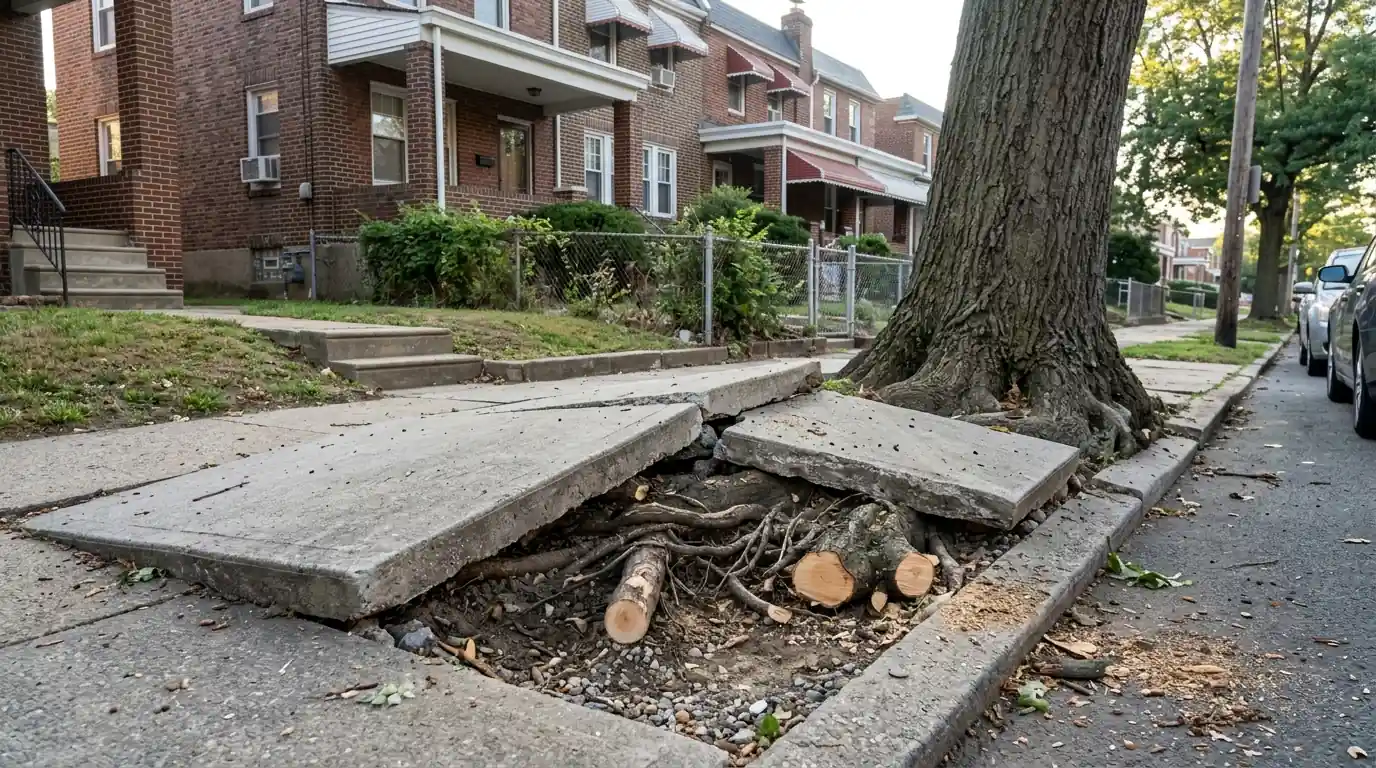
- Root PruningCutting street-tree roots cleanly so a lifted sidewalk slab can be relaid in front of the house.
- Tree RemovalA yard tree that has outgrown a rancher or duplex lot, taken down in pieces.
- Roof & House Clearance TrimmingLimbs off gutters and shingles on the house side of a tree that leans toward the light.
- Stump GrindingThe stump ground out after a removal so the small front or back yard can be used again.
Park-side blocks by Pennypack and Bradford Park
Pennypack Park, counted among the largest urban parks in the country, forms Rhawnhurst's northern edge along the creek. Bradford Park, a much smaller green space, sits near the Roosevelt Mall.
Trees at a woodland edge lean toward the light, which on the park-side blocks means toward the houses. Over sixty years that adds weight over back yards and garages. Thinning the heavy side, or removing a tree that has gone past saving, is the usual fix, and a dead tree at the park edge is worth dealing with before it drops on its own.
Sidewalk slabs and street-tree roots
In Philadelphia, keeping the sidewalk in front of your house safe is your job, with no exception for damage from street tree roots. If the tree is healthy, it stays, and the repair has to be done without harming its roots. If Parks and Recreation judges it unhealthy, you can wait for the city to remove it or hire an approved contractor to do it sooner.
On a postwar block, a street tree planted when the houses were new can be lifting the slab by now. Careful root pruning lets the concrete be relaid without killing the tree. Our street tree permit guide covers the city side of that job.
Rhawnhurst tree questions
You do, as the owner. A healthy tree has to stay, so the slab is relaid around careful root pruning. If the city rules the tree unhealthy, removal can come first.
Usually, if it is sound. A crown reduction shortens the longest limbs back to smaller side branches, which takes weight off the roof side while the tree keeps growing.
Yes. We prune limbs reaching into yards from the park side and remove trees standing on your property near the woods. Trees standing in the park itself are the city's.
Not by age alone. A long-lived tree of sixty can have a century left, while a short-lived one the same age may be failing. We judge by condition: dead tops, cracks and decay.
Around Rhawnhurst
Tree outgrowing your Rhawnhurst lot?
Call and describe it. We will tell you whether it can be cut back or has to come down, and price it before any work starts.