Quick answer
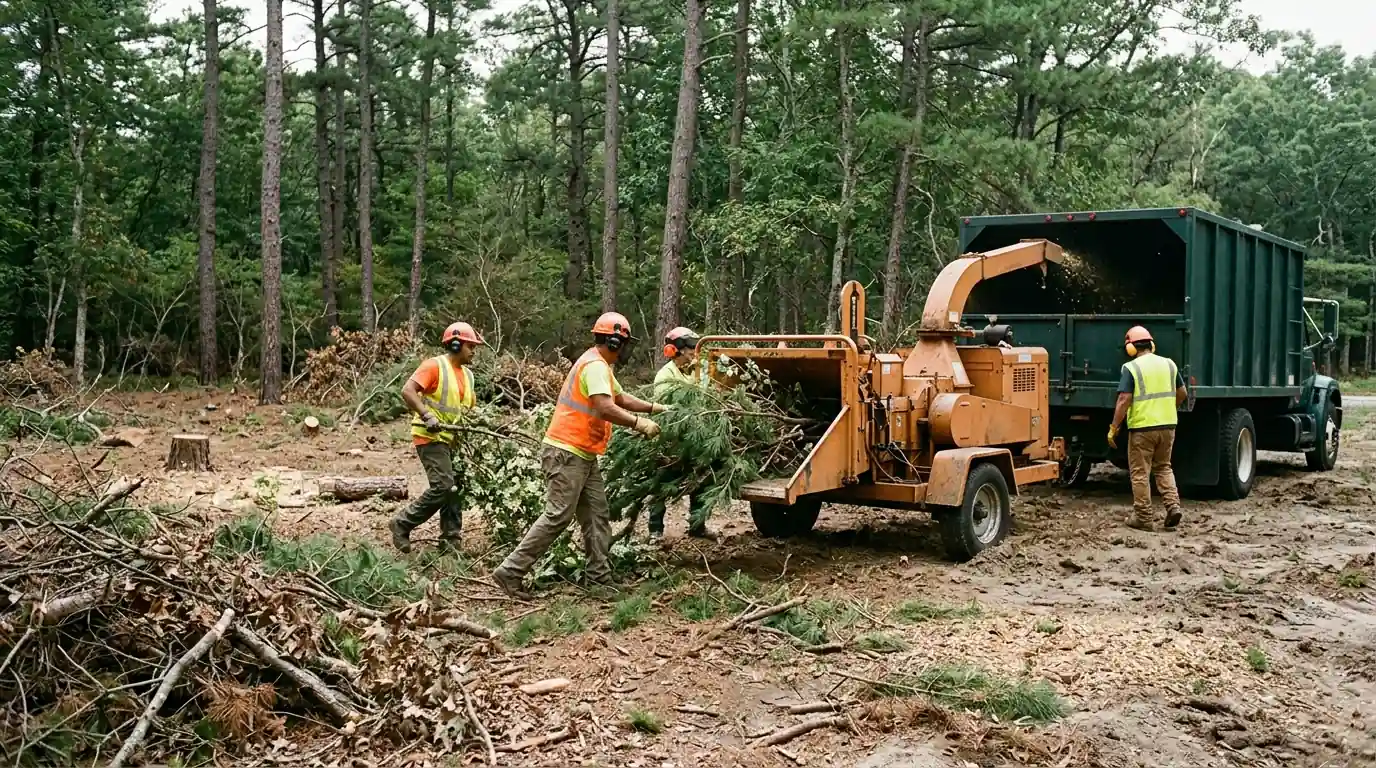
Commercial tree work is priced per job or per visit, with each tree scoped in writing so a board or owner can approve it. Published figures put tree trimming at about $430 to $640 per tree nationally and Philadelphia removals at $500 to $2,200. Grouping trees into one visit lowers the per-tree cost.
Tree work when the property is shared
On a single-family lot, one person decides and one household moves the car. On an HOA common, a church lot or a school campus, the same pruning job touches parking, foot traffic, residents who want a say, and sometimes a public right-of-way. Most of the work is scheduling and communication before a saw starts.
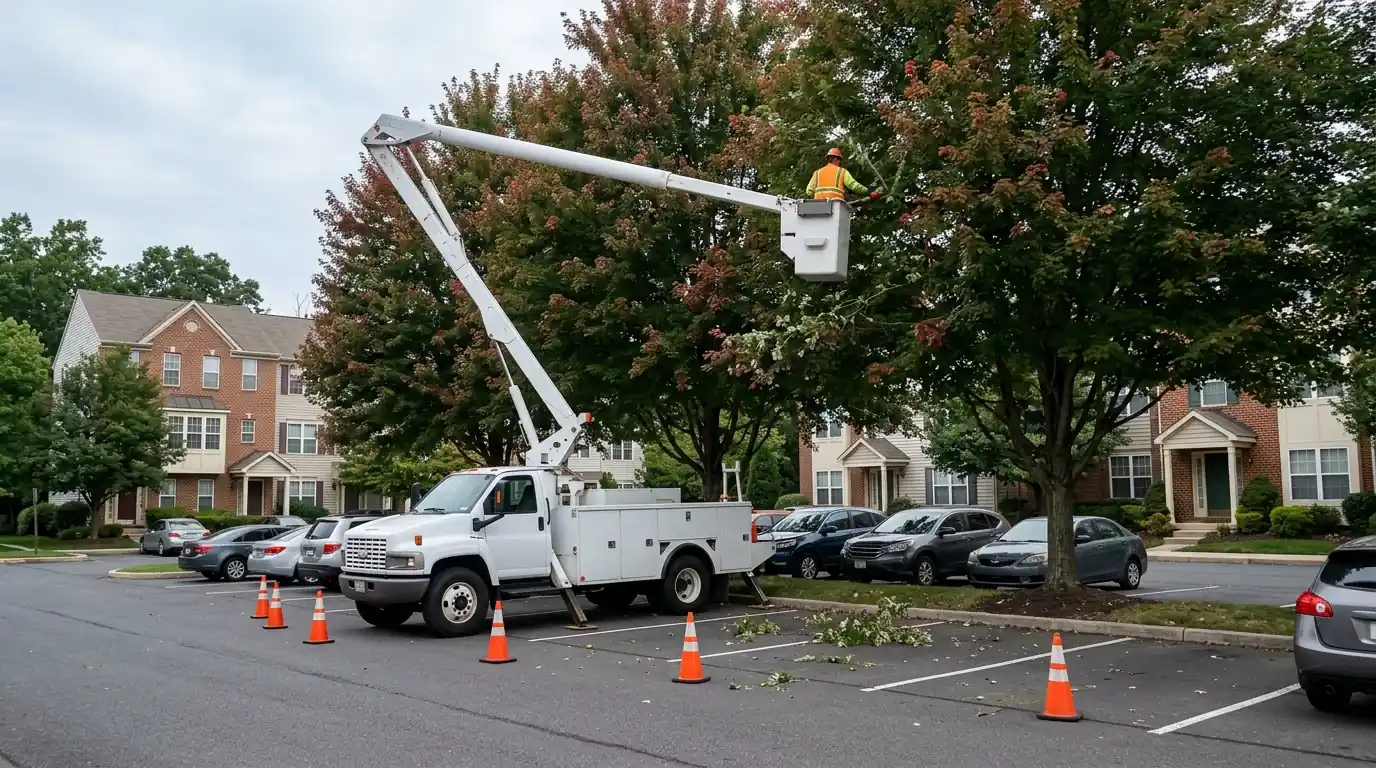
The trees themselves are often the same mix: parking-lot maples lifting curbs, Callery pears splitting along entrance drives, mature oaks over playgrounds and walkways. A walk-through with a written list of what each tree needs lets you budget a year ahead rather than react after a storm. Trees that worry you can get a hazard check before the board meets.
How commercial tree work is priced
Every property is scoped tree by tree. These published ranges help with budgeting; the factors below move a job inside them.
- 01
Number of trees per visit. Twenty trees pruned on one visit costs far less per tree than three visits for a few each.
- 02
Working hours. Jobs around a school day, a Sunday service or full parking lots may need early or split scheduling.
- 03
Traffic and parking control. Coning off lot sections, moving tenants' cars or flagging a drive adds setup time.
- 04
Permits and right-of-way trees. Trees in a township strip may need a permit before anyone can prune or remove them.
- 05
Debris handling. Chips spread in beds on site cost less than hauling every load off the property.
| Job | Published range | Source |
|---|---|---|
| Tree trimming, per tree | $430 to $640 | LawnStarter, 2026 |
| Tree removal, Philadelphia | $500 to $2,200 | HomeBlue, 2025 |
| Arborist tree inspection | $75 to $150 | HomeAdvisor, 2026 |
| Tree crew, Philadelphia hourly | $240 to $310 per hour | HomeBlue, 2025 |
Planning numbers from published surveys, not our prices. We price after seeing the tree.
HOAs and townhome communities
Townhome communities tend to have rows of one species planted together, so they age, crowd and fail together. We walk the common areas, list each tree with the work it needs, and price it so the board can approve phases across budget years. Notices go out ahead of time, and cars move section by section. Overgrown buffer strips can be cut back on the same visit with brush and overgrowth clearing.
Property managers and landlords
For a manager, a tree problem is usually a tenant call: a limb on a car, branches on a roof, roots in the walk. Phones here are answered 24/7, so the first call can happen whenever the tenant reports it. Planned work across several buildings can be grouped by area to save setup time. Limbs over rental roofs are a common item, covered on our page about cutting branches back from roofs.
Churches, schools and campuses
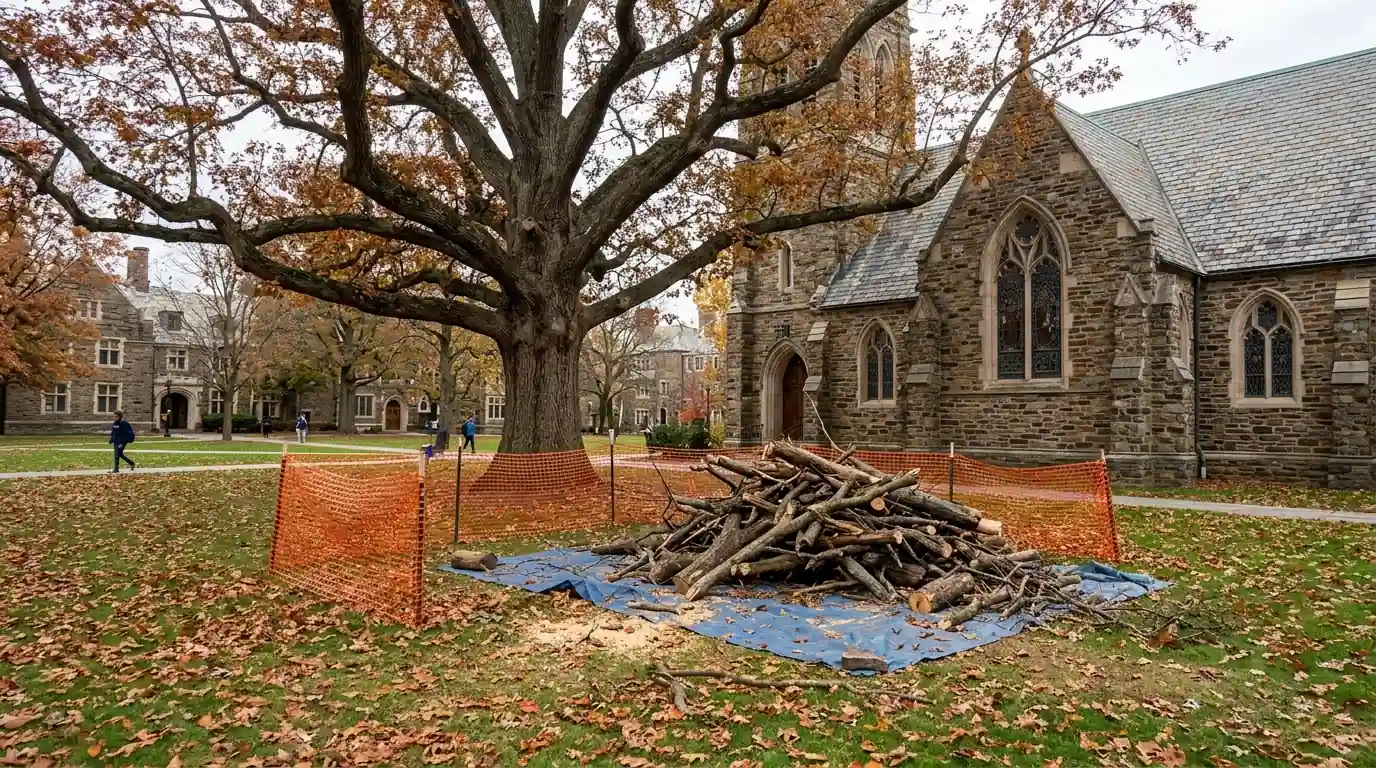
Institutions have the oldest and biggest trees, and the most people walking under them. Work gets scheduled around services, school hours, weddings and events, with drop zones fenced off from walkways. Deadwood over playgrounds and paths is usually the first priority. A large campus tree that has to come out near buildings may need a crane removal scheduled on a quiet day.
What a commercial tree visit from us includes
- A walk of the grounds with you or your manager
- A written, tree-by-tree scope you can take to a board
- Permit checks for right-of-way and township trees
- Resident, tenant or staff notice dates agreed in advance
- Work timed around parking, services or class schedules
- Drop zones coned or fenced away from foot traffic
- Pruning, removals and stump grinding as approved
- Chips spread in beds or hauled, walks and lots blown clean
- Notes on trees to watch at the next visit
Township tree rules that affect larger properties
Two South Jersey towns show why commercial grounds need a permit check. In Cherry Hill, removing, or trimming more than 30 percent of, any tree 5 inches or more in diameter at breast height needs a township permit, healthy or dead, and extra healthy trees removed need a one-for-one replacement or a $175 payment to the Cherry Hill Tree Fund in Camden County. In Moorestown, trees in the strip between sidewalk and road have been township trees since a 2018 ordinance, more than 6,200 of them, and removing, trimming or disturbing one without a Public Works permit can bring fines, fees and replacement costs.
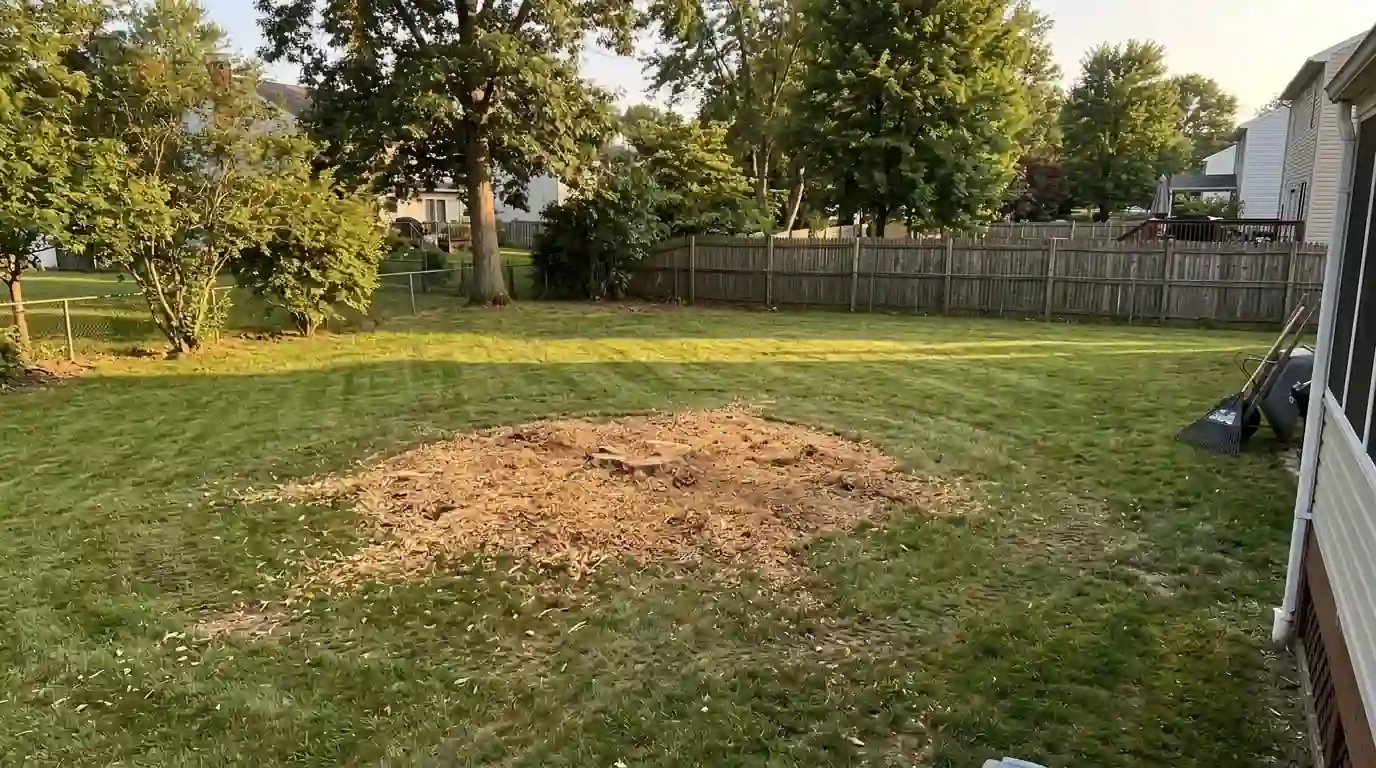
The finish we work toward: lot reopened, walks blown off, chips in the beds.
Call (916) 312-2373How a commercial job goes from walk-through to cleanup
Call with the property
Address, type of site, the trees that concern you and who approves work.
Walk the grounds
Every tree in scope looked at and noted with what it needs.
Written scope
Tree-by-tree list and price, phased if the budget needs it.
Permits and notices
Township permits booked, residents or staff told the dates.
Set up the site
Cones, parking moved and drop zones fenced from walkways.
Do the work
Pruning and removals in the agreed order, section by section.
Hand back the grounds
Chips handled, lots and walks clean, notes for next time.
Questions from boards, managers and facilities staff
Yes. We rank each tree by urgency in the written scope, so hazards come first and routine pruning can be spread over later seasons as the budget allows.
Yes. We schedule around drop-off, dismissal, services and events, and fence drop zones away from paths so the grounds stay usable.
Usually the board or manager sends the notice, and we supply the dates, the areas affected and when cars need to be moved.
It depends on the town. Some South Jersey and Pennsylvania townships treat right-of-way strip trees as public trees that need a permit before any pruning or removal.
Yes. Tell us the addresses and we group the work by area, which cuts setup time and keeps one scope for all of them.
Services commercial grounds use most
Tree Trimming
Cleaning, thinning and shaping that keeps a shade tree healthy and out of the way.
Deadwood Removal
Dead branches cut out of the crown before they drop on someone.
Lot & Land Clearing
Wooded lots and overgrown ground cleared, with the trees you want kept left standing.
Log & Debris Haul-Away
Logs, brush piles and storm debris loaded up and hauled off the property.
Managing trees on shared property?
Call and tell us about the site. We will walk it, give you a tree-by-tree scope to take to your board or owner, and schedule the work around your people.