Quick answer
Root pruning means exposing the roots causing the damage and severing them with a clean saw cut, far enough from the trunk that the tree stays stable. It is billed as crew time, and HomeBlue lists Philadelphia tree crews at $240 to $310 per hour. Cut too close to the trunk and the tree can die or tip.
What cutting roots fixes, and what it cannot
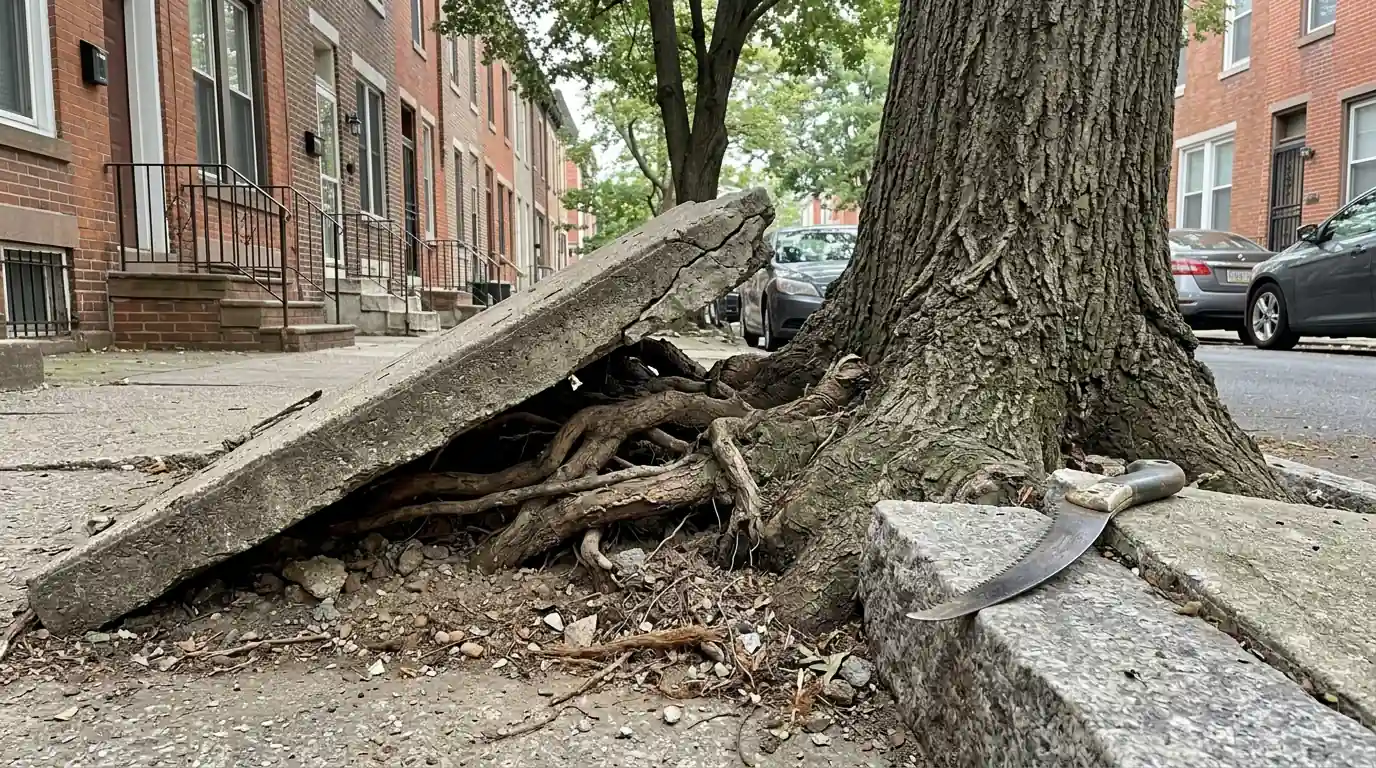
Most roots sit in the top couple of feet of soil and spread past the branch tips. One growing under a slab thickens every year and lifts the concrete. Root pruning removes that section with a clean cut where the tree can spare it, never inside the zone that anchors the trunk.
A saw cut seals over and sprouts fine roots behind it; a root torn by a backhoe bucket decays back toward the trunk. Pruning buys space, not permanent peace, because cut roots regrow. When too much would have to go, taking the street tree out or digging the stump and roots may be the honest answer. After roots are cut, soil decompaction and root feeding can help the tree recover.
What root pruning costs
No survey publishes a root-pruning range, so crew time is the honest measure. These five things set the hours.
- 01
Length of the cut line. Six feet of sidewalk is a short job; a whole foundation wall is several hours.
- 02
Root size. Thin roots cut in seconds; forearm-thick anchoring roots need careful sawing and a judgment call.
- 03
How roots are exposed. Hand digging around pipes takes longer than trenching open lawn.
- 04
Concrete in the way. If the old slab is still down, it has to be broken and lifted first.
- 05
Permit and barrier. Street-tree work needs a Parks and Recreation permit, and a root barrier adds material.
| Job | Published range | Source |
|---|---|---|
| Tree crew, Philadelphia hourly | $240 to $310 per hour | HomeBlue, 2025 |
Planning numbers from published surveys, not our prices. We price after seeing the tree.
Cutting roots yourself or having us do it
| Doing it yourself | Having us do it | |
|---|---|---|
| Picking the roots | Easy to cut the one in the way, even if the tree needs it | Cut points chosen by size and distance from the trunk |
| The cut | An axe or spade crushes and tears, inviting decay | Clean saw cuts that seal and regrow fine roots |
| Buried lines | Gas and water laterals often share the trench | 811 marks first, then hand digging around them |
| Tree stability | Severing an anchor root can leave the tree free to tip | We say so if a cut would weaken the anchor |
| Street trees | Roots of a street tree fall under City permit rules | Permit step handled before we dig |
Roots lifting sidewalks
The slab out front has a lip someone will trip on, and the tree beside it is the obvious cause. We work alongside whoever sets the new concrete: they lift the old slab, we expose the roots and cut only those above the new base depth. The tree keeps the roots running deeper or sideways. Our explainer on the street tree permit covers the paperwork side.
Roots near foundations
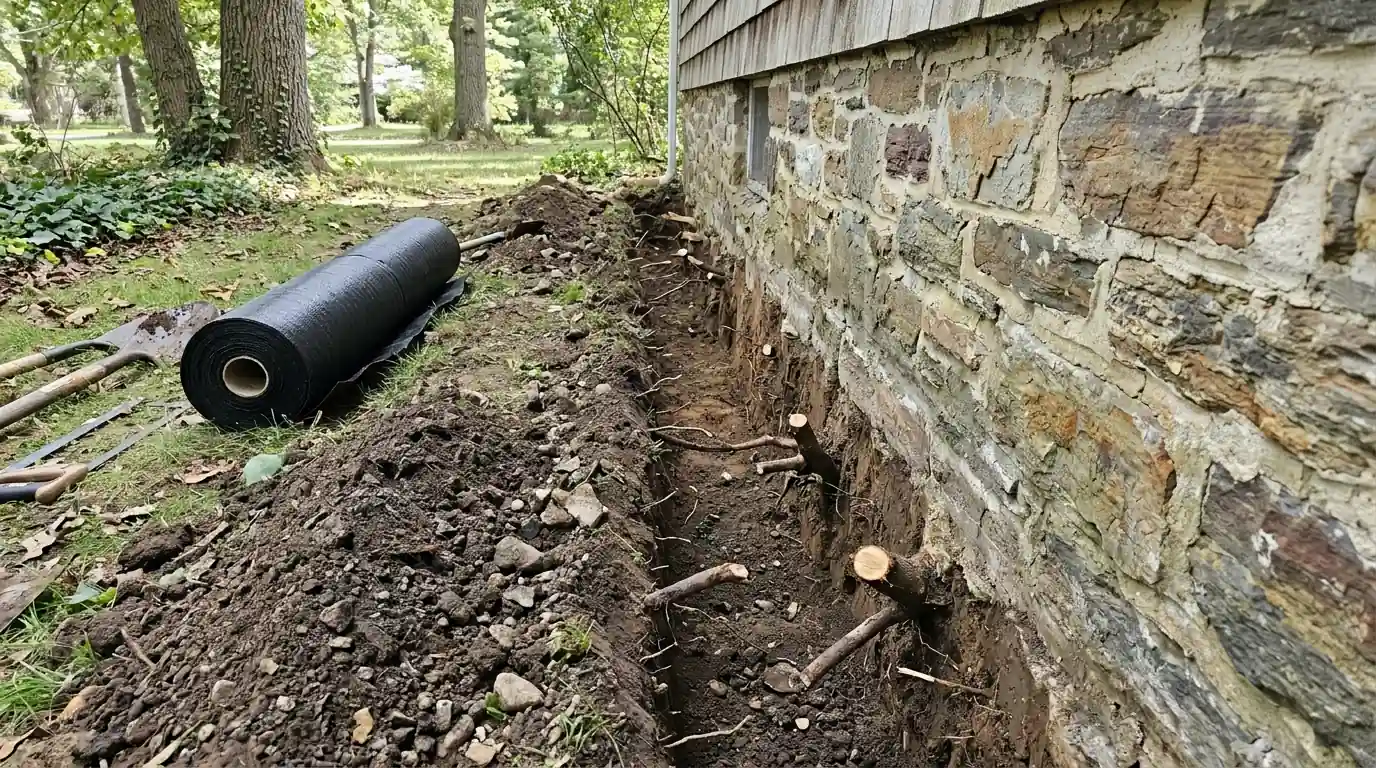
Roots seldom break a sound foundation, but they will work into an existing crack, and a thirsty tree can dry clay under a footing in August. With a big tree a few feet from the wall, we dig a narrow trench along the foundation, cut the roots heading toward it, and can set a barrier before backfilling. Old rubble foundations get extra care, since disturbing them causes its own trouble.
Root pruning before hardscape work
Planning a driveway, patio or retaining wall inside a tree's root zone? Severing roots cleanly before the excavator arrives does far less harm than letting a machine rip them. We mark the dig line, hand-expose the roots along it and saw them at that line. Pair it with tree protection during construction when the project runs for weeks.
The sidewalk rule every Philadelphia owner inherits
In Philadelphia the sidewalk in front of your property is yours to keep safe, and the City makes no exception when street tree roots did the damage. A healthy street tree has to stay, so the repair must be done without harming its roots, which is exactly where careful root pruning comes in. Any contractor working on a street tree also needs a tree work permit from Parks and Recreation Street Tree Management first, so we line that up before the slab comes up.
How a root pruning job runs
Trace the damage
Lifted concrete or a crack followed back to the tree feeding it.
Permit and locates
Street-tree permit for city trees, 811 marks before digging.
Coordinate the slab
Your mason lifts the old concrete, and we time our visit to theirs.
Expose the roots
Hand tools clear soil without crushing bark.
Choose cut points
Roots sized up and cut only where the tree can spare them.
Saw clean
Pruning-saw cuts, with frayed ends trimmed back.
Barrier and backfill
Root barrier set if wanted, soil returned for the new base.
Signs roots are behind the damage
- Slabs tipped up toward the tree
One edge higher than its neighbor, the high side nearest the trunk.
- A root ridge in the lawn
A raised line running from the trunk toward the walk or house.
- Cracks in a garden wall or step
Masonry splitting along a line that points back to the tree.
- Pavers rocking near the trunk
Patio units shifting where roots pushed into the setting bed.
- Roots climbing the curb
Thick roots growing over the curb or into the gutter line.
- A trunk flare swallowing the walk
The base swelling onto the concrete edge as the tree grows.
Root pruning questions
Not if the cuts stay well away from the trunk and take a modest share of the roots. Cutting close in, or on several sides at once, is what kills trees.
Late fall to early spring, while the tree is dormant and the soil moist. Sidewalk deadlines do not always allow that, and a careful summer cut survives with watering.
Years rather than months, since cut roots regrow slowly. A root barrier, a deeper base and a wider tree pit push that day further out.
Grinding leaves a wound that decays and can still lift paving. A clean cut further back is better for both the tree and the concrete.
In Philadelphia, the property owner does. The repair also has to spare a healthy tree, which is why root pruning is often part of the job.
Related root and stump work
Stump & Root Ball Removal
Digging the stump and main roots out when the spot is getting a slab or a new tree.
Stump Grinding
Stumps ground below grade, the chips raked out or left as mulch.
Street Tree Removal
Sidewalk-strip trees, with the Parks and Recreation permit step sorted before any cut.
Tree Protection During Construction
Fencing root zones and pruning ahead of additions, driveways and sewer work.
Roots wrecking the walk?
Call and describe the damage. We will look at the tree and the concrete and tell you what can be cut and what has to stay.