Quick answer
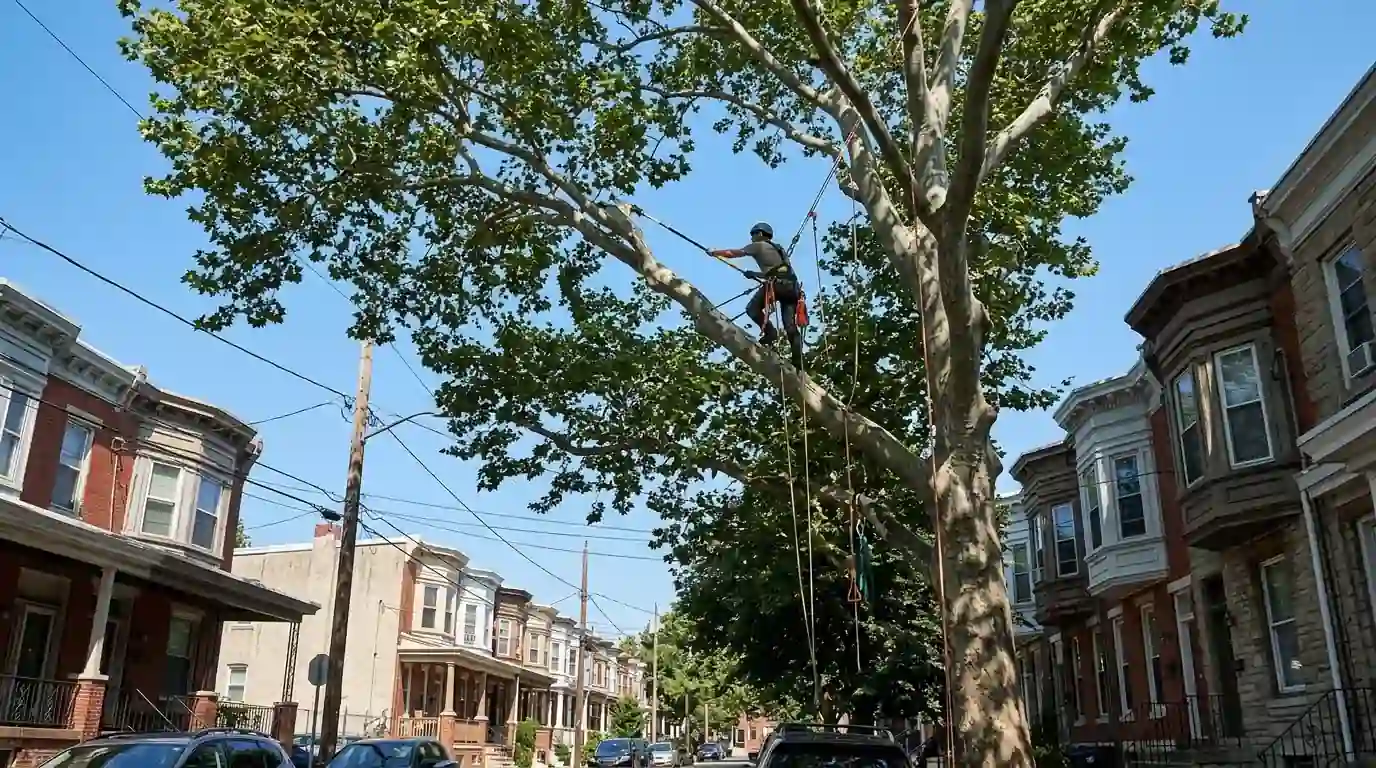
Roof clearance trimming shortens the limbs over and against a house back to side branches, leaving several feet of open air between leaves and shingles. LawnStarter's published average for trimming one tree is $430 to $640. A one-sided clearance on a smaller tree often costs less than that. Doing it before snow and ice season matters most.
What clearing a tree off the house involves
A branch resting on a roof does its damage slowly. It grinds granules off asphalt shingles, cracks slate, pries at flashing and packs the gutters. In a storm it becomes a lever against the rafters.
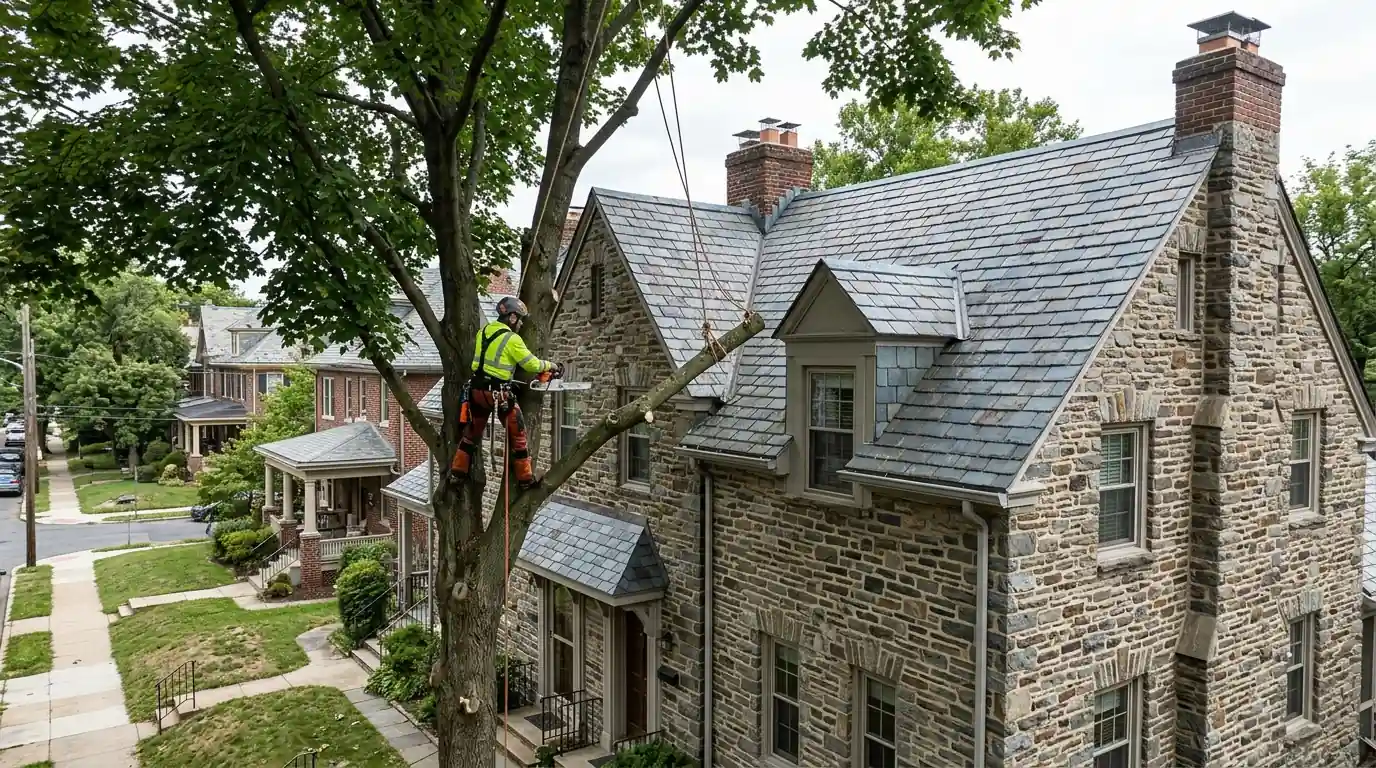
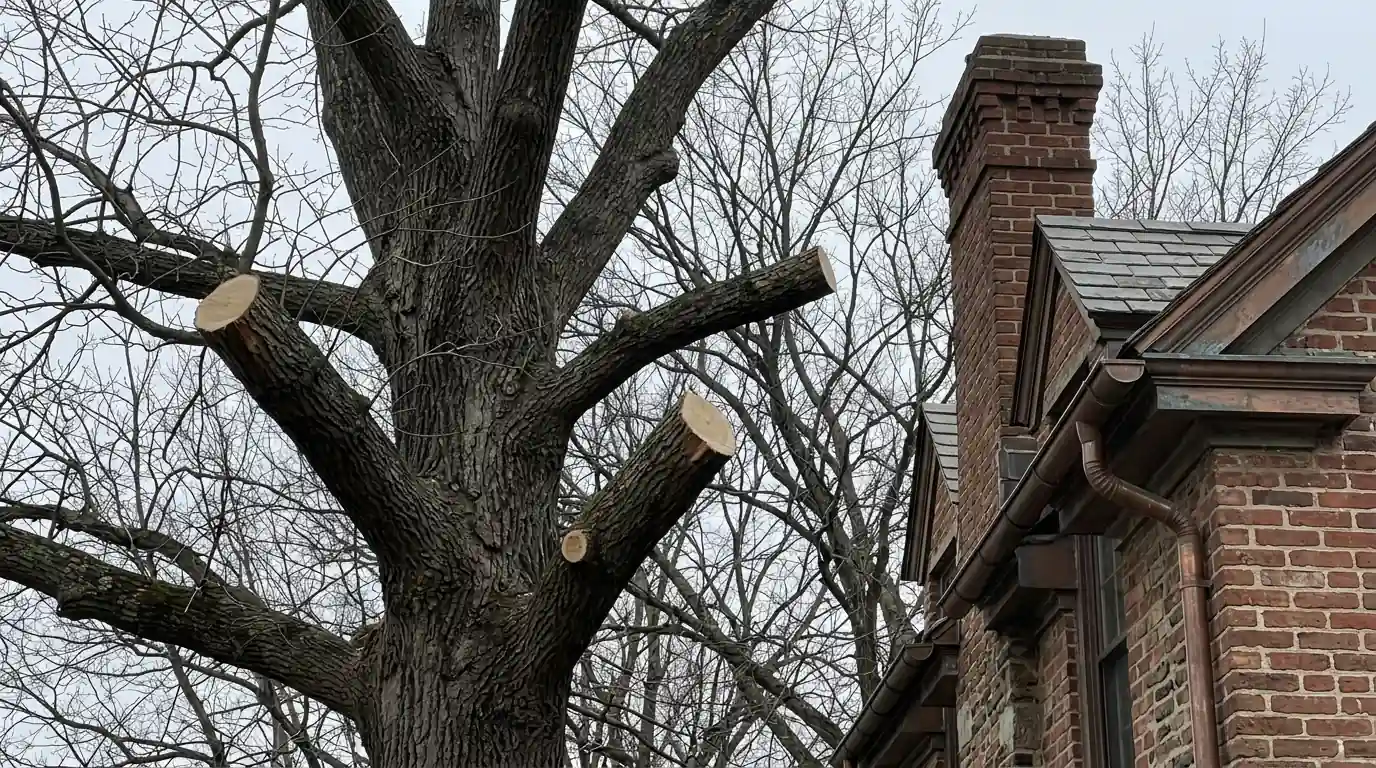
We do not lop the ends off where they touch. A stub cut at the roofline sprouts a bushy tangle that is back on the shingles in two summers. Each limb is shortened to a side branch growing away from the house, which holds clearance for years. If the whole crown leans in, shortening the crown may be the better fix, and a limb that already cracked is a job for hanging limb removal.
What a roof clearance visit covers
- A look at every limb over or within reach of the house
- Limbs shortened to side branches, never stubbed at the roofline
- Heavy pieces roped and lowered clear of the shingles
- Room opened around the chimney top and roof vents
- Branches pulled off siding, windows and soffits
- Limbs near the service wire flagged for a make-safe before cutting
- Twigs from the work picked out of the gutters we can reach
- Brush chipped and hauled away
- A note of any roof or gutter damage we spotted
Limbs rubbing the roof
You hear it before you see it: a scraping on windy nights, then dark streaks where the shingle granules have worn off. On slate, a rubbing limb can crack pieces that later slide into the gutter. We rope the limb, cut it back to a side branch pointing away from the house, and lower it onto the lawn instead of dragging it across the roof. Any damaged shingles we spot get noted for your roofer.
Branches over gutters
Gutters under a canopy fill with leaves in fall, seed in spring and twigs all year, and an overflowing gutter soaks fascia and foundation. Clearance trimming will not keep every leaf out, since leaves blow in from the whole crown. Taking back the limbs directly overhead does cut the load and stops branches dropping straight in.
Limbs touching siding and chimneys
Branches against siding hold moisture on the wall, scuff paint and give ants and squirrels a way in. At a chimney, leaves collect in the cap and around the flashing, and limbs near the flue are a fire worry. We prune back to a clear gap all round. Where a big low limb sweeps the side of the house, lifting the lower crown is often part of the same visit.
Signs a tree is getting too close to the house
- Scraping in the wind
A rhythmic rasp on the roof or siding on gusty nights.
- Worn granules
Dark bare streaks on asphalt shingles right under a branch.
- Gutters full by October
Gutters that overflow every fall and pack with twigs between cleanings.
- Green stains on the wall
Moss or mildew where branches keep siding and shingles shaded and damp.
- Squirrels on the roof
Animals crossing from a limb to the roofline, or chew marks at soffits and vents.
- Leaves in the chimney cap
Twigs and leaves collecting on the cap or the flashing around it.
Old houses and unpredictable winters
About 40.3 percent of Philadelphia's homes were built before 1940, against about 22 percent across the wider region, so many of the roofs we clear trees from sit on older houses. Snow is the other variable. The city measured only 8.1 inches in winter 2024-25, about a third of normal, and the last five winters averaged 11.3 inches, roughly half the long-term average. It does not always stay mild: 2009-10 brought 78.7 inches and 2013-14 brought 68. A limb that clears the roof in a light winter can sag onto it under wet snow, so we leave extra room.
How we pull a tree back from the house
Walk the roofline
We look from the yard and the street at every limb near the house.
Agree on clearance
We show you which limbs go and how far back they come.
Protect below
Tarps over plants, cars moved, ladders kept off the gutters.
Rig over the roof
Ropes set so cut pieces swing away from the house.
Cut to side branches
Each limb is shortened to a branch aimed away from the roof.
Clear what fell
Debris from the cuts is picked off the roof edge and gutters.
Chip and haul
Brush chipped, logs hauled, walks blown clean.
What clearance trimming costs
Trimming surveys give the planning numbers. Where a house job lands depends on these five things.
- 01
How many sides. One limb over the porch is quick; a tree wrapped around two sides of the roof is a full climb.
- 02
Height over the roof. Limbs above a three-story roofline take more rigging than ones over a kitchen addition.
- 03
Roof material. Slate and old tile mean every piece is lowered gently, which takes longer.
- 04
Access. A rear yard with no alley means every armful of brush leaves by hand.
- 05
Wires in the canopy. A service drop running through the limbs may need a utility make-safe first.
| Job | Published range | Source |
|---|---|---|
| Tree trimming, per tree | $430 to $640 | LawnStarter, 2026 |
Planning numbers from published surveys, not our prices. We price after seeing the tree.
Questions about trimming trees off the roof
Several feet of open air is the usual goal, more for fast growers like silver maple. The gap allows for a couple of seasons of growth and for limbs sagging under snow.
Every two to four years for most trees. A fast grower over the roof may need a lighter pass sooner, while slow growers like oak hold clearance longer.
A little, but cutting to side branches keeps the outline natural. If one side ends up badly overweight, we may thin the opposite side lightly to balance it.
For most trees, yes. With the leaves off we can see exactly which limbs reach the roof, and the work is done before snow pushes branches down.
Rarely. The climber works from inside the tree and pieces are rigged so they never land on the shingles. Debris from the cuts is cleared from the edge by ladder.
Other ways we make room around a house
Crown Reduction
Shortening a crown back to healthy side branches instead of topping it.
Crown Raising & Clearance Pruning
Lifting low limbs off sidewalks, driveways, parked cars and the lawn.
Tree Trimming
Cleaning, thinning and shaping that keeps a shade tree healthy and out of the way.
Tree Trimming Near Service Lines
Clearing the wire to your house, with the utility make-safe step booked first.
Branches on your roof?
Call and tell us where they touch. We will show you which limbs come back and how far, and price it before anyone climbs.