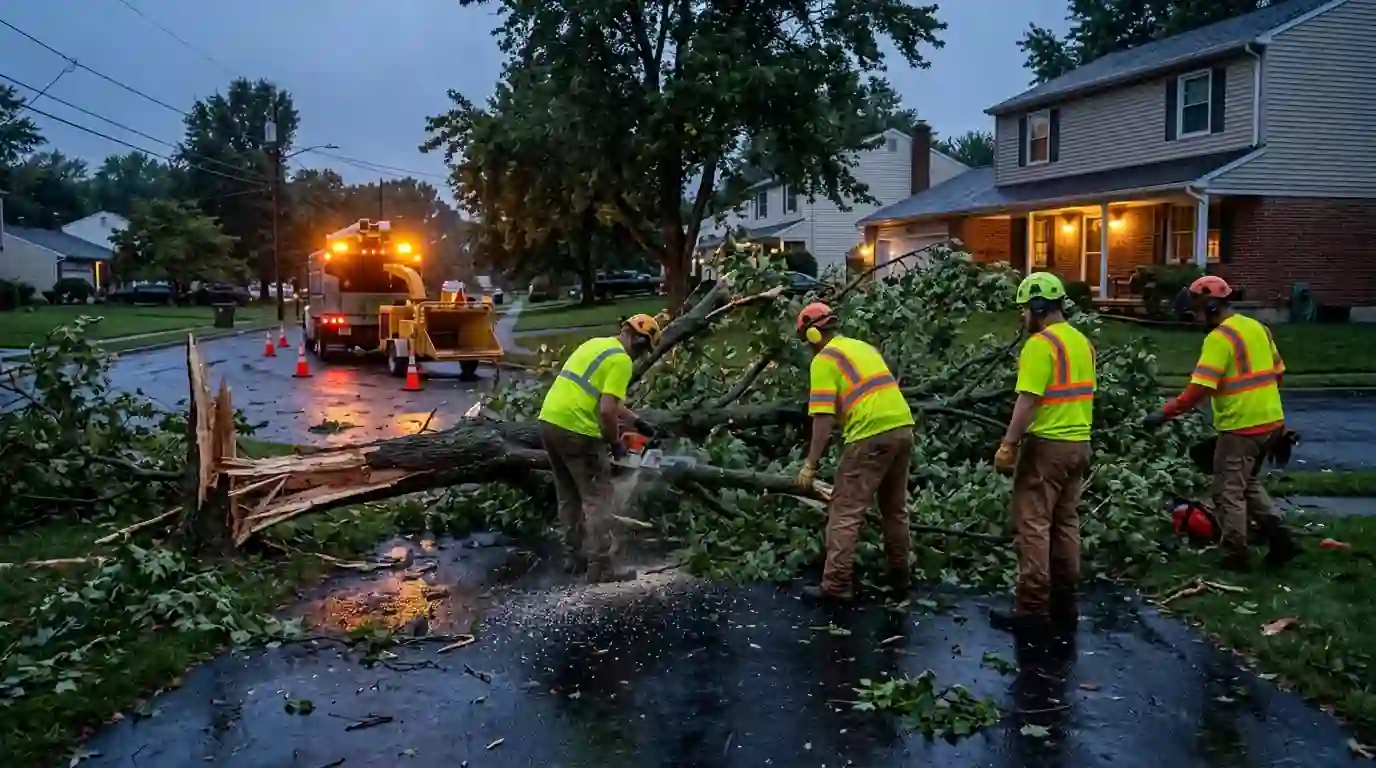
Quick answer
A tree that leans suddenly, with soil heaved or cracked on the side away from the lean, has lost root hold and can fall in the next storm. Keep people away from the side it leans toward and call us any hour. A tree that has leaned the same way for years, with a crown that curves back upright, is usually stable.
Old lean or new lean: the question that decides it
Trees grow toward light, so many lean a little and curve their tops back up to compensate. That kind of lean is old and settled. The worrying kind is new: the trunk is straight but the whole tree is tipped, because roots on the far side have torn or the soil has turned to mud.
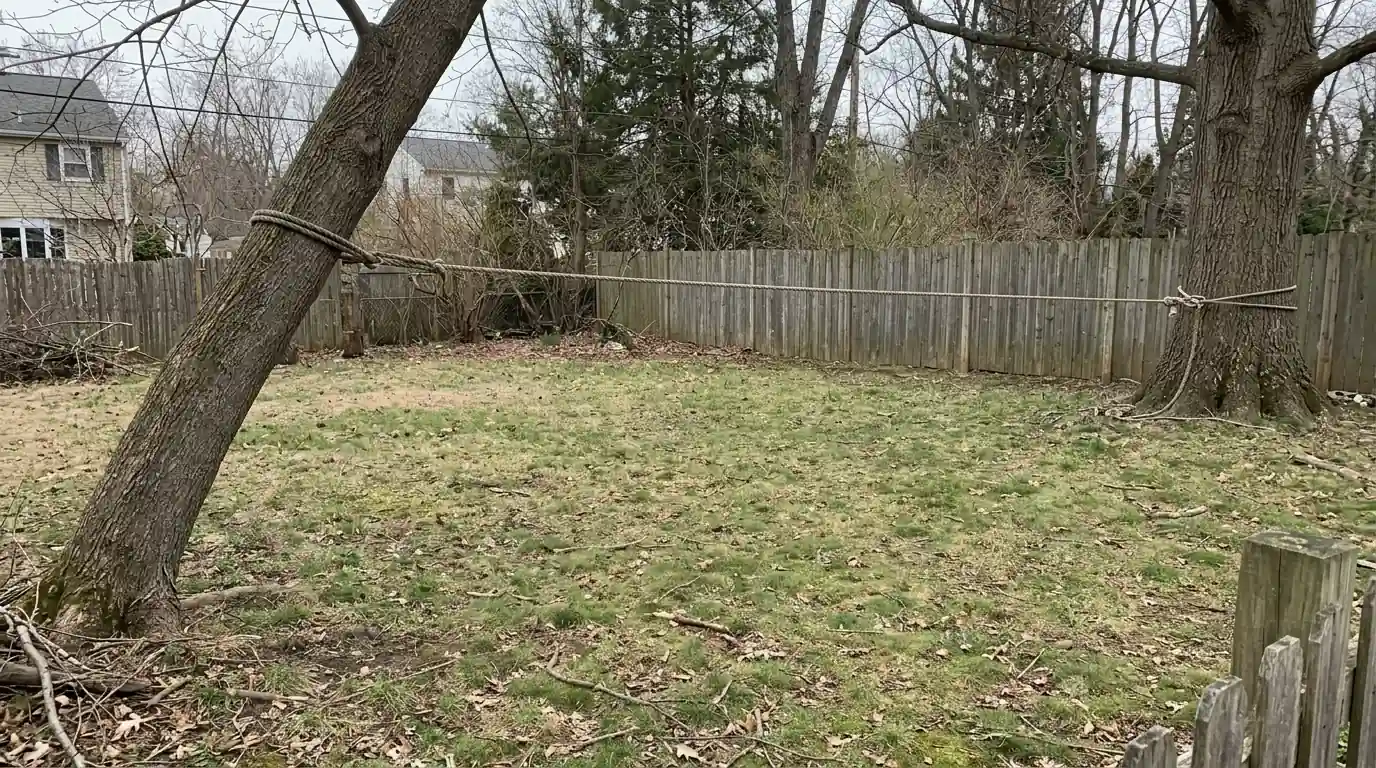
Removing a leaning tree means fighting gravity. We take weight off the heavy side first, tie the trunk back toward the safe side with a pulling line, and cut sections so each one falls or is lowered away from the house. Our guide to the warning signs before a tree fails shows more of what to watch for.
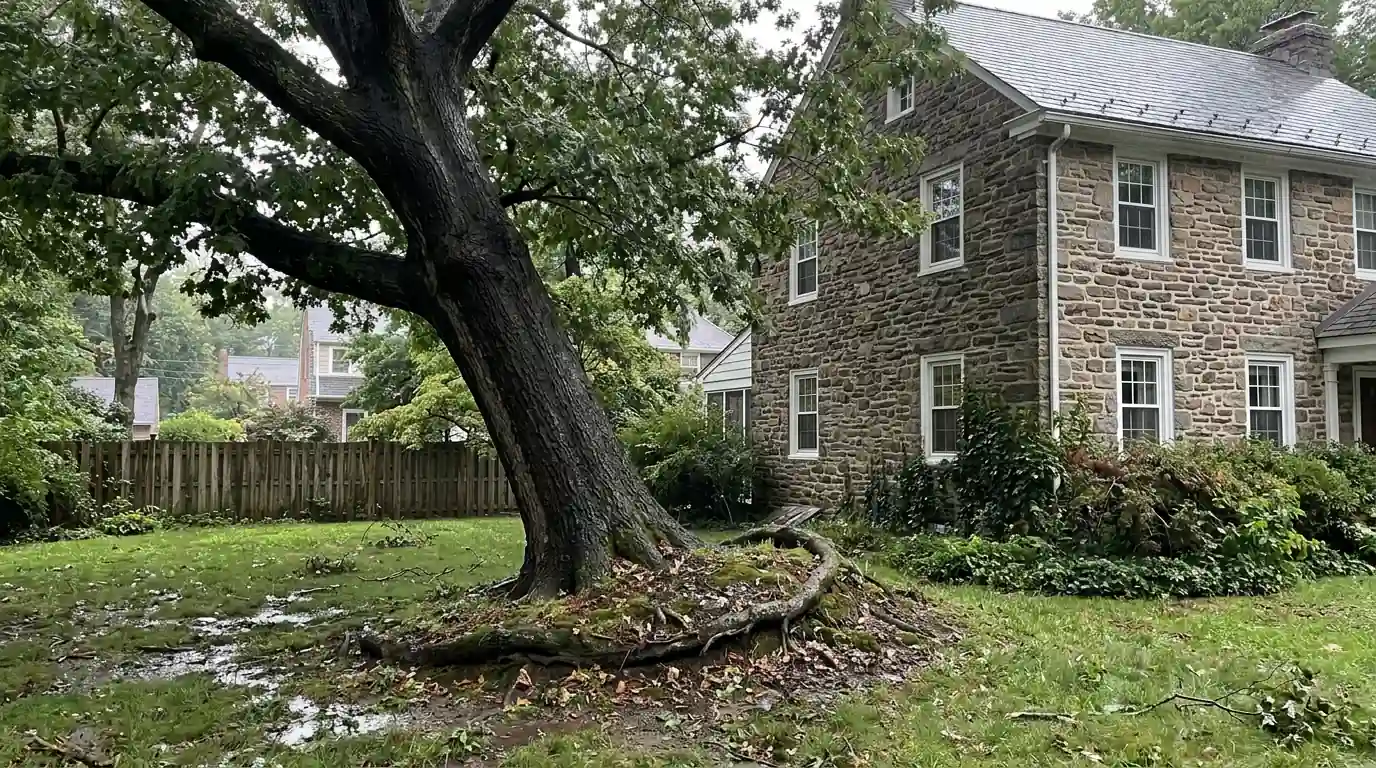
Signs a lean is getting worse
- Cracked soil on the far side
A crescent of raised earth opposite the lean.
- Exposed or torn roots
Roots showing or snapped near the trunk.
- A gap at the base
Space opening between trunk and soil on one side.
- A straight trunk tipped over
No upward curve in the top, just a tilt from the ground.
- A lean that changed
The tree now touches a gutter or wire it used to clear.
- Mushrooms at the root flare
Fungus at the base can mean root rot under the lean.
How a leaning tree comes down safely
Read the lean
Old curve or new tip, and how the base looks.
Clear the fall side
People, cars and anything movable out from under the lean.
Set a pulling line
Anchored on the far side to hold the tree back.
Unload the heavy side
Limbs over the lean come off first.
Section the trunk
Short pieces, each one guided away from the house.
Release the root plate
The stump is cut low and the plate checked.
Grind and fill
Stump ground, hole filled, yard raked.
Root plates lifting after rain
After days of rain, look at the base. A crescent of cracked, raised soil on the side away from the lean means the root plate is rocking out of the ground. You may see torn roots or a gap opening near the trunk. This is the most urgent lean there is, because the next gust can finish it. We take it down from the top with a pulling line holding it back, and HomeAdvisor's medium-tree range of $450 to $1,200 gives a starting frame.
Trees leaning toward a house
When the lean points at the roof, every cut has to send wood the other way. We set a pulling line high in the tree, anchored on the opposite side, then take limbs off the house side first so the tree's weight shifts away. The trunk comes down in short pieces. If there is no safe way to drop anything, a crane may be the safer route.
Trees leaning over a neighbor's yard
A tree rooted in your yard and leaning over the fence is your responsibility if it falls, even onto their side. Removing it means working over their property, so we talk with you about getting their okay before the day of the job. Pieces are lowered on ropes back to your side when there is room, or into theirs with permission and protection for their lawn.
Wind events that tested leaning trees around Philadelphia
Leaning trees are the ones wind tests first, and the region has had hard tests. During Isaias on August 4, 2020, an EF2 tornado tracked from Northeast Philadelphia to Doylestown, and a separate EF0 downed trees in Worcester Township. In September 2021, Ida's remnants brought seven tornadoes to the region, among them an EF-3 near Mullica Hill and an EF-2 from Fort Washington into Horsham.
Remove it, brace it or leave it?
| Kind of lean | Usually remove | Can often stay |
|---|---|---|
| After a storm | Soil heaved and roots torn on the far side | Slight tip with soil undisturbed, watched over the next storms |
| Toward light | Decay or a hollow at the base under the lean | Crown curves back upright and the root flare is solid |
| Near a house | Lean is growing and the house is in the fall path | Weight reduced with a crown reduction and checked yearly |
| After construction | Roots cut on one side by digging | Roots cut on the lean side only, tree otherwise healthy |
What leaning tree removal costs
A lean usually adds rigging time compared with an upright tree of the same size. These five things decide how much.
- 01
Direction of the lean. Leaning toward open lawn is simple; leaning toward a roof means every piece is pulled away.
- 02
How fresh the lean is. A tree still moving needs extra lines before anyone climbs it.
- 03
Height and spread. A tall tree with a heavy crown on the lean side takes longer to unload.
- 04
Neighbor access. Working over a fence needs coordination and sometimes protection on their side.
- 05
Root plate damage. A lifted plate may need grinding and fill once the trunk is gone.
| Job | Published range | Source |
|---|---|---|
| Medium tree removal, 30 to 60 ft | $450 to $1,200 | HomeAdvisor, 2026 |
| Large tree removal, 60 to 80 ft | $800 to $1,500 | HomeAdvisor, 2026 |
| Tree removal, Philadelphia | $500 to $2,200 | HomeBlue, 2025 |
Planning numbers from published surveys, not our prices. We price after seeing the tree.
Leaning tree questions
There is no magic angle. A tree leaning 15 degrees for 30 years can be fine; one that tipped 5 degrees last night is not. The change and the base matter more than the angle.
Young trees sometimes, with staking over a season or two. A mature tree with a lean will not be pulled upright, and trying can tear the remaining roots.
Talk to them first, and keep a written record if nothing happens. If the tree looks like it is failing, a written inspection gives both of you something concrete to act on.
A fresh lean, yes, because its roots have already given. An old lean the tree has grown into is often as stable as an upright one.
Usually. Pulling lines and rigging handle most leans. A crane comes in when the tree leans over a house with no room to lower anything.
Related tree work
Emergency Tree Removal
A tree cracking, leaning hard or blocking the way out. We answer around the clock and make it safe first.
Tree Inspection & Risk Assessment
A walk-around look at decay, cracks, lean and roots, with a straight answer on what needs doing.
Crane Tree Removal
Big picks lifted over roofs when there is no safe way to lower the wood by rope.
Tree Cabling & Bracing
Steel cables and rods that support weak unions in trees worth keeping.
Tree tipping toward something?
Call and describe the lean and the base. We'll tell you whether it can wait.