Quick answer
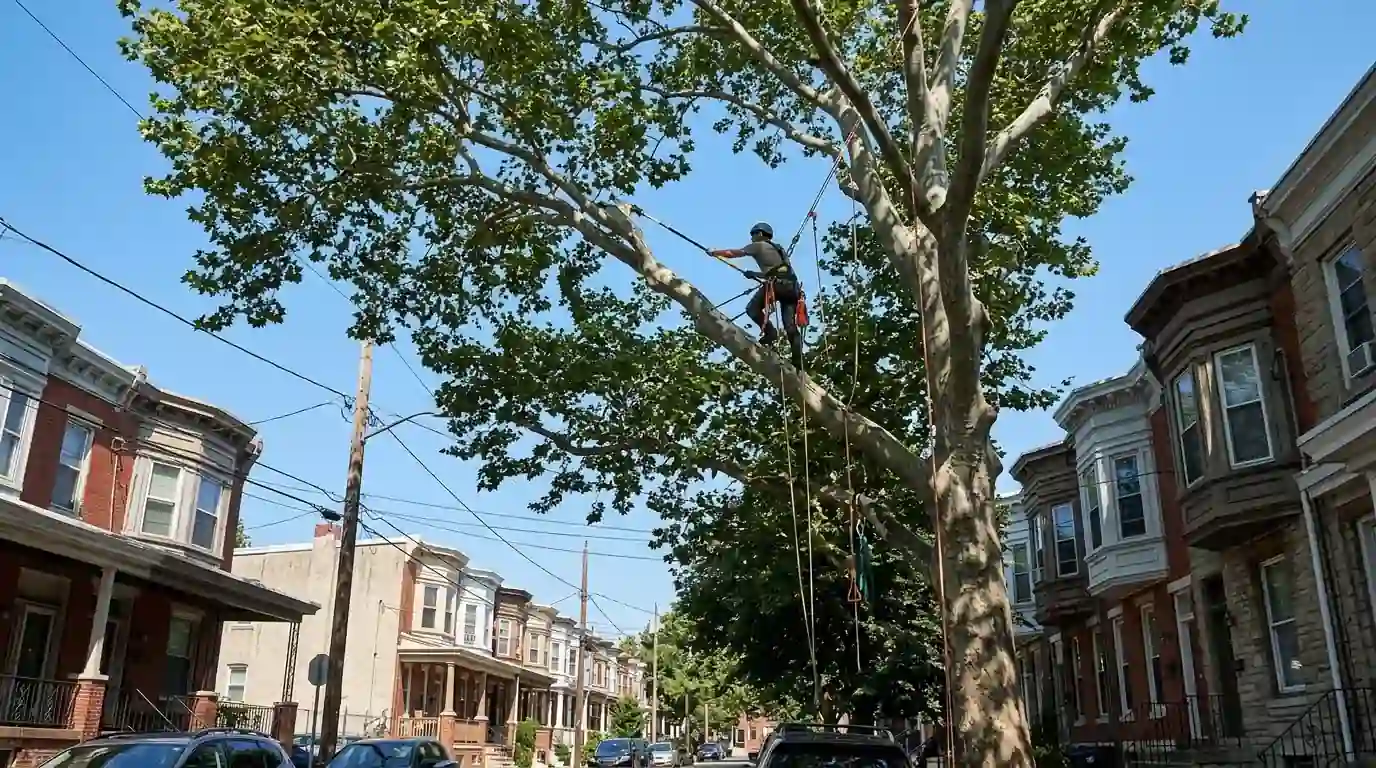
Crown raising removes or shortens a tree's lowest limbs so people, cars and trucks pass underneath. LawnStarter's national figures put trimming for trees under 30 feet at $85 to $415, and the per-tree average at $430 to $640. A light raise on one tree is often a short visit; thick limbs come off over two visits, not one.
How high to lift, and how much to leave
The rule of thumb is to keep at least two-thirds of the tree's height in live crown. Strip the trunk higher and the tree loses leaves that feed it and grows top-heavy. On a young tree, low limbs also help the trunk thicken, so those come off gradually.
Thick low limbs leave big wounds, so we often shorten one first and remove the rest a few years later. Work on a Philadelphia street tree needs the Parks and Recreation tree work permit first, as our page on sidewalk-strip trees explains. If height or spread is the real issue, shortening the crown is the job you want. Overgrown shrubs crowding the trunk are a separate job: cutting back hedges and screens.
What a crown raising job covers
- A look at which limbs are in the way and how thick they are
- A target clearance agreed for the walk, street or driveway
- The permit step when the tree stands in the sidewalk strip
- Lowest limbs removed at the branch collar
- Thick low limbs shortened now, with removal planned for later
- At least two-thirds of the height kept in live crown
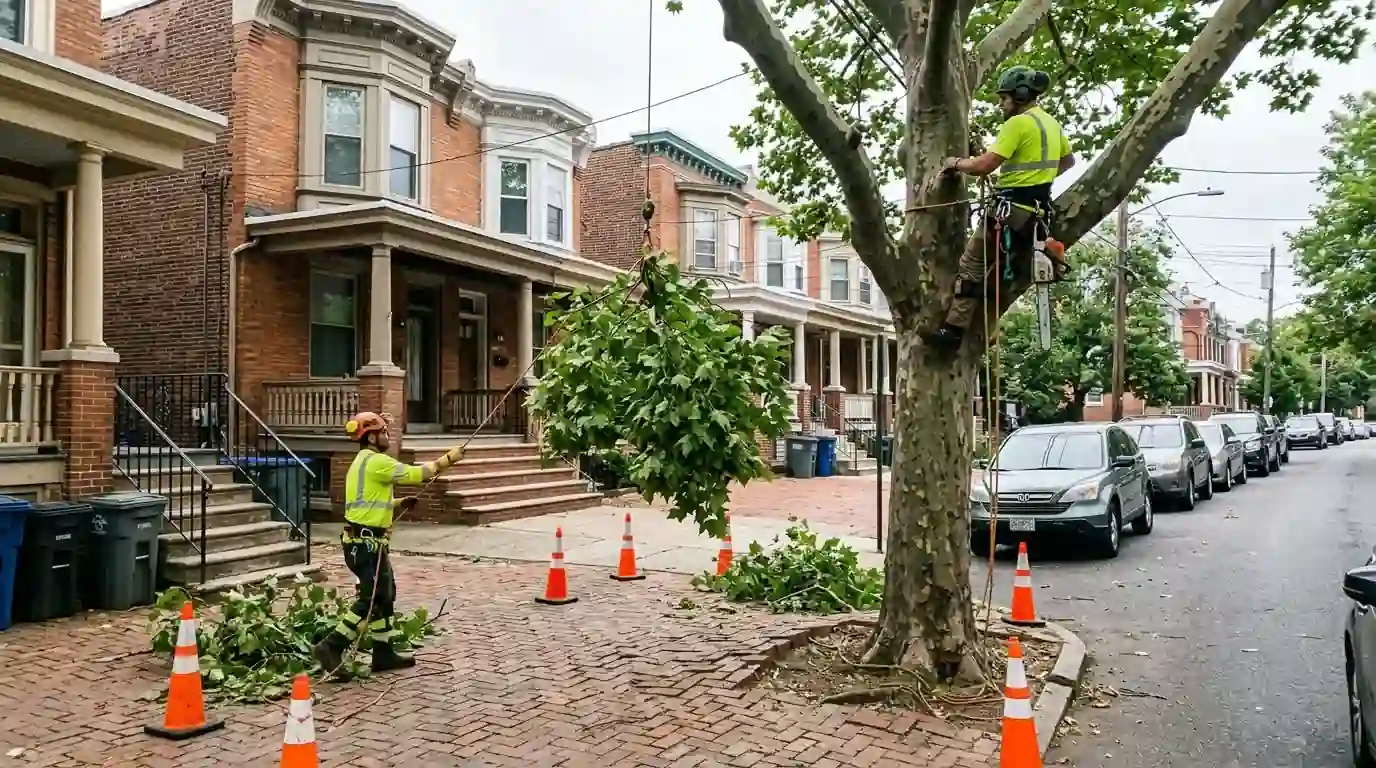
- Pieces roped down over cars, fences and walkers
- Brush chipped, and wood hauled or left
- Sidewalk and driveway swept before we leave
Sidewalk and street clearance
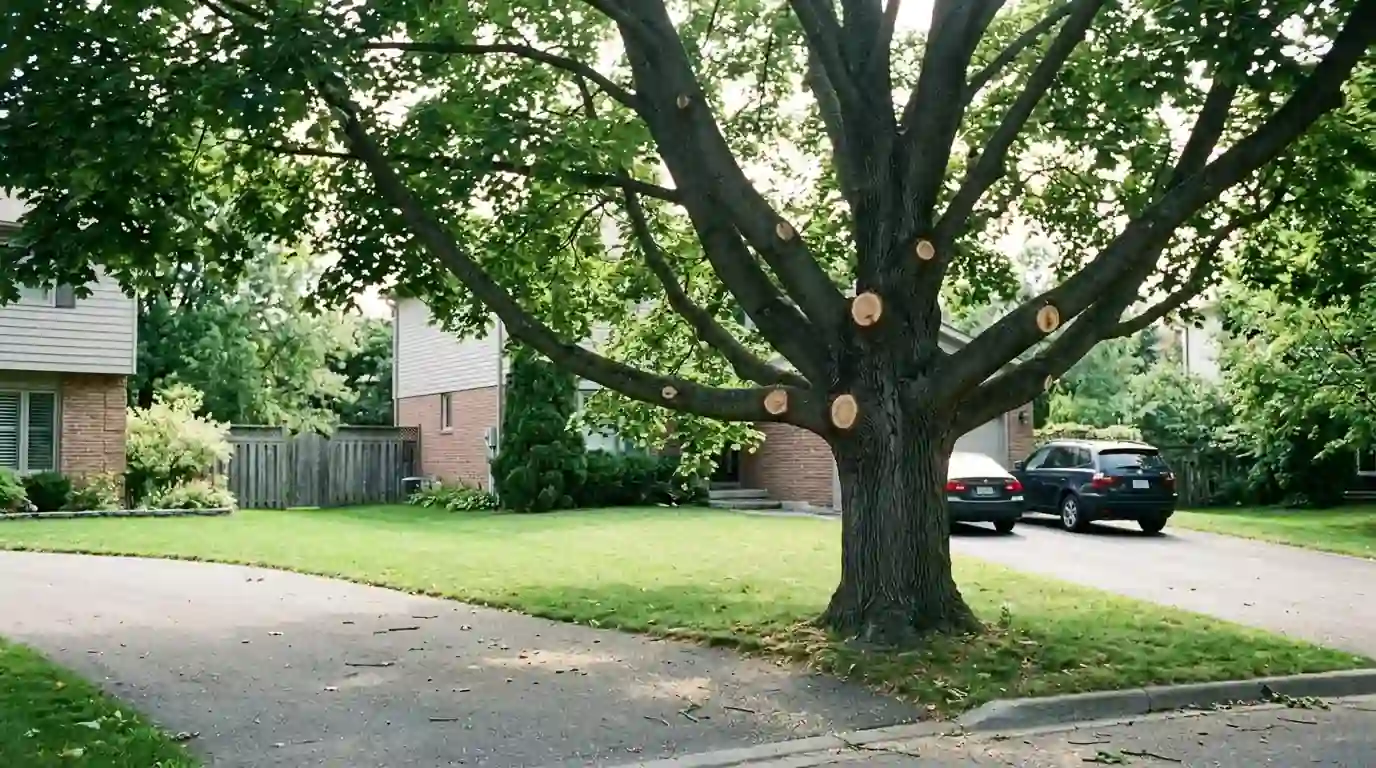
Limbs that make people duck on the sidewalk, or that trash and delivery trucks scrape on the street side, are the usual reason for a raise. We lift the walk side enough for a tall person with an umbrella and take the street side higher for box trucks. On a Philadelphia sidewalk-strip tree, the work waits for the permit, and the rest of the crown is left full.
Driveway clearance
A low limb over the driveway drips sap on the car, scratches roof racks and keeps moving trucks or oil deliveries from pulling in. Clearing that side of the crown usually means one or two limbs, sometimes shortened rather than removed so the tree stays balanced. Each piece is lowered onto open pavement, with cars moved out of the way before the first cut.
Lifting limbs for light and lawn
Grass that thins to bare dirt under a maple is often a light problem, not a soil problem. Lifting the lowest limbs lets morning and evening sun reach the ground, and pairing it with a light thinning of the crown lets more through at midday. It also frees room for the mower. Expect the lawn to come back over a season or two rather than overnight.
Suburban rules for raising trees by the road
Two suburbs show how differently the road edge is handled. In Lower Merion, trees with more than half their trunk in the public right-of-way or on Township land fall under the shade tree chapter: owners request work in writing, a contractor needs a permit from the Director of Public Works after Shade Tree Commission approval, and owners can be required to remove low limbs over the right-of-way at their own expense. In Moorestown, a 2018 ordinance made the more than 6,200 trees between sidewalk and road township trees, and trimming one without a Public Works permit can bring fines, fees and replacement costs.
How we raise a crown
Tell us what is hitting
People, cars, trucks, or the lawn underneath.
Agree on clearance
We set the height needed on each side.
Check permits
Street trees get the Parks and Recreation step first.
Plan in stages
Thick limbs shortened now, removed on a later visit.
Cut at the collar
Clean cuts the tree can close.
Lower over targets
Pieces roped down over cars and walks.
Sweep up
Brush chipped, walk and driveway cleared.
Raising the crown yourself
Small limbs within reach of a pole saw are a reasonable homeowner job. Above that, the risks change.
| Doing it yourself | Having us do it | |
|---|---|---|
| Limb size | Taking a thick limb flush to the trunk leaves a wound that may never close. | Thick limbs are shortened first and removed in stages. |
| Cutting overhead | A cut limb falls toward you and swings on the way down. | Limbs over walks and cars are roped and lowered. |
| Street trees | Pruning a sidewalk-strip tree yourself can run into the city's permit rules. | We apply for the permit before touching a street tree. |
| How high to go | It is easy to strip too much trunk and leave a lollipop tree. | Two-thirds of the height stays in live crown. |
What crown raising costs
Raising is usually lighter than a full trim, because the work sits low in the crown. These factors set the price.
- 01
Number and size of limbs. Two small limbs over a walk is short work; a row of thick ones is not.
- 02
Height of the cuts. Limbs reachable from a ladder go faster than ones that need a climber.
- 03
What sits below. Parked cars, fences and foot traffic mean pieces get lowered.
- 04
Permit step. A sidewalk-strip tree adds the permit request before any cut.
- 05
Several trees at once. Raising a row of trees along one walk shares the setup.
| Job | Published range | Source |
|---|---|---|
| Tree trimming, per tree | $430 to $640 | LawnStarter, 2026 |
| Tree crew, Philadelphia hourly | $240 to $310 per hour | HomeBlue, 2025 |
Planning numbers from published surveys, not our prices. We price after seeing the tree.
Crown raising questions
High enough that a tall adult walks under without ducking, with room for an umbrella. The street side usually needs more so trucks clear it.
Not in moderation. Keeping at least two-thirds of the height in live crown and avoiding very large cuts keeps the tree healthy.
Usually once to set the clearance, then a light touch-up every few years as lower limbs droop with added length and weight.
Better not. Low limbs help a young trunk thicken, so they come off gradually over several years as the tree grows taller.
It depends on the town. Some own the strip trees and require a permit for any trimming; others can make owners clear low limbs at their own cost.
Other clearance and pruning work
Tree Trimming
Cleaning, thinning and shaping that keeps a shade tree healthy and out of the way.
Crown Reduction
Shortening a crown back to healthy side branches instead of topping it.
Roof & House Clearance Trimming
Branches pulled back from roofs, gutters, siding and chimneys.
Tree Trimming Near Service Lines
Clearing the wire to your house, with the utility make-safe step booked first.
Ducking under your own tree?
Give us a call. We will agree on the clearance you need, plan the cuts so the tree stays healthy, and price it before we begin.