Quick answer
Stump grinding usually runs $120 to $500 per stump in HomeAdvisor's national figures, with an average near $250 and single-stump minimums of $100 to $150. Diameter, hardness and access decide where yours lands. Grinding takes the stump below grade but leaves the deeper roots to rot in place; digging those out is a separate job.
How a stump grinder actually works
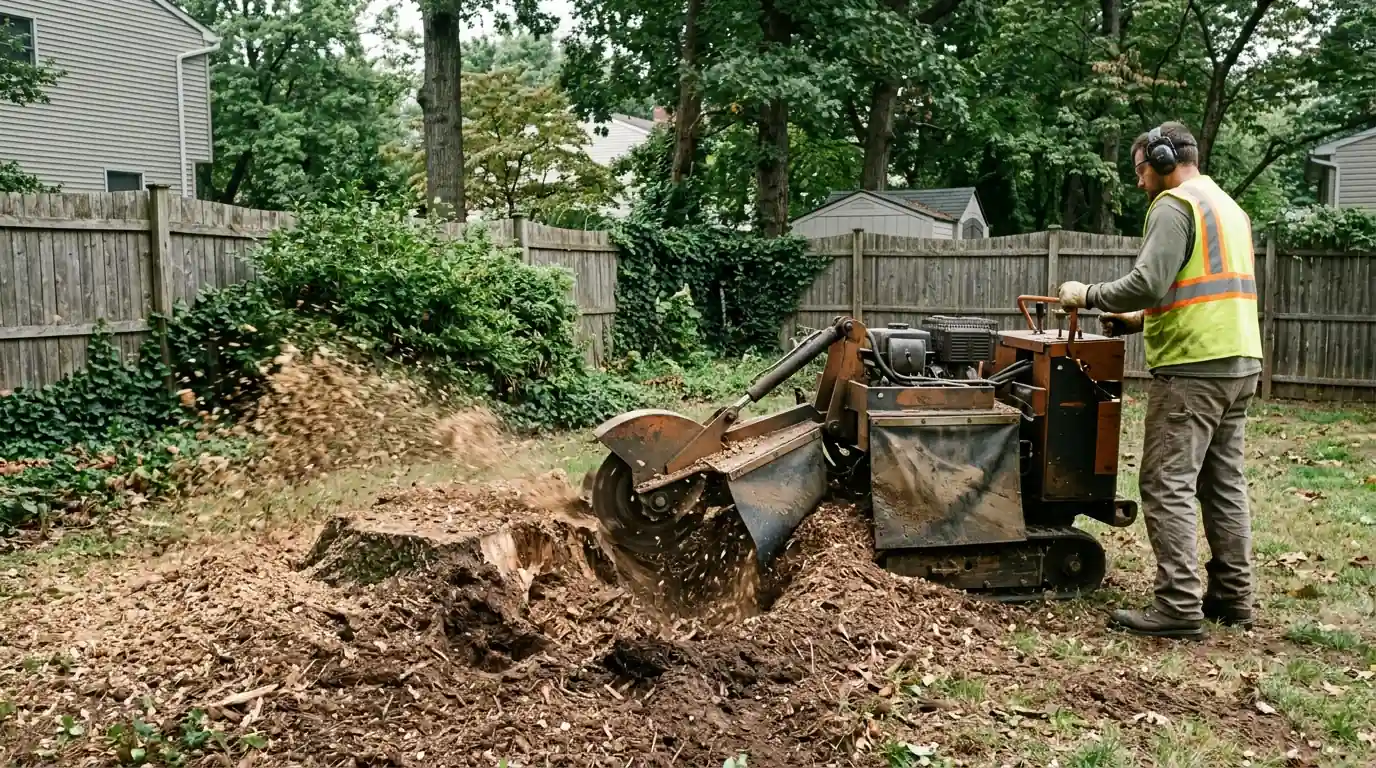
A stump grinder is a heavy cutting wheel lined with carbide teeth. The operator swings it side to side across the stump, shaving wood with each pass and lowering it as the stump disappears, until only chips and soil are left.
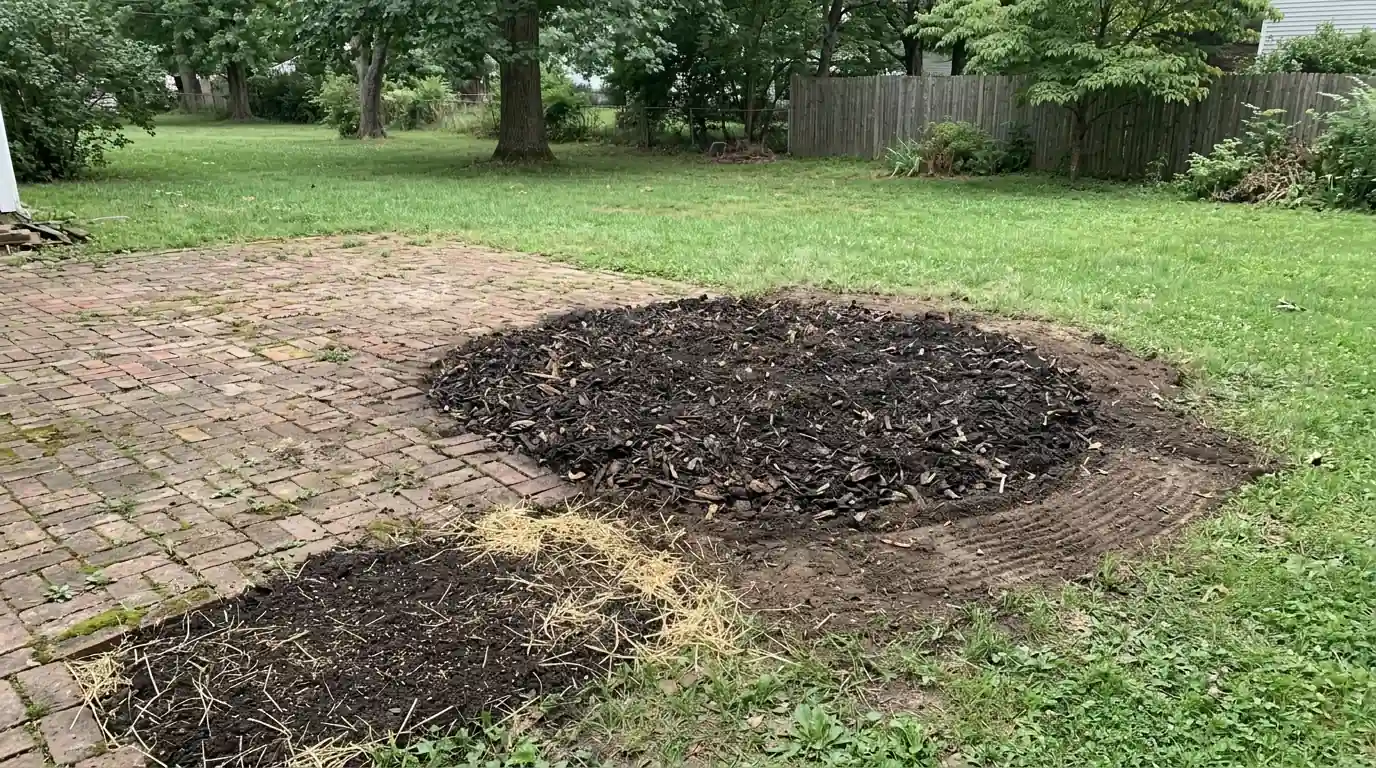
We grind four to six inches below grade for lawn, deeper where pavers, a patio or a new bed are planned, and follow the surface roots out from the stump. The roots below stay in the ground to break down. If those must go too, full stump and root ball removal digs them out, and our guide to grinding versus pulling a stump weighs the two.
What stump grinding costs
HomeAdvisor publishes a national range for grinding. Five things decide where a stump lands in it.
- 01
Diameter. Width at ground level drives grinding time more than anything else.
- 02
Wood and age. A fresh oak stump is hard going; an old, half-rotted one grinds fast.
- 03
Access. A stump behind a narrow gate or up steps needs a smaller machine and more time.
- 04
Depth and roots. Grinding deeper for pavers, or chasing long surface roots, adds time.
- 05
Chip cleanup. Leaving the chips as mulch costs less than raking them out, hauling them and adding topsoil.
| Job | Published range | Source |
|---|---|---|
| Stump grinding | $120 to $500 | HomeAdvisor, 2026 |
Planning numbers from published surveys, not our prices. We price after seeing the tree.
Grind it, dig it out, or leave it?
Three options, each with a catch.
| Option | What happens | Good for | The catch |
|---|---|---|---|
| Grinding | Stump chewed to chips below grade, deep roots left to rot | Lawn, beds and planting nearby | A soft patch can settle as the roots decay |
| Full extraction | Stump and main roots dug or pulled out | Slabs, additions and footings | A big hole and far more soil disturbance |
| Leave it to rot | Nothing now; the stump decays over many years | Out-of-the-way corners | Suckers, a trip hazard, and fungus and insects while it rots |
A heavy sprouter needs more than grinding: the stump has to be treated or it sends up root suckers, which is why tree of heaven stumps get their own approach.
Renting a grinder, or calling us
Rental grinders exist, and people use them. The honest comparison:
| Doing it yourself | Having us do it | |
|---|---|---|
| The machine | Rental units are smaller and slower, and still heavy enough to tip on a slope. | A grinder sized to the stump and the gate. |
| Buried hazards | Rocks, buried cable and gas lines can be hit or thrown. | Buried lines are marked before any grinding starts. |
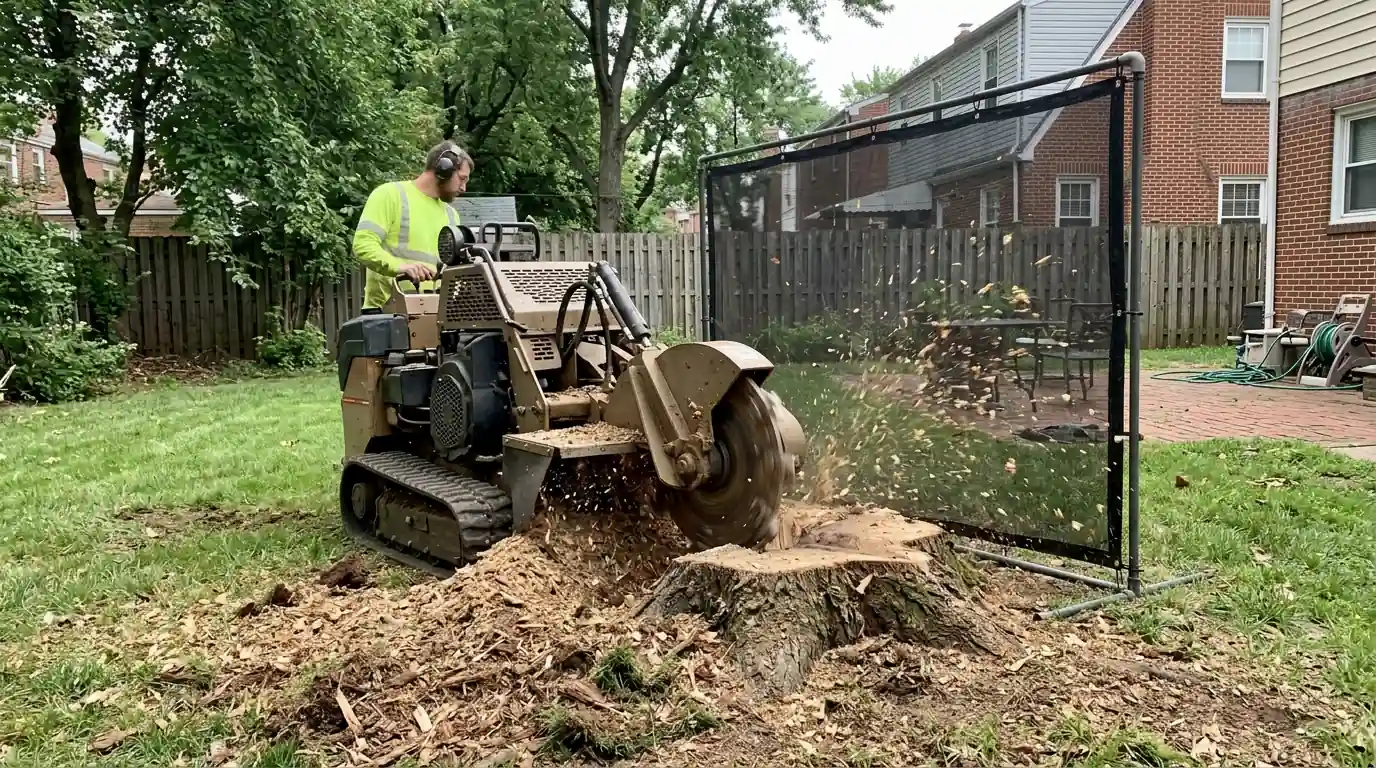
| Flying debris | Chips and stones fly far enough to crack windows and car glass. | A set-up angled away from glass and people, with screens where needed. |
| Effort | Hauling the unit home and back, plus a long afternoon. | Usually a short visit per stump. |
Single stump grinding
One stump in the front lawn or by the patio is the most common call. You notice it every time you mow around it or pull its suckers. Price is mostly diameter and access: a 14-inch maple stump by the driveway is quick, a 40-inch oak behind a narrow gate is not. HomeAdvisor's published national grinding range is $120 to $500 per stump, so a big oak lands near the top.
Grinding several stumps
After a run of removals or a cleared fence line, a yard can hold half a dozen stumps. Grinding them in one visit spreads the setup across all of them, so each stump costs less than it would alone. We take the largest first, then work down, and either pile the chips for you to spread or haul them away. Small sprout stumps along a fence are often ground in one pass.
Grinding below grade for lawn or pavers
Depth depends on what goes on top. For lawn, a few inches below grade with topsoil and seed is enough. For pavers, a patio or a shed slab, we grind deeper and chase the main surface roots farther, since wood left under a base will rot and settle. Tell us the plan for the spot before we start, because a second visit to go deeper costs more than doing it once.
Slopes and borough trees that change the stump plan
Philadelphia wrote steep slope protections into its code in 2012, mostly for the hilly Northwest, including Roxborough, Chestnut Hill and Manayunk, plus parts of Cobbs Creek and the Northeast. Earth disturbance on slopes of 25 percent or more is prohibited and lesser steep slopes need Planning Commission approval, so on a bank, grinding that leaves the roots holding soil usually beats digging. In Haddonfield the Borough keeps about 9,000 trees along streets and park strips, residents need written permission to prune one, and Borough stumps can sit a year or more after winter removals.
How a stump grinding visit goes
Look at the stump
Diameter, roots, access and what goes on the spot next.
Mark buried lines
Utility lines located before any grinding.
Clear around it
Rocks pulled, edging and beds protected.
Aim the set-up
Grinder angled away from windows, cars and people.
Grind below grade
Side-to-side passes until the stump is below the planned depth.
Chase surface roots
Main roots near the surface ground out along their run.
Chips and fill
Chips left as mulch, or raked out and the hole backfilled.
Stump grinding questions
Usually four to six inches below the surface for lawn, deeper for pavers or a slab. Tell us what goes on the spot so we grind to suit it.
The deeper roots stay in the ground and decay over several years. Most never cause trouble, though a soft patch can settle as they break down.
Not for a tree in the same hole. Ground chips and old roots make poor planting soil, so set the new tree a few feet to one side, or have the chips raked out first.
Most will not once ground below grade. A few species, tree of heaven especially, send up root sprouts and need the stump treated as well.
Spread them as mulch in beds, kept back from the house, or have us rake them out and haul them. Fresh chips should not be dug straight into garden soil.
More stump and cleanup work
Stump & Root Ball Removal
Digging the stump and main roots out when the spot is getting a slab or a new tree.
Root Pruning
Cutting problem roots cleanly so a sidewalk can be fixed without killing the tree.
Tree Removal
Sectional takedowns sized to the yard, with the wood, brush and cleanup handled.
Log & Debris Haul-Away
Logs, brush piles and storm debris loaded up and hauled off the property.
Stump still sitting in the yard?
Call and tell us about it. We will look at the size and access and give you a price before any grinding.