Quick answer
Grind the stump if you want the spot back as lawn or garden; it is quicker, cheaper and leaves the roots to rot in place. Pull the stump and root ball if something solid is going on that ground, like a slab, footing or new tree in the same hole. HomeAdvisor puts typical stump grinding at $120 to $500.
The difference in plain terms
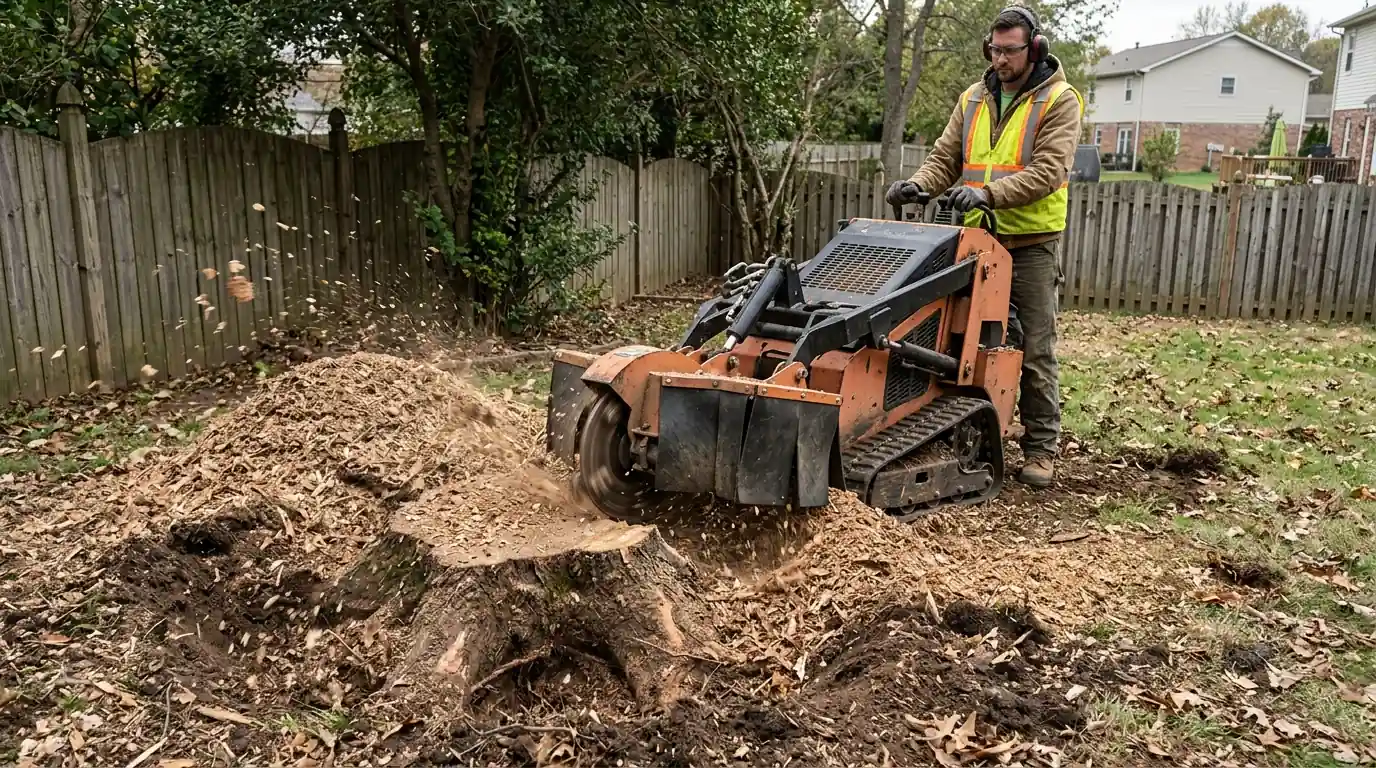
Stump grinding uses a machine with a toothed wheel that chews the stump into chips, working side to side until it is below the soil line. The depth is set by what comes next: a few inches for a lawn, deeper for a garden bed or pavers. The big roots stay underground and slowly decay.
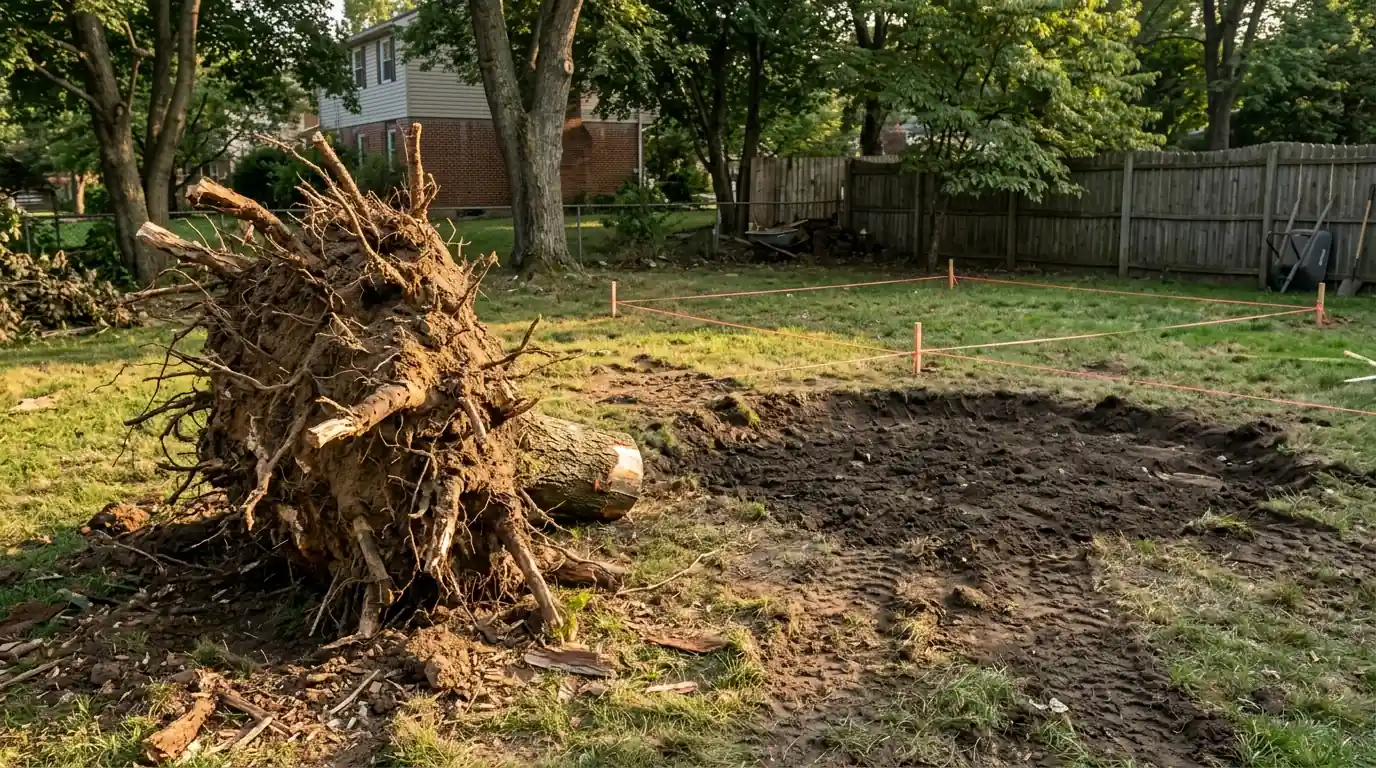
Stump removal, sometimes called extraction, takes out the stump and the root ball around it. Roots are cut around the base, the soil is dug away, and the whole mass is levered or lifted out. It leaves a large hole that has to be backfilled and compacted, and it moves a lot more soil than grinding does.
What a ground stump leaves behind
After grinding you get a mound of chips mixed with soil, roughly the size of the stump and often larger than people expect. Many owners rake some into beds as mulch and have the rest hauled away, then fill the hollow with topsoil and seed it.
The roots left behind break down over several years. As they do, the ground can settle a little, and mushrooms sometimes pop up along the old root lines. Neither is a problem for a lawn. A new tree is usually planted a few feet to one side, where the soil is not full of decaying wood. Our stump grinding page covers depths for lawn, beds and pavers.
When digging the stump out is worth it
Full extraction costs more time and makes a bigger mess, so it should earn its place. It usually does when something structural is going on that exact spot, or when the roots themselves are the problem.
- A patio, slab or walkway will be poured over the spot
- An addition, shed footing or fence post line crosses the old root zone
- You want a new tree in the same hole, not a few feet over
- Large surface roots run across the lawn and keep catching the mower
- A stump of a species that sprouts back keeps sending up shoots
For those jobs, stump and root ball removal clears the ground properly. If the issue is a few problem roots near a foundation or walk while the tree stays, root pruning is the better tool.
Tell us what is going on that spot next and we will say whether grinding is enough.
Call (916) 312-2373Grinding and extraction compared
The right answer usually comes from what the ground will be used for next, not from the stump itself.
| Question | Grinding | Full removal |
|---|---|---|
| What stays underground | Main roots, left to rot over several years | Little; the root ball comes out |
| Disturbance to the yard | A chip mound and a shallow hollow | A large hole, soil piles, backfill and compaction |
| Typical use afterward | Lawn, garden bed, mulch circle | Slab, footing, replanting in the same spot |
| Access needed | Small grinders fit many gates and doorways | More digging room, often heavier equipment |
| Published cost | HomeAdvisor: $120 to $500 with a $250 average | No published range in our sources; priced by size and soil |
What drives the price of each
HomeAdvisor lists a normal range of $120 to $500 for stump grinding with an average of $250. It also notes that single stumps often carry minimums of $100 to $150. Diameter is the biggest factor, followed by hardwood versus softwood, surface roots that also need grinding, and how far the machine has to travel to reach the stump. Several stumps on one visit usually cost less each than one stump alone.
Extraction has no tidy published figure, because it is closer to excavation. The size of the root ball, rocks or old foundations in the soil, how much fill is needed, and whether the debris can be hauled out by machine or only by hand all move it. Expect it to cost well above grinding the same stump.
Hillside lots in Northwest Philadelphia and beyond
Philadelphia wrote steep slope protections into its code in 2012. They apply mostly to the hilly neighborhoods of Northwest Philadelphia, such as Roxborough, Chestnut Hill and Manayunk, plus parts of Cobbs Creek and the Northeast. Earth disturbance on slopes of 25 percent or more is prohibited, and lesser steep slopes need Planning Commission approval.
Pulling a root ball out of a hillside plainly disturbs earth, so ask the city whether the slope rules reach your lot before planning an extraction. Grinding moves far less soil and leaves the old roots holding the bank while they slowly decay, which is often reason enough to choose it on a slope.
Sidewalk stumps and stumps that sprout back
Philadelphia owners must keep the sidewalk in front of their property safe, with no exception for damage from street tree roots. A healthy street tree stays and the repair has to spare its roots; if Parks and Recreation judges the tree unhealthy, the owner can wait for City removal or hire a Parks and Recreation-approved contractor sooner. If the tree is already gone, plan the stump and the slab repair together, and confirm with Parks and Recreation before working in the strip. Our guide to street tree permits in the city walks through that process.
Some species refuse to stay dead. Penn State Extension notes that cutting a tree of heaven without treating it triggers a flush of root and stump sprouts, so grinding alone will not finish it. The stump needs herbicide treatment as part of tree of heaven removal, with grinding afterward if you want the spot level.
Stump questions homeowners ask
Deep enough for whatever comes next. A few inches below grade is usual for lawn, and deeper for garden beds or pavers. Tell us the plan for the spot so the depth matches it.
Yes, mixed chips and soil make a serviceable mulch for beds and paths. Keep them a few inches off plant stems and away from the house foundation, and have the surplus hauled off.
Decaying roots can host wood-feeding insects, but a ground stump is usually less inviting than a whole one left standing. Removing the chips and keeping wood debris away from the house helps.
Usually, yes. The machine and travel are the fixed part of the cost, so several stumps on one visit tend to cost less each than a single stump, which often carries a minimum charge.
You can. A large hardwood stump may take many years to break down, and it can send up sprouts, trip people and get in the way of mowing. Grinding is the quicker way to reclaim the space.
Stump and root work
Stump Grinding
Stumps ground below grade, the chips raked out or left as mulch.
Stump & Root Ball Removal
Digging the stump and main roots out when the spot is getting a slab or a new tree.
Root Pruning
Cutting problem roots cleanly so a sidewalk can be fixed without killing the tree.
Tree Planting
Planting replacement trees, including the replacements some towns require.
Have a stump to deal with?
Call and describe the stump and your plans for the spot. We will tell you whether grinding covers it or the root ball needs to come out.