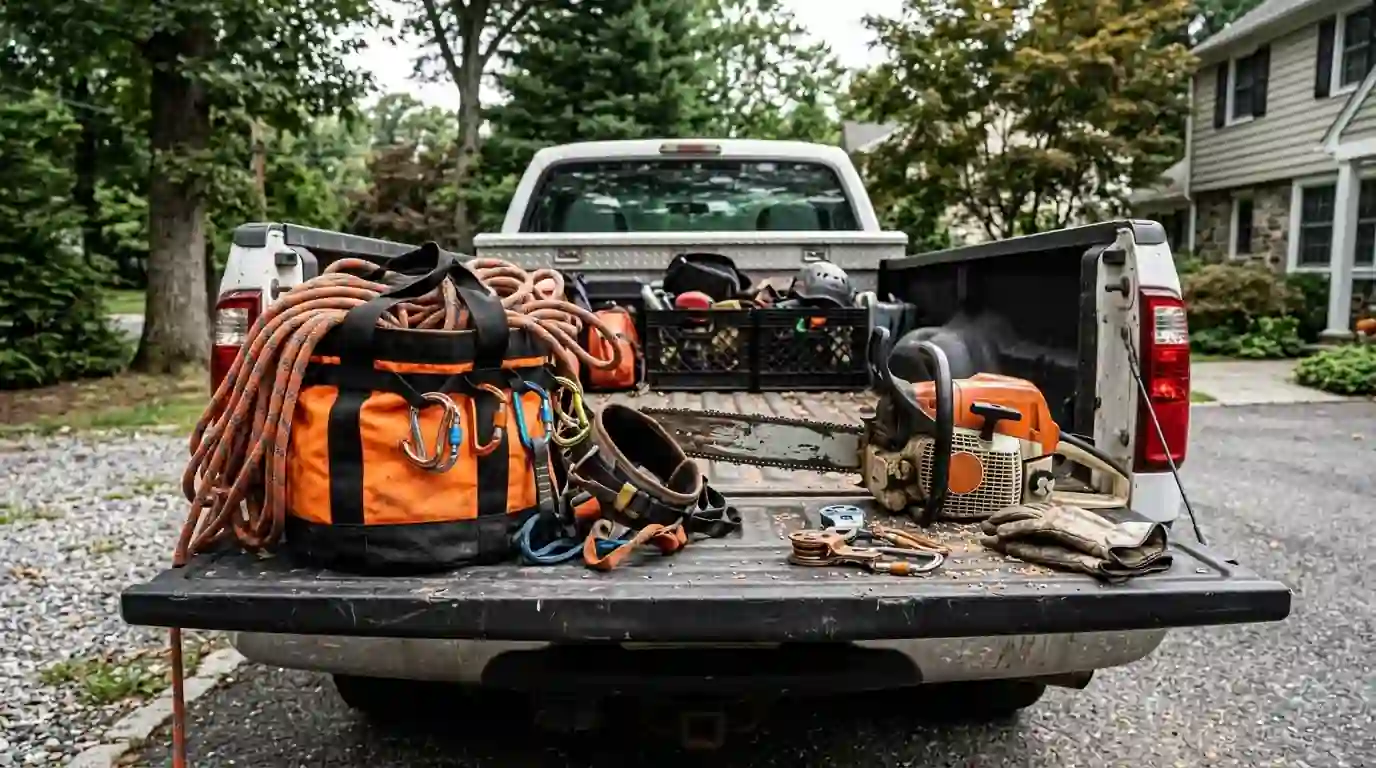
Quick answer
In Philadelphia, a contractor needs a tree work permit from Parks and Recreation before major pruning or removal of a street tree. The tree belongs to the adjoining owner, but it stands in the public right-of-way, so the city controls the work. Parks and Recreation removes dead or hazardous street trees free and will not remove a living, healthy one.
Whose tree is in the sidewalk strip?
A street tree grows in the sidewalk or the planting strip, which is public right-of-way. The City holds jurisdiction over that ground, while the owner of the adjoining property owns the tree itself. Parks and Recreation manages planting, pruning and removal for the whole street tree population.
In practice that means two things at once. You carry an owner's interest in the tree, and you cannot treat it like a yard tree. Cutting a large limb or taking the trunk down is city business first, even though the tree sits in front of your door.
What Parks and Recreation will and will not do
The department handles a limited set of jobs, and knowing them saves a lot of waiting on the wrong request.
- Prunes mature street trees.
- Removes street trees that are dead or hazardous, at no charge to you.
- Does not remove a living, healthy street tree because an owner would rather not have it.
- Leaves you free to hire your own tree professional, at your own cost, for permitted work.
So a dead tree out front can be handled by the city, on the city's schedule. If you want it down sooner, or the tree is merely inconvenient rather than dead, the work falls to a contractor you hire, with a permit in hand.
Hiring a contractor: the tree work permit
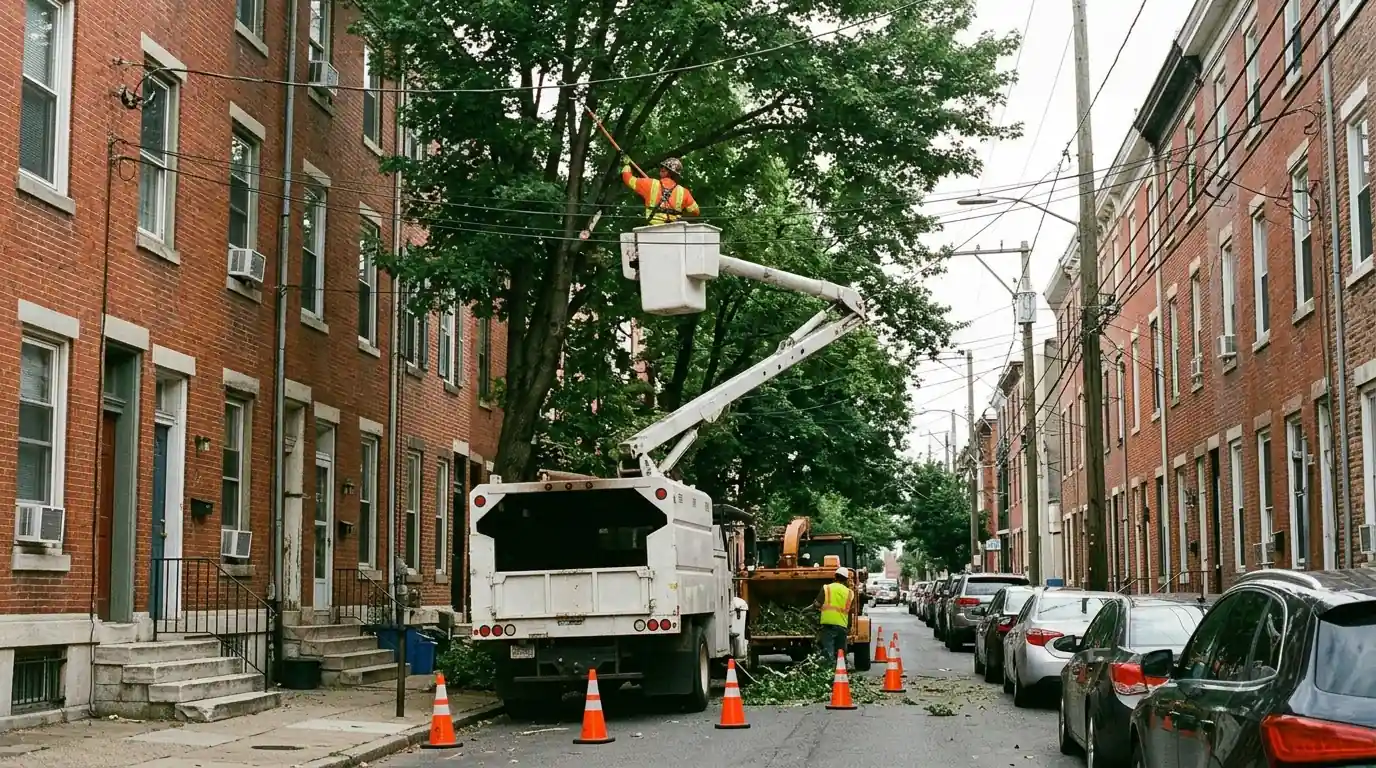
When you hire someone for major pruning or removal of a street tree, that contractor must get a tree work permit from Parks and Recreation Street Tree Management before working on it. The permit belongs to the job, not to you, so the company you hire should be the one filing it.
Ask about the permit at the first conversation. A crew that shows up ready to cut a sidewalk tree without one is putting you in an awkward spot with the city. On our street tree removal jobs the permit comes before the saw, and the same goes for raising low limbs over the sidewalk when the cuts are large.
Have a street tree that needs work? Call and we will explain the permit step for your block.
Call (916) 312-2373Roots lifting the sidewalk: who fixes it?
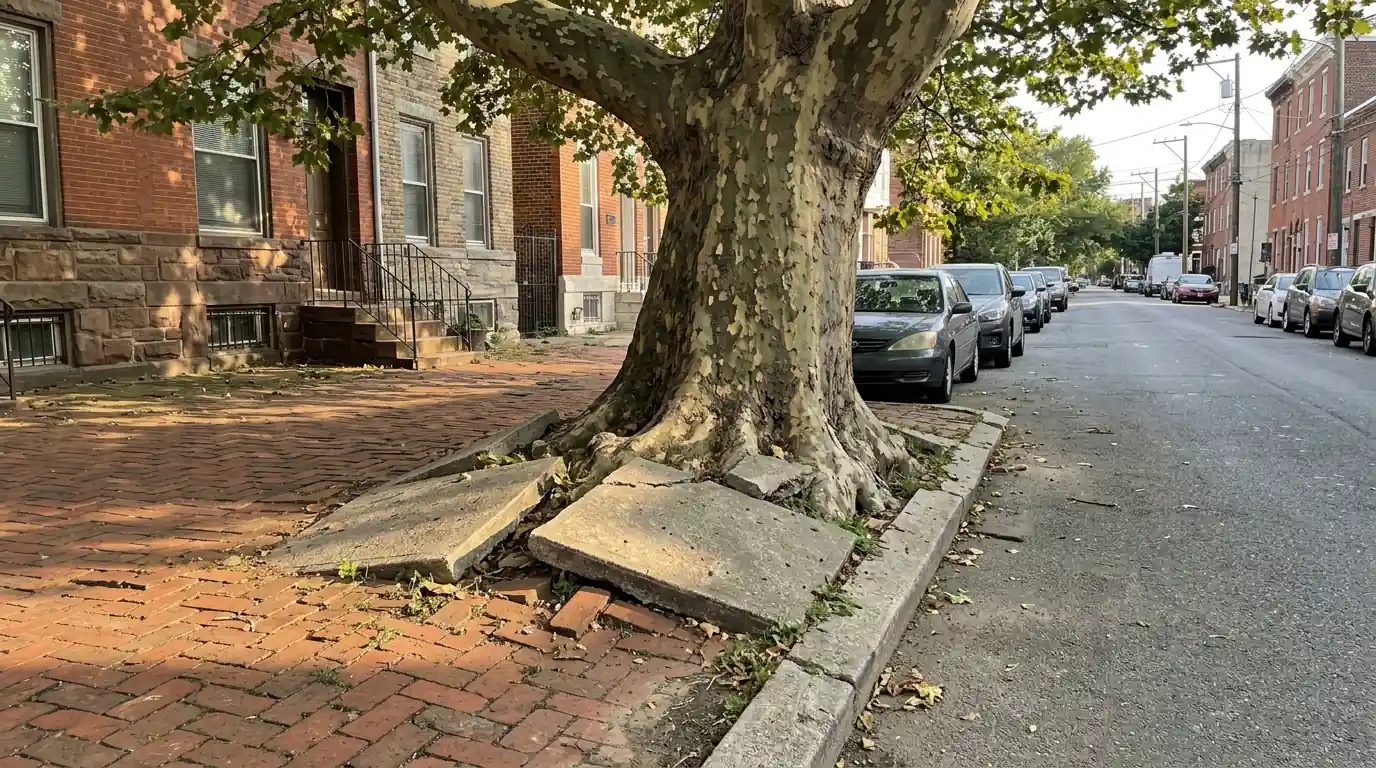
Philadelphia owners must keep the sidewalk in front of their property safe, and there is no exception when the damage comes from street tree roots. That surprises people, since the tree is in city-controlled ground. The repair is still yours.
If the tree is healthy, it stays, and the sidewalk has to be repaired without harming its roots. That usually means planning the pour around the root zone and, where a root sits right under the slab, careful root pruning by hand rather than a backhoe. If Parks and Recreation judges the tree unhealthy, you can wait for the city to remove it or hire a Parks and Recreation-approved contractor to do it sooner. Once a removed tree's stump is out, grinding it below grade clears the way for new concrete.
A crane needs its own permit
Some street trees, and many big trees behind rowhomes, come down with a crane set up in the road. Parking a crane on a Philadelphia street requires a street closure permit through the Streets Department, which publishes a crane closure guide for contractors.
That filing is separate from any Parks and Recreation tree permit. A single job can need both: the tree permit for the work and the closure permit for the street. Ask whoever is quoting a crane removal which permits they plan to file and how far ahead the date has to be set.
Why the city protects healthy street trees
Philadelphia's 2018 assessment put tree cover near 20 percent, down 6 percent from 2008. The 2023 Philly Tree Plan aims for 30 percent cover in every neighborhood within 30 years. The thinnest canopy today sits in neighborhoods marked hazardous on 1937 redlining maps, and the plan's priority areas include South, West, Southwest, North and Northeast Philadelphia.
Seen that way, the refusal to remove a healthy tree is not personal. Each mature street tree is canopy the city is trying to add, not lose. If a tree is causing a real problem, a pruning plan or a sidewalk repair designed around the roots often solves it without a removal at all. The what removal costs guide helps if you are weighing the options.
Street tree permit questions
The owner of the adjoining property owns it, but it grows in the public right-of-way, so the City holds jurisdiction and Parks and Recreation manages its planting, pruning and removal.
Not necessarily. The city takes dead or hazardous street trees down for free, on its own schedule. You can hire a contractor to do it sooner at your own cost, and that contractor needs a Parks and Recreation permit.
No. Parks and Recreation will not remove a living, healthy street tree. Pruning may ease the mess, and major pruning by a contractor still requires the tree work permit first.
The contractor does. Anyone hired for major pruning or removal of a street tree needs a tree work permit from Parks and Recreation Street Tree Management before starting.
The property owner. Philadelphia owners must keep their sidewalk safe even when tree roots caused the damage, and a healthy tree has to stay, so the repair must spare its roots.
Yes. A crane set up on a Philadelphia street needs a street closure permit through the Streets Department, which is separate from the Parks and Recreation tree permit.
Street tree work we handle
Street Tree Removal
Sidewalk-strip trees, with the Parks and Recreation permit step sorted before any cut.
Root Pruning
Cutting problem roots cleanly so a sidewalk can be fixed without killing the tree.
Crown Raising & Clearance Pruning
Lifting low limbs off sidewalks, driveways, parked cars and the lawn.
Crane Tree Removal
Big picks lifted over roofs when there is no safe way to lower the wood by rope.
Not sure what your street tree needs?
Call and describe it. We will tell you whether it is a city job, a permit job, or something a pruning plan can fix.