Quick answer
Yes, a tree can come out of a rowhome yard with no alley. It is taken down in small pieces on ropes, and the wood leaves either through your house, over a neighbor's yard with permission, or lifted over the roof by a crane. Which route makes sense depends on the tree's size, the hallway, and what your neighbors agree to.
Why rowhome yards are a job of their own
Rowhomes make up about 70 percent of Philadelphia's housing units, and nearly 60 percent of people in the city live in one. That is a higher share than any other American city, so the walled-in backyard is not an odd case here. It is the normal one.
Age matters too. About 40.3 percent of the city's homes were built before 1940, against roughly 22 percent across the wider region. Old houses mean old yard trees, many planted as saplings decades ago or seeded in on their own, now 50 feet tall in a space barely wider than the house. They also mean plaster walls, original floors and narrow hallways that a tree crew has to respect on the way through.
Rope work: lowering a tree into a space the size of a room
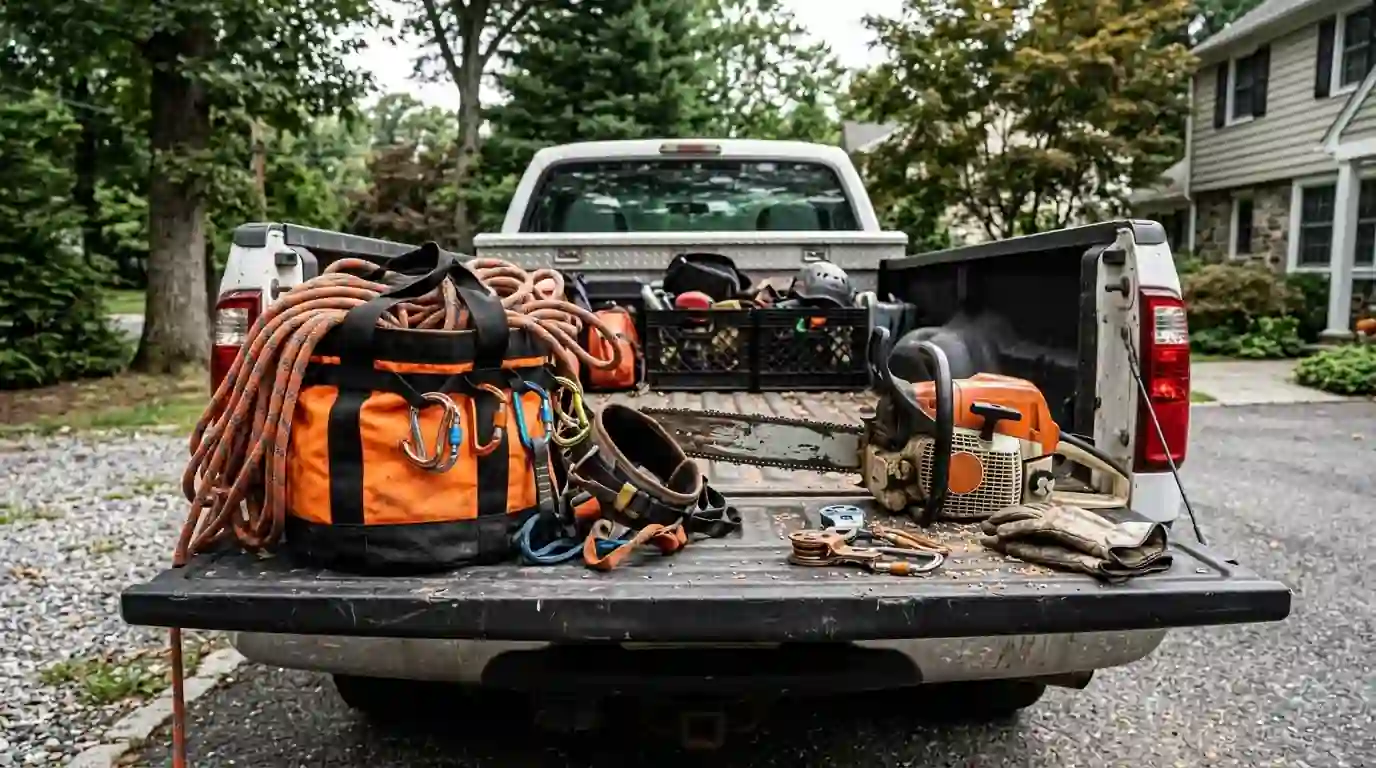
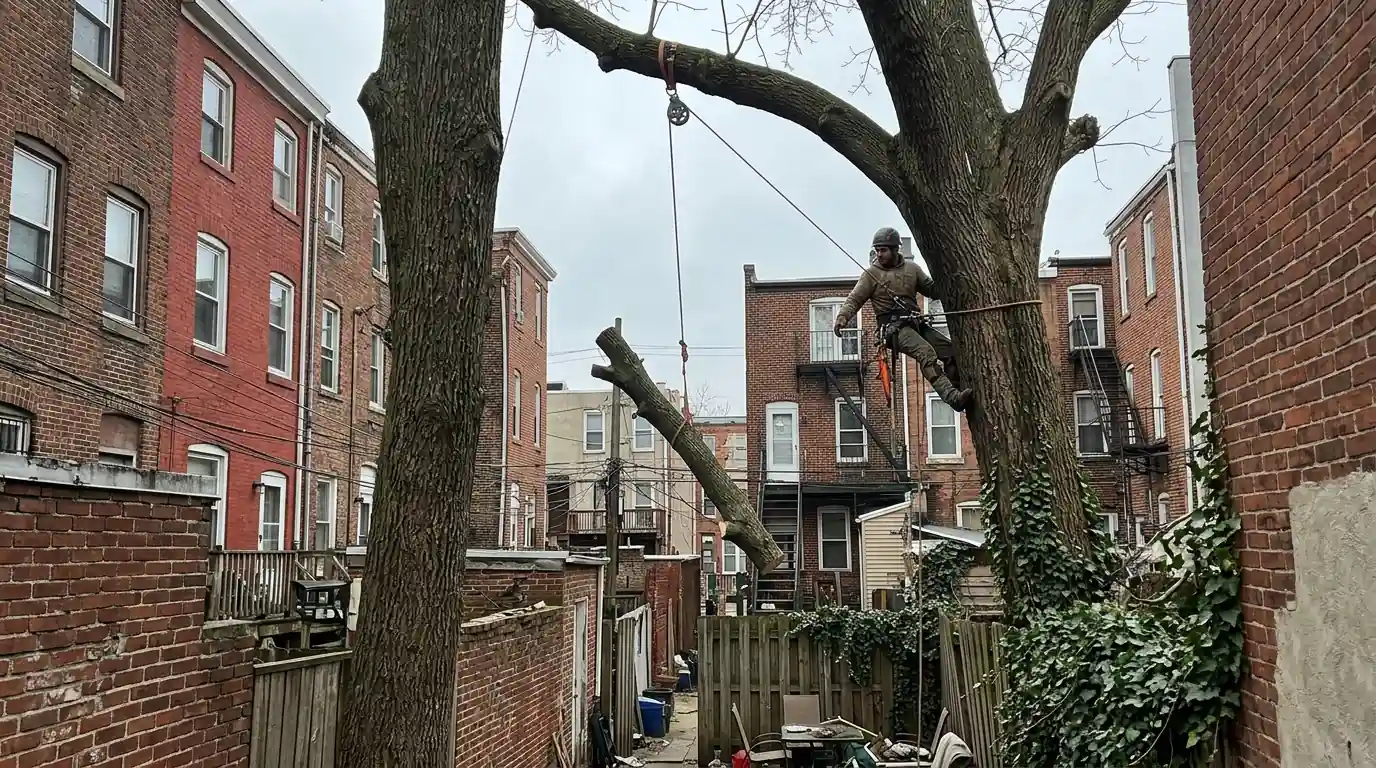
Felling is off the table when the drop zone is smaller than the tree. Instead a climber works down from the top, tying off each limb before cutting it so the piece swings into a controlled descent instead of falling. The rope runs through a pulley high in the tree to a ground worker who lets it down slowly onto a cleared patch of yard.
Pieces are cut to the size the yard can take. A limb that would crush a shed roof or a neighbor's grill gets cut shorter, and the trunk comes down in rounds rather than long logs. That makes for more cuts and more trips on the rope, which is why a rowhome job runs longer than a suburban one with the same tree. Our backyard tree removal for tight access page covers how we set up for side gates and garages too.
How the wood leaves when the only way out is the house
If there is no alley, no driveway and no gate, every branch and log has to cross either your home or someone else's. Going through the house is common and works better than people expect when it is planned properly.
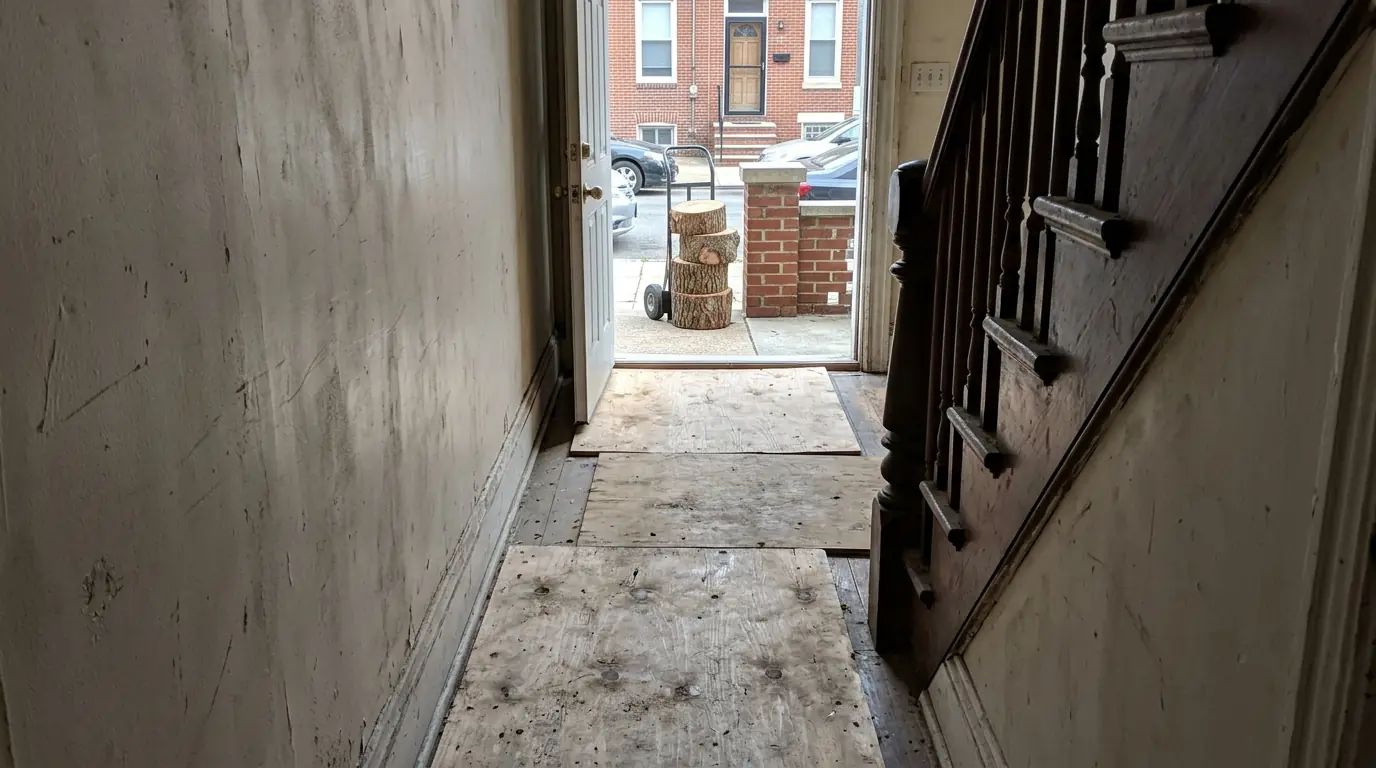
Brush is cut into armloads and bagged or tarped so leaves and twigs do not trail across the floor. Logs are bucked into rounds a person can carry, and the heaviest go out on a hand truck over plywood or runner boards. Then it all goes into the truck or chipper out front.
- Floor runners or plywood laid from the back door to the front door
- Door frames, newel posts and radiators padded where the carry turns
- Rugs, plants and anything breakable moved out of the path beforehand
- Rounds cut small enough to clear the narrowest turn in the hallway
- Brush bagged or wrapped in tarps before it comes inside
If carrying through the house is not something you want, the other routes are over a neighbor's wall or over the roof. Hauling is part of the price either way; log and debris haul-away explains what happens to the wood after it reaches the street.
Tell us about the yard, the hallway and the tree, and we will work out the route with you.
Call (916) 312-2373When a crane over the roof makes more sense
A big tree in a small yard can produce more wood than anyone wants carried through a living room. Sometimes the trunk also leans over the house or is too decayed to climb. A crane parked on the street can then reach over the roofline, pick each section free once the climber cuts it, and set it down out front.
Setting a crane on a Philadelphia street needs a street closure permit through the Streets Department, which publishes a crane closure guide for contractors. That step adds lead time, and the parking gets blocked for the day, so neighbors should hear about it early. HomeAdvisor lists a crane line item of $250 to $600 per day nationally for trees over about 80 feet, and notes complex crane jobs can reach $6,000 to $7,000. See crane picks over rowhomes for how that day is laid out.
Your neighbors: what you need from them and what they can do
A tree on your lot is your responsibility, overhanging branches included, and the city can fine owners $150 to $300 for violations. Owners usually get 30 days to fix a non-emergency problem. Your neighbor may cut back limbs that cross the line at their own expense, but may not come onto your property without permission, and the same applies the other way.
In practice that means asking before the job, not during it. If a limb has to be cut from their side, or wood lowered into their yard, or a rope anchored to their wall, get a clear yes in advance. Knocking on doors a week before also gives people time to move cars, patio furniture and the dog. The same tree that crowds your yard is often dropping leaves into three others, so the conversation is usually easier than people fear.
What drives the price of a rowhome removal
HomeBlue puts Philadelphia tree removals at about $500 to $2,200 per tree, with stump removal usually extra, and quotes $240 to $310 per hour for a three-person crew in the city. Rowhome jobs tend to sit higher in a range like that because the hours stretch, not because the tree is unusual. For the full breakdown, see our guide to what a removal costs in the city.
| Route for the wood | What it involves | Effect on the day |
|---|---|---|
| Through your house | Floor protection, small rounds, many trips down the hall | Longer carry, no permit needed |
| Over a neighbor's yard | Their permission, then their gate or alley | Often quicker if their access is open |
| Lifted over the roof by crane | Street closure permit, crane on the block | Fewer hands carrying, more setup and cost |
| Left on site | Rounds stacked for firewood, brush still removed | Shorter day, less to haul |
Getting the house and yard ready
A little preparation saves time. Clear the hallway, move anything fragile off the walls along the route, and take patio furniture and planters out of the drop zone. Tell us if the basement door, a side passage or a neighbor's open alley could be used instead. If you want the stump gone too, grinding the stump afterward can usually be done with a small machine that fits through a standard doorway, so mention the width of your narrowest door when you call.
Rowhome tree removal questions
Not if the route is protected. We lay runners or plywood from door to door, pad the corners where the carry turns, and keep each round light enough to carry without dragging it.
Not to remove your own tree. You do need it if anyone has to stand in their yard, lower wood onto it, cut from their side, or anchor a rope to their wall.
The crane street closure permit through the Streets Department is part of the crane job, and its cost belongs on the quote. Ask to see that line separately so you know what the permit and crane add.
Often, yes. Most rowhome trees are climbed and lowered in small pieces by rope. A crane earns its keep when the wood volume is huge, the tree is too decayed to climb, or it leans over the house.
Longer than the same tree in a suburban yard, because every piece is smaller and carried by hand. A modest tree may take a morning; a large one with a long carry through the house can fill a full day.
Services for boxed-in yards
Tight-Access Backyard Tree Removal
Rowhome and twin yards with no alley, worked by rope and by hand.
Crane Tree Removal
Big picks lifted over roofs when there is no safe way to lower the wood by rope.
Log & Debris Haul-Away
Logs, brush piles and storm debris loaded up and hauled off the property.
Stump Grinding
Stumps ground below grade, the chips raked out or left as mulch.
Tree trapped behind your rowhome?
Call and describe the yard and the way out. We will come look, explain which route the wood takes, and price it before anything starts.