Quick answer
Cutting tree of heaven without treating it triggers a flush of root and stump sprouts, so one trunk can turn into dozens. Penn State Extension says control depends on herbicide treatment of the stem or the stump, not cutting alone. Treat first, let it work down into the roots, then cut, and watch for sprouts the following seasons.
What tree of heaven is doing in your yard
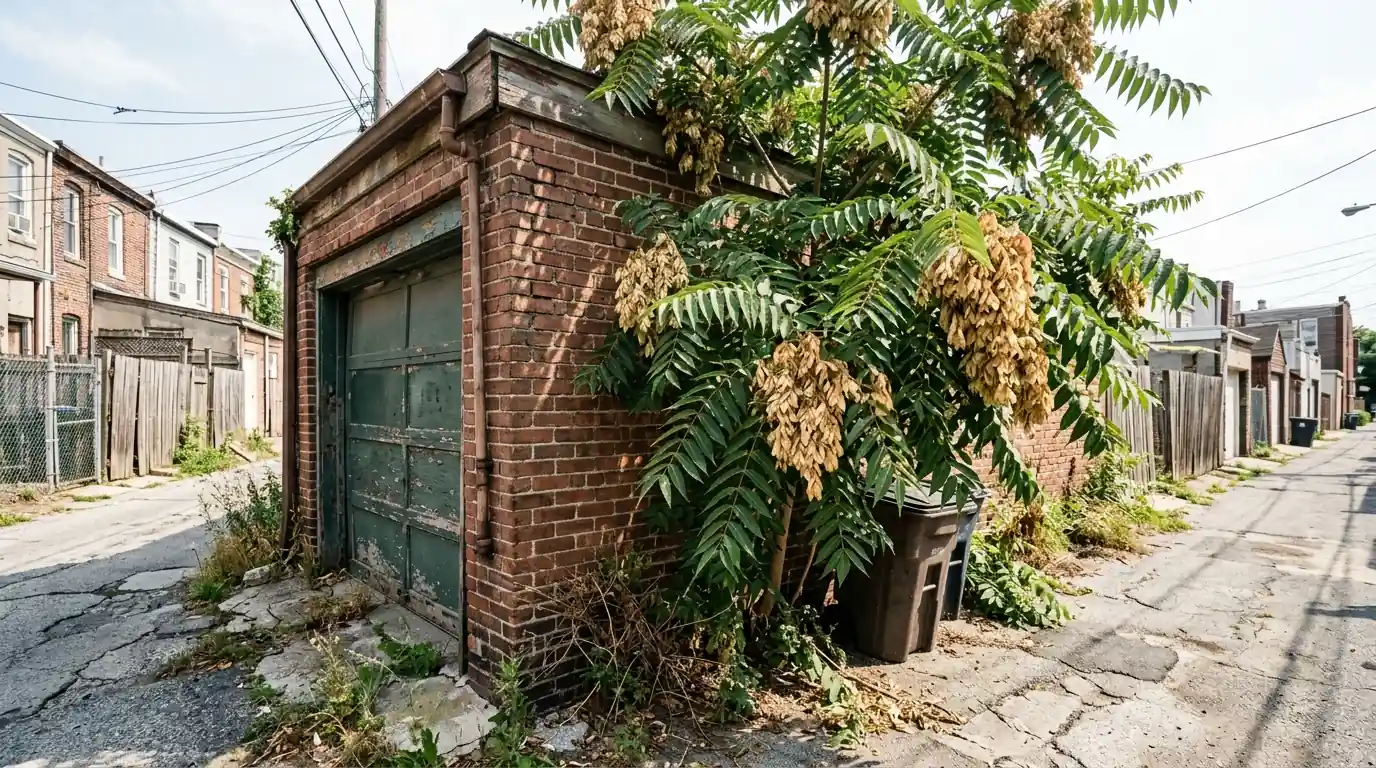
Tree of heaven is a fast-growing weed tree that has spread across Philadelphia and its suburbs. It seeds into any gap it can find: the strip behind a garage, a crack in a retaining wall, the foot of a chain link fence. A seedling can reach head height in a season and keep going.
It also spreads underground. Roots run sideways well beyond the crown and send up new shoots, so a single tree often becomes a grove. That root network is the reason the usual cut-and-forget approach fails.
Telling it apart from sumac, walnut and ash
Several native trees also carry long compound leaves, so people cut the wrong one or leave the right one. These features, taken together, separate tree of heaven from its look-alikes:
- Leaflet edges are smooth except for one or two small notches near the base of each leaflet.
- Crushed leaves and broken twigs give off a rank, burnt-peanut smell.
- Bark is smooth and gray with pale, netted streaks, a bit like a cantaloupe rind.
- Female trees carry big hanging clusters of papery, twisted seeds that turn tan in fall.
- Sumac and black walnut leaflets are toothed along the whole edge, and walnut drops round green nuts.
- Ash has branches in opposite pairs and far fewer leaflets per leaf; tree of heaven branches alternate.
If you are still unsure, take a leaflet to the call. A crushed leaf that smells bad is usually the clincher.
How it feeds the spotted lanternfly
Spotted lanternfly first turned up in Berks County, Pennsylvania, in 2014. Philadelphia has been inside Pennsylvania's quarantine since 2017, and by August 2020 New Jersey's quarantine covered eight counties, including Burlington, Camden, Gloucester and Mercer, with treatment focused on tree of heaven.
The insect prefers tree of heaven but feeds on about 70 kinds of plants, so maples, grapevines and garden shrubs nearby take damage too. Its sap feeding leaves sticky droppings that grow a black mold, and over time that mold can kill plants. Some programs leave a few treated tree of heaven standing as trap trees, which is part of spotted lanternfly treatment planning.
Think you have tree of heaven? Call and describe the leaves and the smell, and we will tell you.
Call (916) 312-2373Why the saw alone backfires
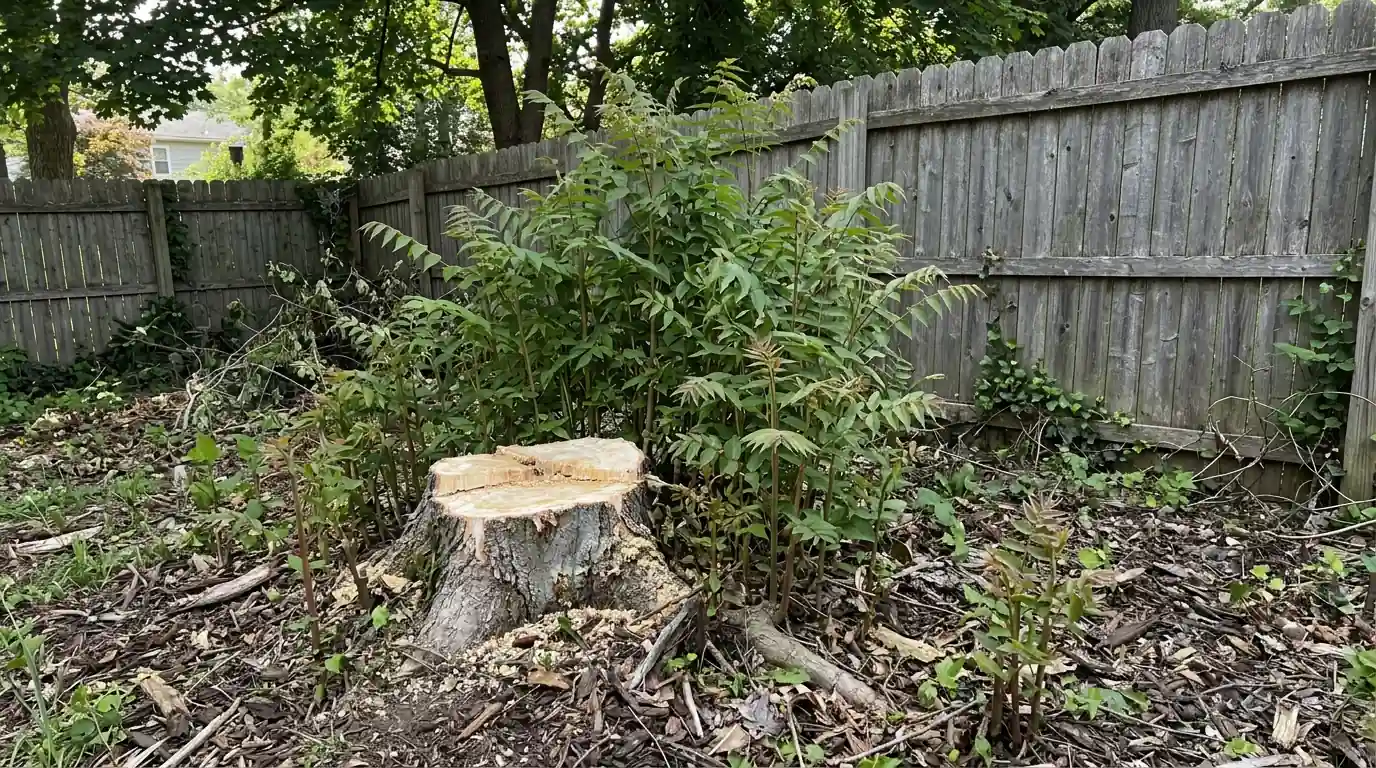
Cut the trunk of a healthy tree of heaven and the roots respond by pushing up sprouts from the stump and along every root. Penn State Extension describes exactly that flush, which is why its advice centers on treating the stem or stump with herbicide rather than cutting alone.
Stump grinding does not fix this either. Grinding takes out the stump, but the roots beyond it are untouched and keep sprouting. Grinding is still useful for a clean lawn once the roots are dead, so stump grinding belongs at the end of the plan, not the start.
A removal plan that keeps it gone
The order of work matters more than the tools. A typical sequence on our tree of heaven removal jobs looks like this:
- Identify every stem, including the small suckers that look like separate trees.
- Treat living stems with herbicide while the tree is in full leaf and moving sugars down to the roots.
- Leave treated trees standing long enough for the product to reach the root system.
- Cut and remove the dead or dying stems, lowering any large trunks near buildings.
- Grind or treat stumps, then check for and treat new sprouts the following season.
Late summer and early fall treatment tends to work well because the tree is sending its energy downward then. Thickets along fences and lot edges can be handled as brush and overgrowth clearing once the roots are spent.
Big ones near houses and wires
A mature tree of heaven can top 60 feet, and its wood is weak and brittle. Large limbs snap in storms, and trees that grew up in a gap between buildings often lean hard toward the light. Those come down in rigged sections like any other tight removal, just with the treatment step first.
If one has grown into the yard behind a rowhome with no alley, the carry-out is the bigger job, and our guide on the costs behind tree removal explains why access weighs so heavily on price.
Tree of heaven and lanternfly questions
Yes. Crush a leaf or snap a twig and you get a rank, burnt-peanut odor that sumac and walnut do not have. It is one of the quickest ways to confirm what you are looking at.
Not by itself. The spreading roots keep sending up sprouts after the stump is gone. Herbicide treatment before cutting is what stops the root system, and grinding finishes the job afterward.
Removing them helps, but lanternflies feed on about 70 kinds of plants, so they will not vanish. Some plans leave a few treated trees as traps while removing the rest.
Late summer into early fall, while it is in full leaf and moving sugars to the roots. Herbicide applied then is carried down into the root system, where the resprouting starts.
Some people get skin irritation from the sap and crushed leaves, so wear gloves and long sleeves when pulling seedlings or handling cut stems, and wash your hands afterward.
They can. The insect feeds on many plants beyond tree of heaven, and its droppings grow a black mold on leaves underneath that can eventually kill weaker plants.
Invasive tree work we do
Tree of Heaven Removal
Cut, stump-treated and followed up so the root sprouts do not come back.
Spotted Lanternfly Tree Treatment
Protecting the trees lanternflies hammer and removing the host trees they breed on.
Stump Grinding
Stumps ground below grade, the chips raked out or left as mulch.
Brush & Overgrowth Clearing
Overgrown yards, fence lines and alleys cut back and hauled out.
Ready to be done with tree of heaven?
Call and describe what is growing. We will plan the treatment and the removal so the sprouts do not come back.