Quick answer
Deep root fertilization injects a liquid fertilizer into the top foot of soil under a tree, where the feeder roots are, so the nutrients skip the lawn and reach the tree. It helps when the leaves or a soil test point to a shortage, and it does the most good paired with loosening compacted soil. It will not cure a tree dying of rot or disease.
What feeding the root zone does
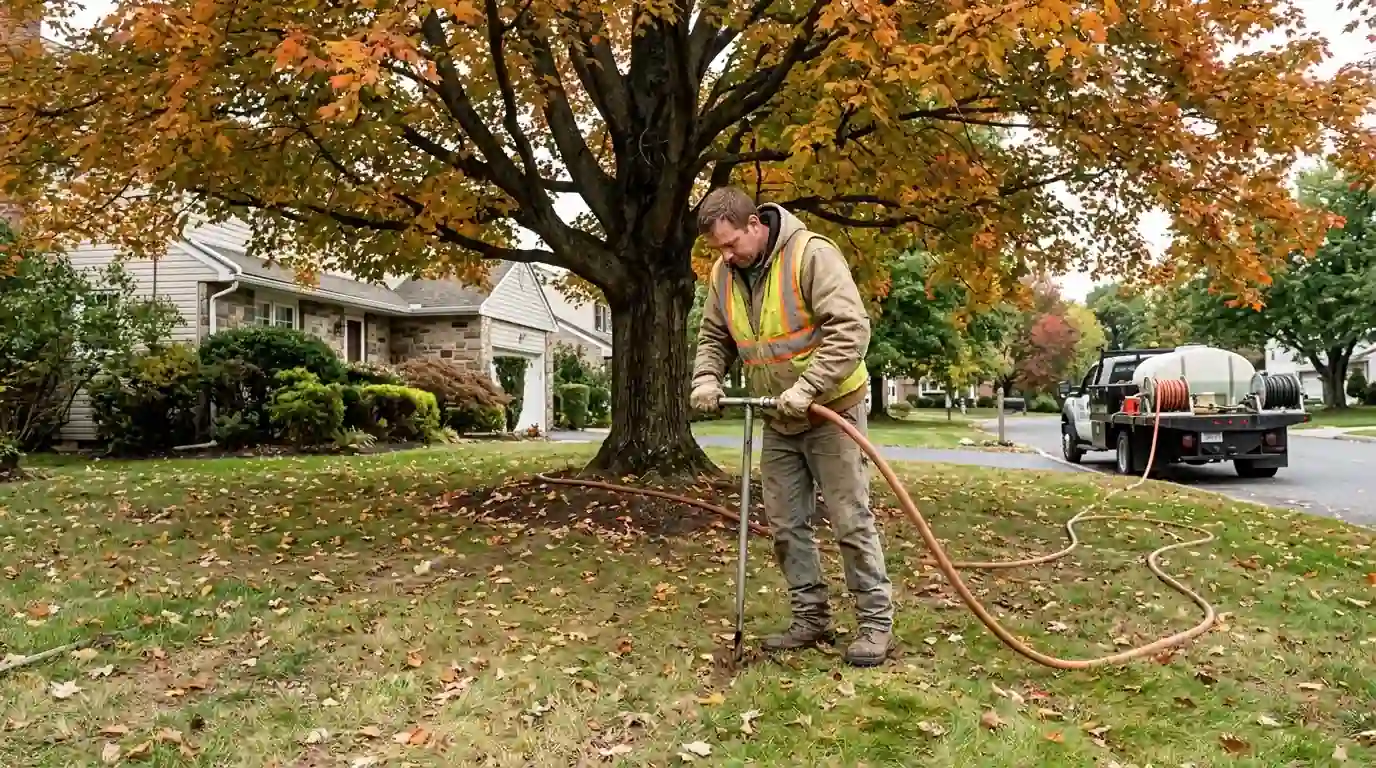
Most absorbing roots live in the top foot of soil and spread well past the drip line. Under turf they compete with grass that takes the nitrogen first, and in packed ground they struggle for air and water. Deep root feeding pushes a liquid mix into that zone under pressure through a grid of injection points, and the pressure opens small channels in the soil.
Fertilizer is not medicine. Too much nitrogen on a stressed tree pushes soft growth that pests love, so we work out what is wrong first and feed only what is short. A tree with decay or a failing root plate needs a full risk check instead, and one that declined after a building project may need root zone protection on the next job. A root circling the base of the trunk is a different fix: cutting a girdling root.
What a root zone treatment includes
- A look at leaves, twig growth and the trunk base
- A soil test when the cause is unclear
- A fertilizer mix matched to what the soil lacks
- Injection points spaced through the root zone
- Feeding under turf and beds, past the drip line
- Loosening soil packed by cars or foot traffic
- Excess mulch or soil pulled off the root flare
- A wide, shallow mulch ring around the trunk
- Watering advice for the weeks after
Fertilizing stressed trees
The tree that leafed out thin this spring, or dropped leaves early last fall, is often short of nutrients its soil cannot supply, especially where leaves get raked away every year. We feed in spring or fall, when roots are growing and the soil is moist. A tree recovering from drought or heavy pruning gets a light mix, since forcing growth on a weak tree spends reserves it needs.
Soil decompaction
Where cars park over the roots, a house went up nearby, or foot traffic beat the ground hard, soil gets so dense that roots cannot push through and rain runs off. Loosening it, by fracturing the soil with compressed air or working compost into radial trenches, gives roots room and oxygen. It shows results more slowly than feeding but usually does more for a compacted tree.
Mulch rings
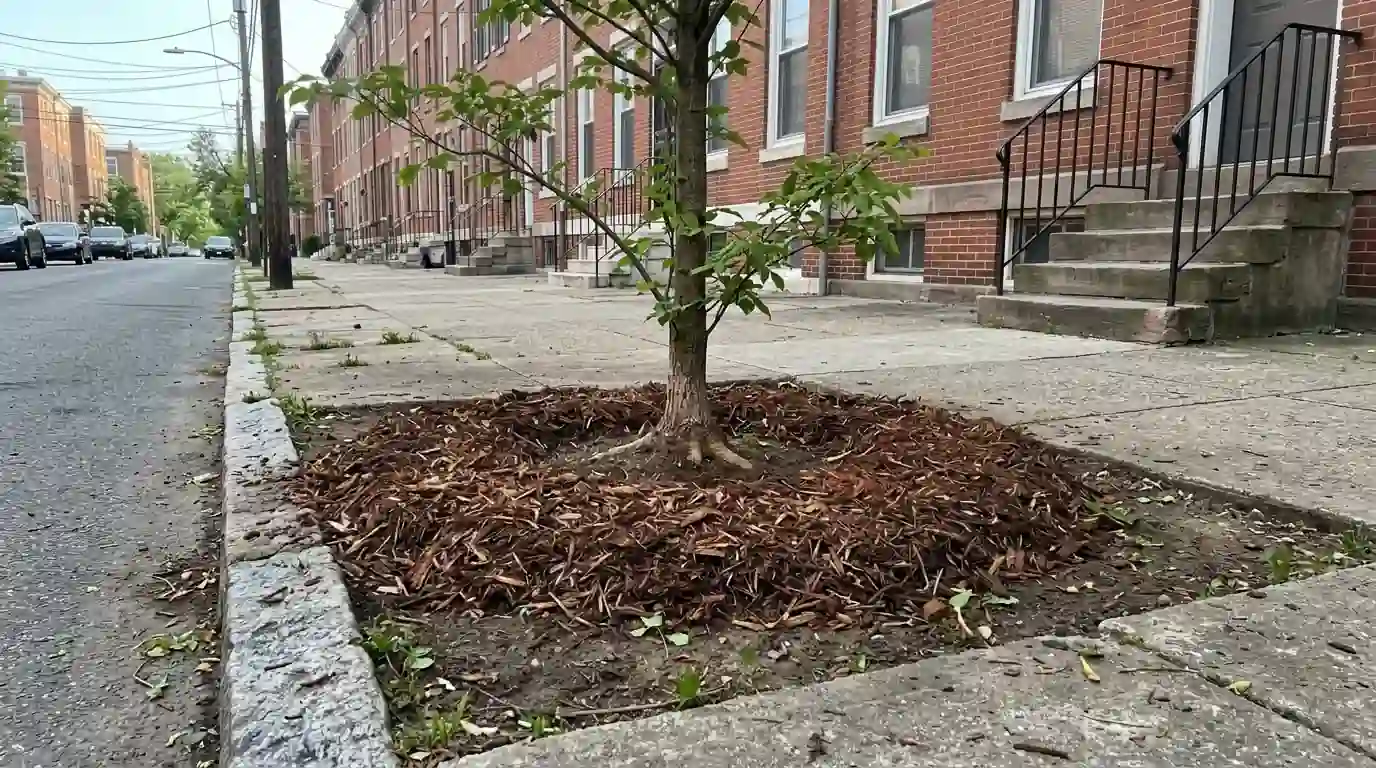
A ring of shredded wood mulch two to four inches deep, spread wide and kept off the bark, holds moisture, keeps mowers off the trunk and slowly feeds the soil. Mulch heaped against the trunk does the opposite, inviting rot and girdling roots. We pull back any volcano, expose the flare and lay a ring as wide as the yard allows. Dead limbs spotted while we are there can come out with a deadwood prune.
Signs a tree is underfed or root-stressed
- Small, pale or yellowing leaves
Leaves smaller than last year, or yellow between green veins.
- Short new growth on twig tips
An inch or two of new twig where there used to be several.
- Early fall color
Leaves turning or dropping weeks before the same species nearby.
- A crown thinning for no clear reason
More sky showing through the canopy each year.
- Hard, bare soil under the canopy
Ground that sheds water, grows nothing, or gets parked on.
- A buried or missing root flare
The trunk going straight into the ground like a post.
Why city soil runs trees short
Trees in Philadelphia often root into ground that was graded, filled and built over long before they were planted, with brick, cinders and old mortar mixed through it. Rowhome yards and narrow sidewalk strips give roots little room, and paving sheds rain away from them. The leaves that would rot down and feed the soil get raked up and bagged each fall. In that setting a tree tends to run short on organic matter and air before any single nutrient, which is why loosening and mulching come first here.
How a deep root feeding visit runs
Look at the tree
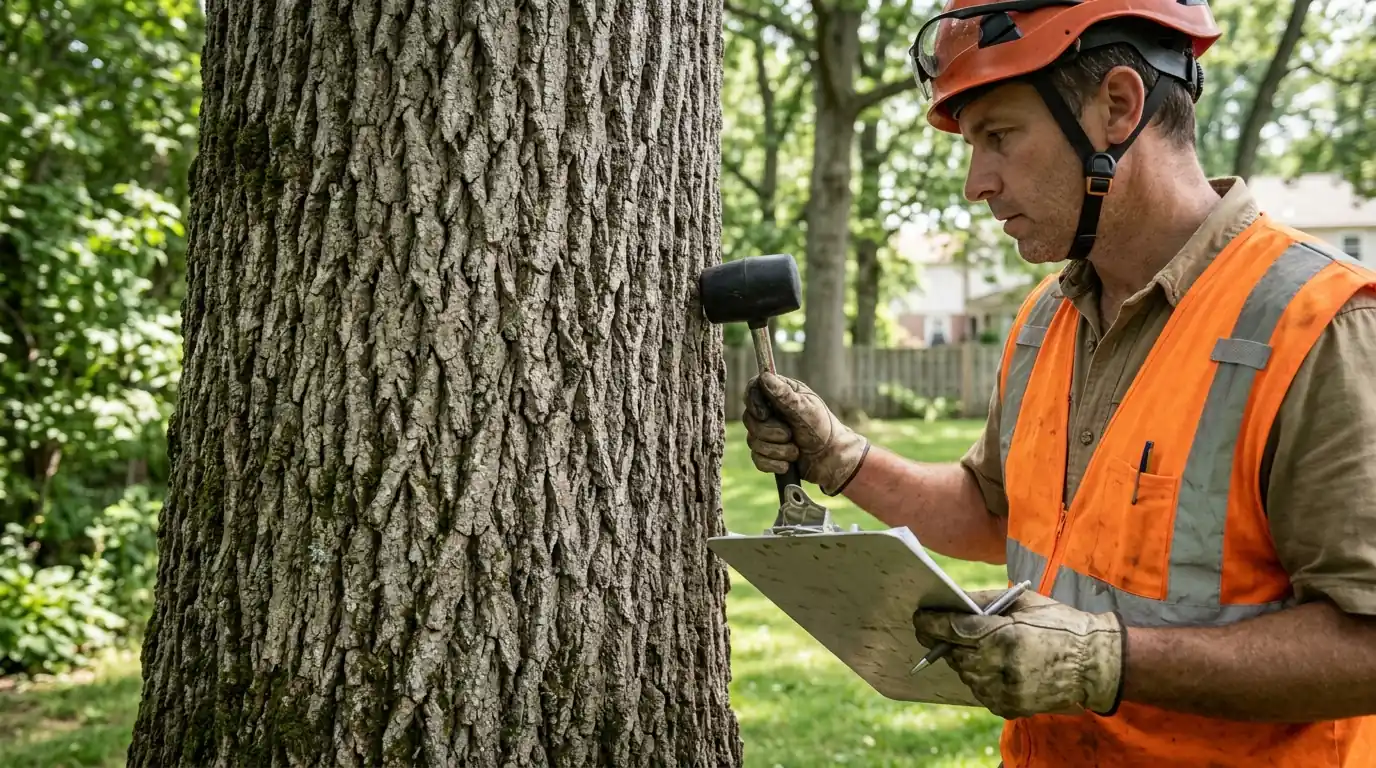
Leaves, twigs, flare and soil checked for the real stress.
Test if needed
A soil sample sent off when the leaves do not explain it.
Mix to suit
Blend and rate matched to the tree and its soil.
Mark the grid
Injection points laid out through the root zone.
Inject and loosen
Liquid fed under pressure, opening small air channels.
Fix the flare
Excess mulch or soil pulled away from the trunk base.
Mulch and water
A wide ring laid and watering advice left for dry spells.
What deep root feeding costs
We have not found a published range for deep root fertilization worth quoting, so the price is set after seeing the tree. These five things drive it.
- 01
Size of the root zone. A wide shade tree needs many more injection points than a young street tree.
- 02
Number of trees. Several trees in one visit share the setup time.
- 03
Soil testing. A lab test adds a little but keeps us from feeding what the soil already has.
- 04
Decompaction. Loosening packed soil takes longer than feeding alone.
- 05
Mulch and flare work. Pulling back volcano mulch and laying a new ring adds material and time.
Root fertilization questions
Only as often as it shows a need. A tree with a confirmed shortage might be fed in spring or fall for a couple of years, then left alone once growth recovers.
Not really. Grass roots catch most of it near the surface, and high-nitrogen lawn mixes are not balanced for trees. Feeding below the turf puts nutrients where tree roots take them up.
Rarely. A tree dying from rot, root damage or disease will not recover from feeding, and forcing growth drains what reserves it has left. Find the cause first.
Mid-spring and early fall, when the soil is moist and roots are growing. Feeding during a summer drought is hard on stressed roots and mostly wasted.
No. The injection holes are small and close quickly, and turf above the root zone often greens up for a while afterward.
Other tree health services
Tree Inspection & Risk Assessment
A walk-around look at decay, cracks, lean and roots, with a straight answer on what needs doing.
Tree Protection During Construction
Fencing root zones and pruning ahead of additions, driveways and sewer work.
Emerald Ash Borer Treatment
Trunk injections that protect healthy ash worth saving from the borer.
Tree Planting
Planting replacement trees, including the replacements some towns require.
Tree looking tired?
Call and describe what you see. We will look at the tree and its soil and tell you whether feeding, loosening or something else will help.