Quick answer
Most backyard fruit trees should be pruned once a year in late winter, before the buds swell, with peaches done last and some cherry work left for summer. A yearly prune keeps the tree low, open and bearing on healthy wood. LawnStarter's published range for trimming trees under 30 feet is $85 to $415, the bracket nearly all home fruit trees fall into.
What pruning does for a fruit tree
Fruit trees are pruned for the crop, not just the shape. Fruit needs sun to color and sweeten, and leaves need moving air to dry after rain. A crowded crown gives you neither: fruit sets only on the outside, and the shaded middle stays damp, which is where scab, rot and mildew get going.
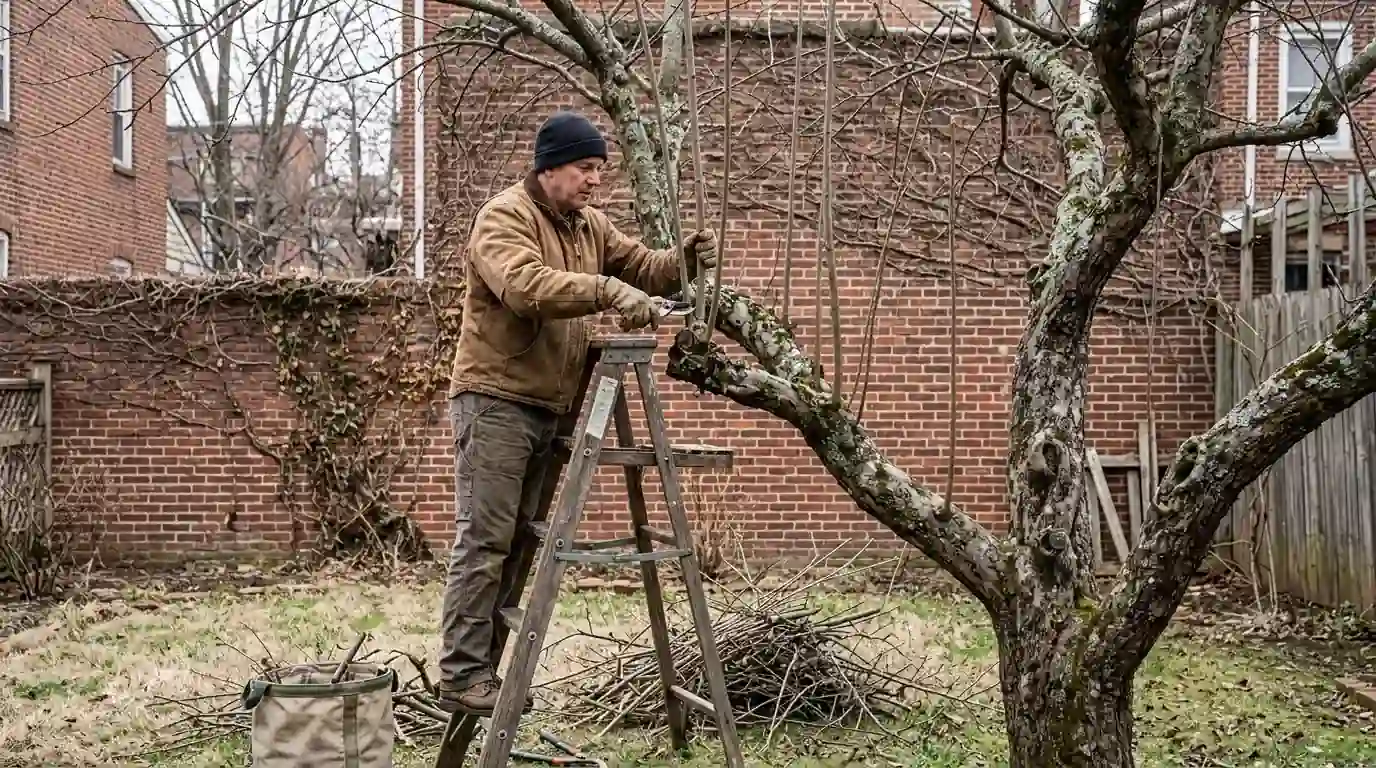
So the cuts differ from shade tree work. We remove upright water sprouts, open the center or keep a single leader depending on species, thin crowded spurs, and bring the top down so most of the crop is picked from the ground. Young fruit trees get the same early shaping as a young shade tree, and one past saving can simply come down and be hauled off.
What a fruit tree pruning visit includes
- A look at form, wood age and any disease
- Dead, broken and diseased wood cut out first
- Water sprouts and root suckers removed
- Crossing and inward-growing branches thinned
- Center opened or leader kept, by species
- Crowded fruiting spurs thinned on apples and pears
- Height lowered toward picking reach
- Shriveled old fruit pulled off the branches
- Brush chipped or hauled, never left under the tree
Apple and pear pruning
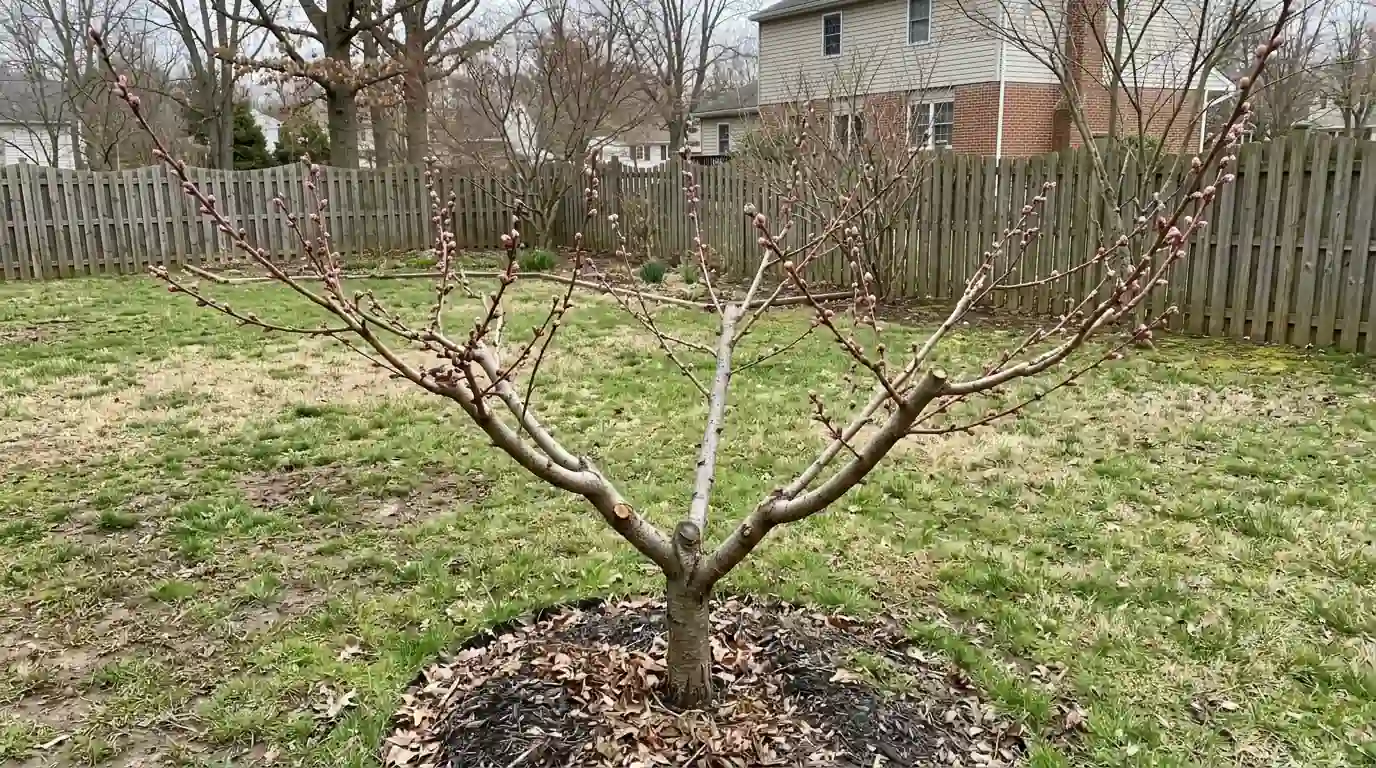
Apples and pears fruit on short, stubby spurs that live for years, so the aim is to keep those spurs in light. You see the need when the crown is a broom of vertical shoots and the fruit is small and spotty. We prune while dormant, taking out water sprouts, crossing limbs and branches heading inward, and thinning old crowded spurs. Pears get extra care for fire blight: blackened, hooked shoots are cut well below the damage, with tools cleaned between cuts.
Peach and cherry pruning
Peaches fruit on last summer's growth, so they need hard pruning every year or the crop creeps farther out each season. We shape them to an open vase and cut late, close to bloom, which lowers the chance of canker entering fresh wounds. Sweet and tart cherries need less: thinning, dead wood out and tall leaders lowered. Some cherry cuts wait until after harvest in dry summer weather, when wounds close faster.
Renovating overgrown fruit trees
An old apple or pear unpruned for years usually still has a sound trunk under the tangle. Cutting it all back in one winter sets off a forest of water sprouts, so we spread the work over two or three years, taking roughly a quarter of the crown each time. The first winter removes dead wood and the worst crossing limbs, then the height comes down and the center reopens. Big dead scaffold limbs may call for cutting out the deadwood first.
What lighter winters mean for fruit trees here
Philadelphia measured only 8.1 inches of snow in winter 2024-25, about a third of normal, and the last five winters averaged 11.3 inches, roughly half the long-term average. Mild stretches tempt people to prune on the first warm day, but cutting too early leaves fresh wounds open to the cold snaps still ahead. Heavy winters still come: 78.7 inches fell in 2009-10 and 68 in 2013-14, and wet snow on long, unpruned fruit limbs is what splits them at the crotch.
How a fruit tree pruning visit goes
Identify the tree
Species and age decide where the fruit forms.
Clear the obvious
Dead, broken and diseased wood comes out first.
Remove water sprouts
Vertical shoots off the main limbs are cut at their base.
Open the canopy
Crossing and inward branches thinned for light and air.
Set the height
Tall leaders shortened to an outward side branch.
Thin the fruiting wood
Spurs thinned or one-year shoots selected, by species.
Clean up
Brush and old fruit cleared from under the tree.
Pruning your own fruit tree, or calling us
On a small tree this is very doable at home. Tall, old or diseased trees are where help pays off.
| Doing it yourself | Having us do it | |
|---|---|---|
| Timing | Easy to prune peaches too early or cherries in wet weather. | Each species is cut in its own window. |
| Which wood to keep | Cutting off fruiting spurs or last year's peach wood loses the crop. | We keep the wood that will bear. |
| Disease | Fire blight and canker spread on unclean tools. | Diseased wood cut well below the damage, tools cleaned between trees. |
| Height | Old trees put the top past ladder reach. | Pole saws or a short climb to bring the height down. |
What fruit tree pruning costs
Home fruit trees sit in the smallest trimming bracket. Five things move a visit inside it.
- 01
Time since the last prune. A yearly prune is quick; ten years of water sprouts is a long session.
- 02
Number of trees. Several trees in one yard share a single setup.
- 03
Species mix. Peaches and apples are cut differently, sometimes on different dates.
- 04
Disease work. Cutting out fire blight or canker means slower, more careful cuts.
- 05
Renovation. An overgrown tree is spread over several winters, each visit priced on its own.
| Job | Published range | Source |
|---|---|---|
| Tree trimming, per tree | $430 to $640 | LawnStarter, 2026 |
Planning numbers from published surveys, not our prices. We price after seeing the tree.
Fruit tree pruning questions
Late winter, after the worst cold and before buds open, suits apples and pears. Peaches go last, near bloom, and some cherry cuts wait for dry weather after harvest.
Those are water sprouts, a reaction to heavy cutting or a crowded crown. Removing them at the base each year, and pruning moderately, slowly calms the tree.
Usually better fruit rather than more. Thinning lets each piece get sun and size, and an open crown dries faster, so less of the crop rots.
Often, if the trunk and main limbs are sound. We renovate over two or three winters rather than cutting it hard all at once, which only triggers more sprouts.
No. Wound paint and sealers trap moisture and do not stop decay. A clean cut just outside the branch collar closes over on its own.
Other pruning for smaller trees
Young Tree Structural Pruning
Early cuts that set a strong structure so the tree needs less work later.
Ornamental Tree Pruning
Careful hand pruning for Japanese maples, dogwoods and flowering cherries.
Deadwood Removal
Dead branches cut out of the crown before they drop on someone.
Tree Trimming
Cleaning, thinning and shaping that keeps a shade tree healthy and out of the way.
Fruit tree gone wild?
Call and tell us what is growing. We will come look, explain what gets cut this winter, and price the visit.