Quick answer
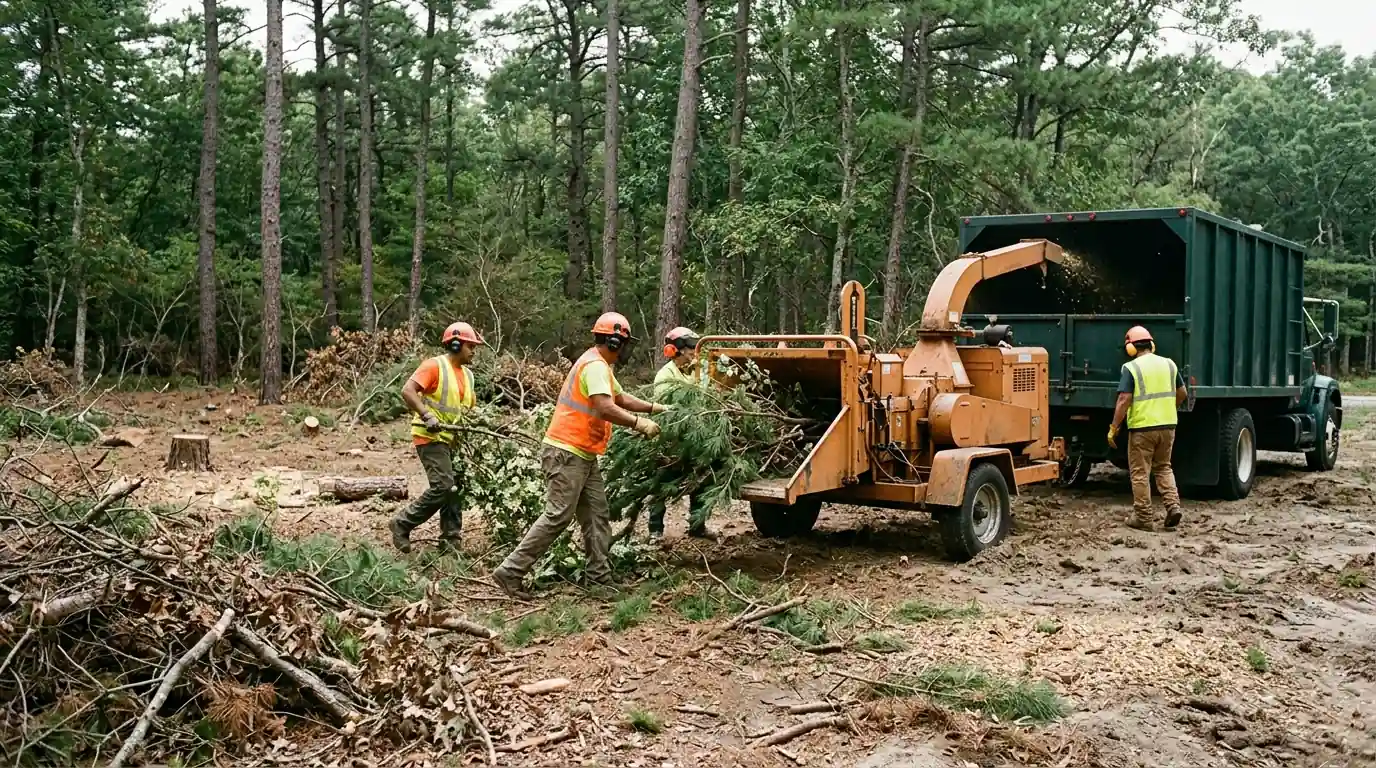
Clearing land runs about $1,500 to $8,000 per acre in national CleanFill data, from $1,500 to $3,000 for light brush to $4,500 to $8,000 for heavy forest. Small suburban lots are usually priced by the job instead. Before anything is cut, check whether your township regulates tree removal on the parcel.
Clearing ground without stripping it bare
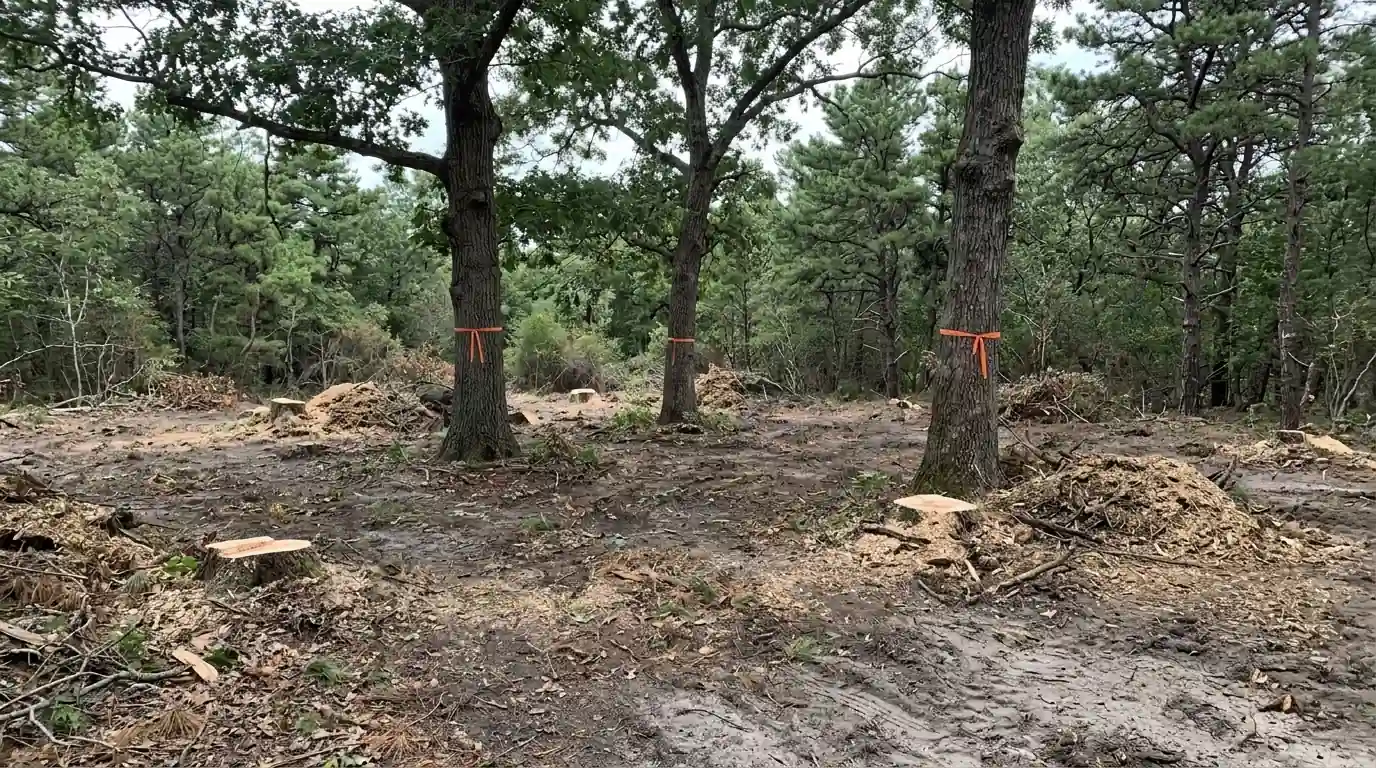
A cleared lot that loses every tree also loses shade, screening and the soil those roots held. Most owners want a building pad, a yard or a sight line opened up, not a moonscape. So the first hour is spent flagging: sound oaks and maples stay, Callery pear, tree of heaven, dead ash and crowded saplings go.
After that the work is sequenced. Standing trees come down first, brush goes through the chipper, logs are cut and hauled or left for you, then stumps are ground. Where the next step is a foundation or a patio rather than lawn, full stump and root extraction may make more sense than grinding. Churches, schools and other campuses clearing a corner of their grounds can read about scheduled grounds work for institutions.
What clearing a lot costs
Per-acre figures fit larger parcels. On a quarter-acre suburban lot, the count and size of trees matters more than the acreage.
- 01
Density of growth. Scattered saplings clear quickly; a stand of 60-foot trees with vines in the crowns is days of rigging.
- 02
Trees kept standing. Working around keepers is slower than open felling, because each drop has to miss them.
- 03
Stumps. Grinding a dozen stumps flush is a separate line from the cutting, and extraction costs more.
- 04
Where the wood goes. Chips left on site and logs stacked for you take less hauling than a lot cleared to bare dirt.
- 05
Rules on the parcel. A township replacement or fee requirement adds to the budget before any saw starts.
| Job | Published range | Source |
|---|---|---|
| Land clearing | $1,500 to $8,000 per acre | CleanFill, 2026 |
| Tree crew, Philadelphia hourly | $240 to $310 per hour | HomeBlue, 2025 |
| Stump grinding | $120 to $500 | HomeAdvisor, 2026 |
Planning numbers from published surveys, not our prices. We price after seeing the tree.
Clear it all, clear selectively, or just open it up?
| Approach | What happens | Suits |
|---|---|---|
| Full clearing | Every tree and shrub removed, stumps ground or pulled | A building footprint, driveway or new lawn |
| Selective clearing | Healthy keepers stay; invasives, dead wood and crowded trees go | A wooded lot you want usable but still shaded |
| Understory only | Brush, vines and saplings cut out, the canopy left alone | Opening a view or a walking path under big trees |
Selective clearing costs more per tree removed than full clearing, but it often means fewer trees to cut in total and less to replant if a town requires replacements.
Wooded lot clearing
Woodland that has grown up for twenty or thirty years usually holds a few good trees among a lot of weak ones. We take the saplings and undergrowth first so the bigger trees can be reached and dropped or rigged safely. Larger trees are priced like any removal; a wooded parcel thick with mixed brush often lands toward the heavy-forest end of the CleanFill range, $4,500 to $8,000 per acre.
Clearing for additions and sheds
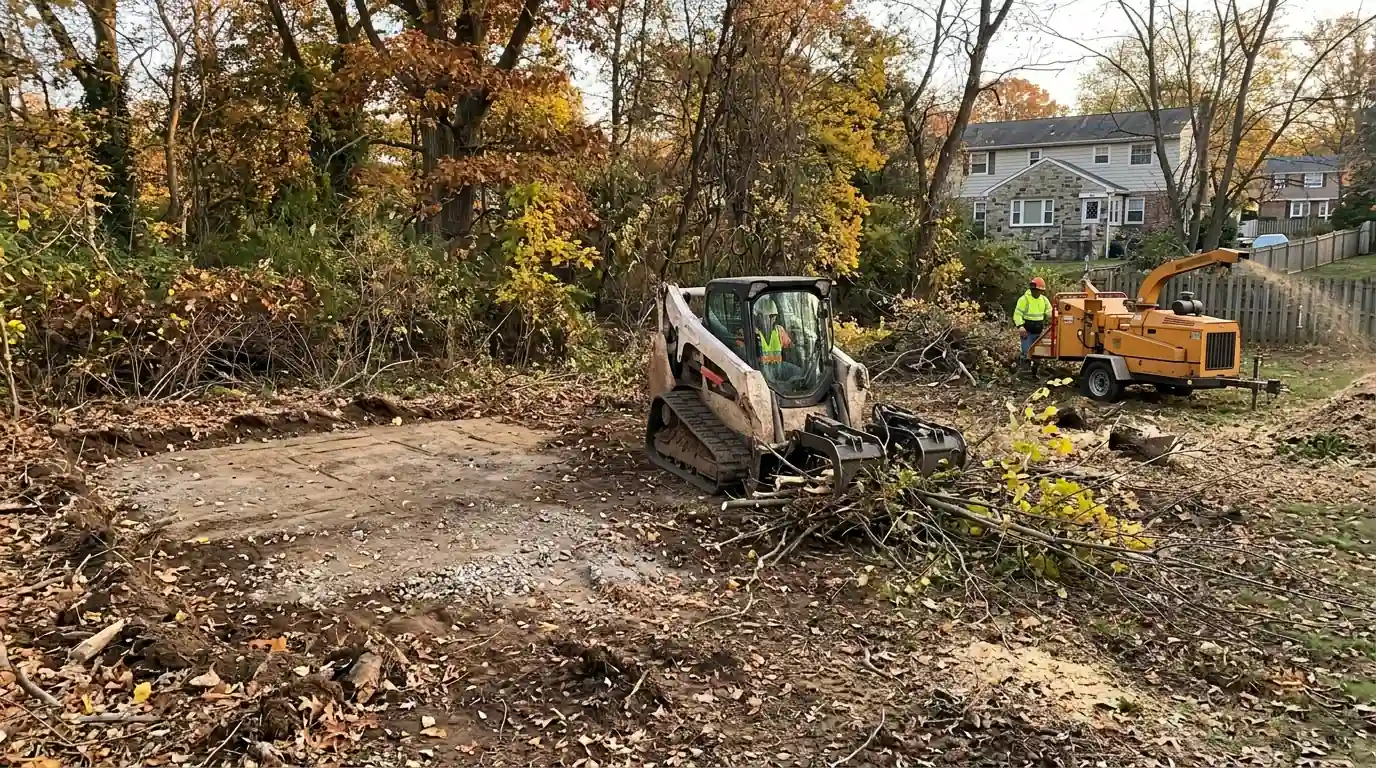
A shed pad or an addition only needs a defined footprint plus working room. We clear that area and the access route, grind stumps below the planned slab depth, and protect the trees at the edge so the build does not kill them later. Fencing those edge trees is covered on our page about keeping trees alive through a build.
Selective clearing
Selective work is a judgment job. Callery pear, tree of heaven and dead ash are easy calls. Crowded young oaks and maples are harder: we keep the straightest with the fullest crowns and thin the rest so they grow stronger. Thick undergrowth and vines can be handled as brush and overgrowth clearing on the same visit.
What a lot clearing job includes
- A walk of the property with keeper trees flagged
- A check on whether the township regulates removals on the lot
- Undergrowth and saplings cut first for access
- Larger trees felled where there is room, rigged where there is not
- Brush chipped, with chips left or hauled
- Logs cut to length and stacked or removed
- Stumps ground below grade or extracted for slabs
- Edge trees protected from the work
- A final rake of the cleared area
Pinelands acreage and township tree rules in New Jersey
Across the river, the Pinelands Area takes in about 334,000 acres of the county our office sits in, 64 percent of it, and about 55,000 acres of Camden County, or 38 percent; its pitch pine upland forest is among the most fire-prone in the country, so lot work there starts with knowing what grows on it. The township next door adopted a tree removal and replacement chapter on April 23, 2024: residents clearing fewer than four trees per acre in five years are exempt, while larger clearings face a $100 fee and replacements or $50 to $250 per tree in lieu.
How a clearing job moves across the lot
Describe the lot and the goal
Rough size, what grows there, and what the cleared ground is for.
Walk and flag
Keeper trees tagged, boundaries and buried utilities checked.
Rules checked
Township permit or replacement terms confirmed before cutting.
Understory out
Brush, vines and saplings cut and chipped to open access.
Trees down
Larger trees felled into open ground or lowered in sections.
Wood and stumps
Logs cut and moved, stumps ground or pulled for a slab.
Clean finish
Ground raked, chips spread or removed, edge trees checked.
Lot clearing questions we get
It depends on the town. Some New Jersey and Pennsylvania townships regulate removals above a trunk size or tree count. We check the rules for your parcel before any cutting.
Yes. We flag keepers with you on the first walk, then fell or rig everything else away from them so trunks and roots are not damaged.
Brush is chipped and the chips can stay as mulch or be hauled. Logs can be stacked for firewood or removed, and keeping them lowers the cost.
Winter often makes the work easier: no leaves, better sight lines, firmer frozen ground and no birds nesting in the brush. Price depends more on the trees than the month.
Only if that is part of the plan. For lawn, grinding below grade is enough; for a slab or footing, the stump and main roots usually come out.
Other property and land work
Brush & Overgrowth Clearing
Overgrown yards, fence lines and alleys cut back and hauled out.
Log & Debris Haul-Away
Logs, brush piles and storm debris loaded up and hauled off the property.
Stump Grinding
Stumps ground below grade, the chips raked out or left as mulch.
Bradford Pear Removal
Callery pears that split in wind and spread across yards, taken out at the root.
Have ground that needs clearing?
Call and tell us what you want the lot to become. We will walk it with you, mark what stays, and price the clearing before a single tree comes down. For New Jersey parcels, our guide to South Jersey tree permits is worth a read first.