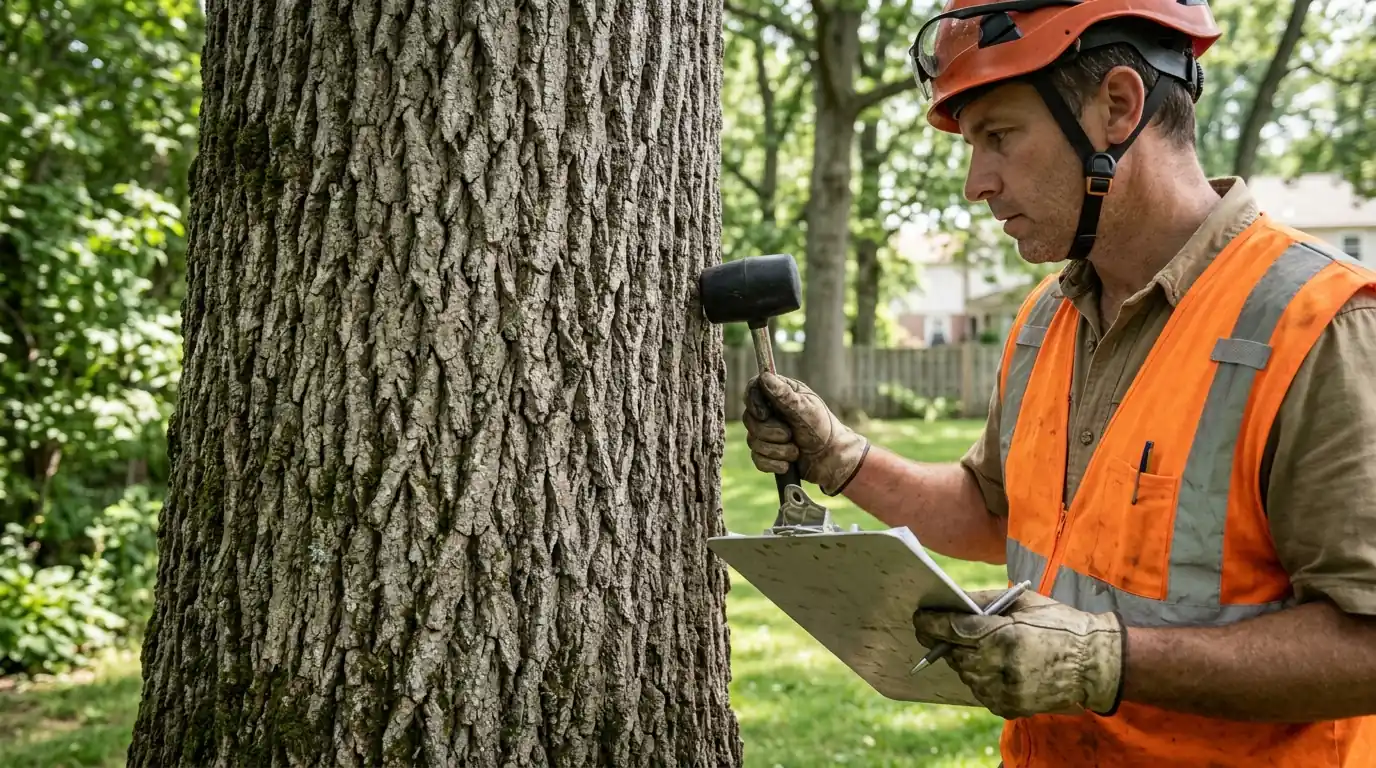
Quick answer
To plant a tree that lives, dig a hole two to three times as wide as the root ball but no deeper, so the flare where trunk meets roots sits at grade. Early fall and spring are the planting windows here. If a town requires a replacement for a tree you took down, plant it before the deadline on your permit.
Why so many new trees die in their first three summers
Most young trees that fail were planted too deep, watered too little, or both. A root ball sunk a few inches below grade looks fine for a year; then the base bark stays wet, roots circle instead of spreading, and the canopy thins by the third summer.
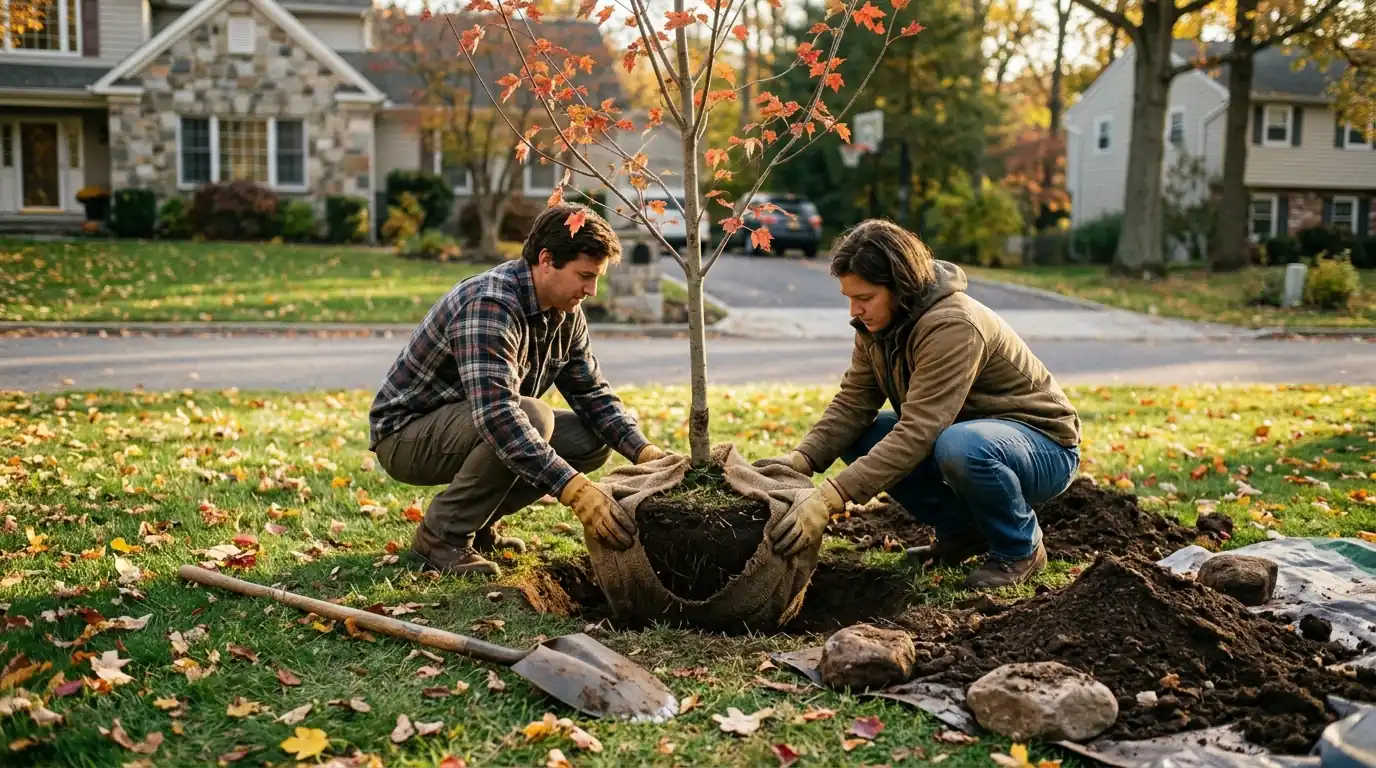
Good planting is mostly the hole and the follow-up. We dig wide in the loose topsoil where new roots grow, pull burlap and twine off the top of the ball, and backfill with the soil that came out. Then the tree needs slow, deep water for two seasons and a few early cuts from structural pruning for young trees. Planting a fruit tree means signing up for winter pruning of the fruit wood every year after.
What decides the price of planting a tree
We have not found a published planting range we trust for this area, so each job is priced from the tree and the site.
- 01
Size of the stock. A 1.5-inch container tree goes in by hand; a 3-inch balled and burlapped tree can weigh several hundred pounds.
- 02
Who supplies the tree. Planting one you already bought is labor only; sourcing one adds the tree and the pickup.
- 03
Getting it to the hole. Rolling a heavy root ball through a narrow gate takes more hands than a driveway drop.
- 04
What is in the ground. An old stump, buried rubble or hard clay means more digging first.
- 05
Number of trees. Several replacements on one visit cost less per tree than one at a time.
Container, balled and burlapped, or bare root?
Nursery trees come three ways, and the choice changes the size you start with, the weight we handle and the planting window.
| Stock type | What you get | Planting window | Good fit for |
|---|---|---|---|
| Container | A smaller tree grown in a pot, light to carry | Spring through fall, with watering | Tight yards and small ornamentals |
| Balled and burlapped | A field-grown tree dug with a heavy soil ball | Early fall and spring | A shade tree that should look established soon |
| Bare root | A young tree with washed roots and no soil | Dormant season only | Program trees and larger batches |
With container stock, we tease or cut circling roots first, since a root that keeps circling can girdle the trunk years later.
Replacement trees after removal
The spot an old tree left is full of grindings and decaying roots that rob nitrogen and settle as they rot. We either clear them out with stump and root ball removal or shift the new hole a few feet into clean soil. Pick a species for the space now, not the one that grew there, especially if the old tree failed from disease.
Balled and burlapped planting
A balled and burlapped tree arrives with its field soil wrapped in fabric and often a wire basket. We move it by the ball, never the trunk. Once it is set plumb at grade, we cut the twine, fold the burlap down and remove the top of the basket so roots can grow out. Synthetic burlap comes off completely because it never rots.
Choosing the right tree for the spot
Start with the space above and below. Under a service wire, a tree that tops out around 25 feet never needs clearance cuts. Near a foundation or sidewalk, avoid species with aggressive surface roots. Skip Callery pear entirely: it splits and spreads, which is why owners often book Bradford pear removal and a replacement on one visit.
What a planting visit from us covers
- A look at sun, soil, wires and the space the tree will grow into
- Help choosing a species and stock size for the spot
- An 811 utility mark-out request before any digging
- A hole two to three times the width of the root ball
- Root flare set at or slightly above grade
- Twine, top burlap and upper wire basket removed
- Backfill with native soil, watered in to settle air pockets
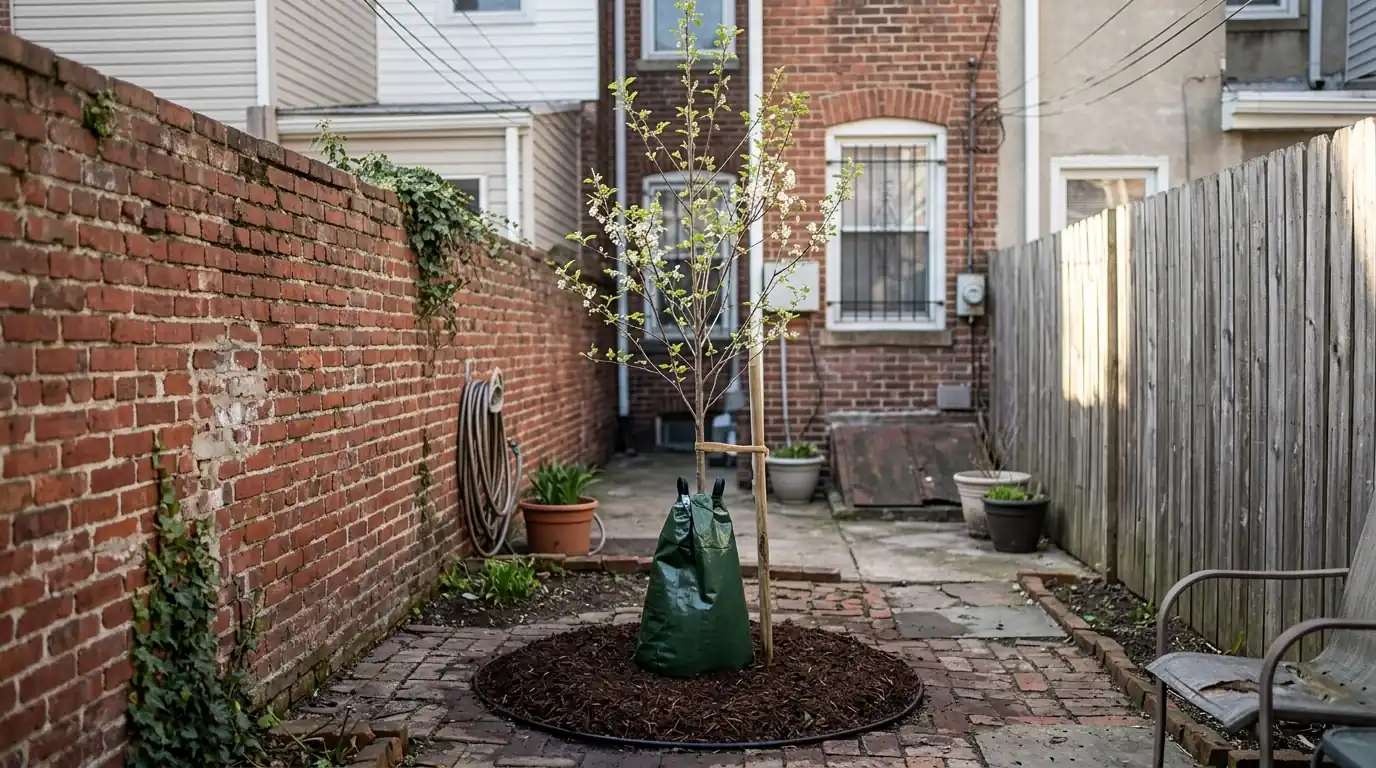
- A mulch ring two to three inches deep, kept off the trunk
- Written watering steps for the first two growing seasons
Free city trees and required replacements
Philadelphia makes planting easier than most cities. TreePhilly, the Parks and Recreation program run with the Fairmount Park Conservancy, has handed out free yard trees to residents since 2012 and passed 25,000 of them by fall 2020; you plant them yourself on your own property. Across the river, Cherry Hill ties planting to removal: past three healthy trees in 12 months, each extra one needs a one-for-one replacement or a $175 payment to the Cherry Hill Tree Fund in Camden County.
How a tree goes in the ground with us
Talk through the spot
Where it goes, what came out, and whether a permit set a replacement.
Site check
Sun, drainage, overhead wires, nearby walls and the mature spread.
Pick the tree
Species and stock type agreed, then sourced or collected.
Mark utilities
An 811 request so buried lines are flagged first.
Dig and set
Wide, shallow hole, tree set plumb with the flare at grade.
Backfill and mulch
Native soil back in, a deep first soak, mulch kept off the bark.
Hand over the care plan
Watering amounts, frequency, and when the first pruning is due.
Tree planting questions people ask us
Early fall is ideal, because warm soil grows roots while the air is cool. Spring works once the ground thaws. Midsummer planting needs container stock and far more watering.
A slow soak at the root ball once or twice a week for two growing seasons, more in dry heat. Feel the soil a few inches down before watering again.
Usually not, since most trees anchor faster without stakes. We stake only on windy, open ground or a loose root ball, and the ties come off after one season.
Yes. Those are small trees, so the visit is short. We help pick the spot, check for buried lines and set it at the right depth.
You can, but grindings and old roots make poor soil. Dig them out and refill with topsoil, or move the new tree a few feet away.
Work that pairs with a new tree
Young Tree Structural Pruning
Early cuts that set a strong structure so the tree needs less work later.
Deep Root Fertilization
Feeding and loosening compacted root zones around stressed city and suburban trees.
Tree Protection During Construction
Fencing root zones and pruning ahead of additions, driveways and sewer work.
Stump & Root Ball Removal
Digging the stump and main roots out when the spot is getting a slab or a new tree.
Ready to put a tree back in?
Call and describe the spot. We will suggest a tree that fits and plant it so it has a real chance. If a permit set the replacement, read our South Jersey permit notes first.