Quick answer
For light brush, national CleanFill data puts clearing at about $1,500 to $3,000 per acre, but most city yards are far smaller and get priced by crew time instead. Philadelphia crews average $240 to $310 per hour in HomeBlue data. Density, vines, hidden debris and how far the brush must be carried set the total.
What clearing overgrowth really takes
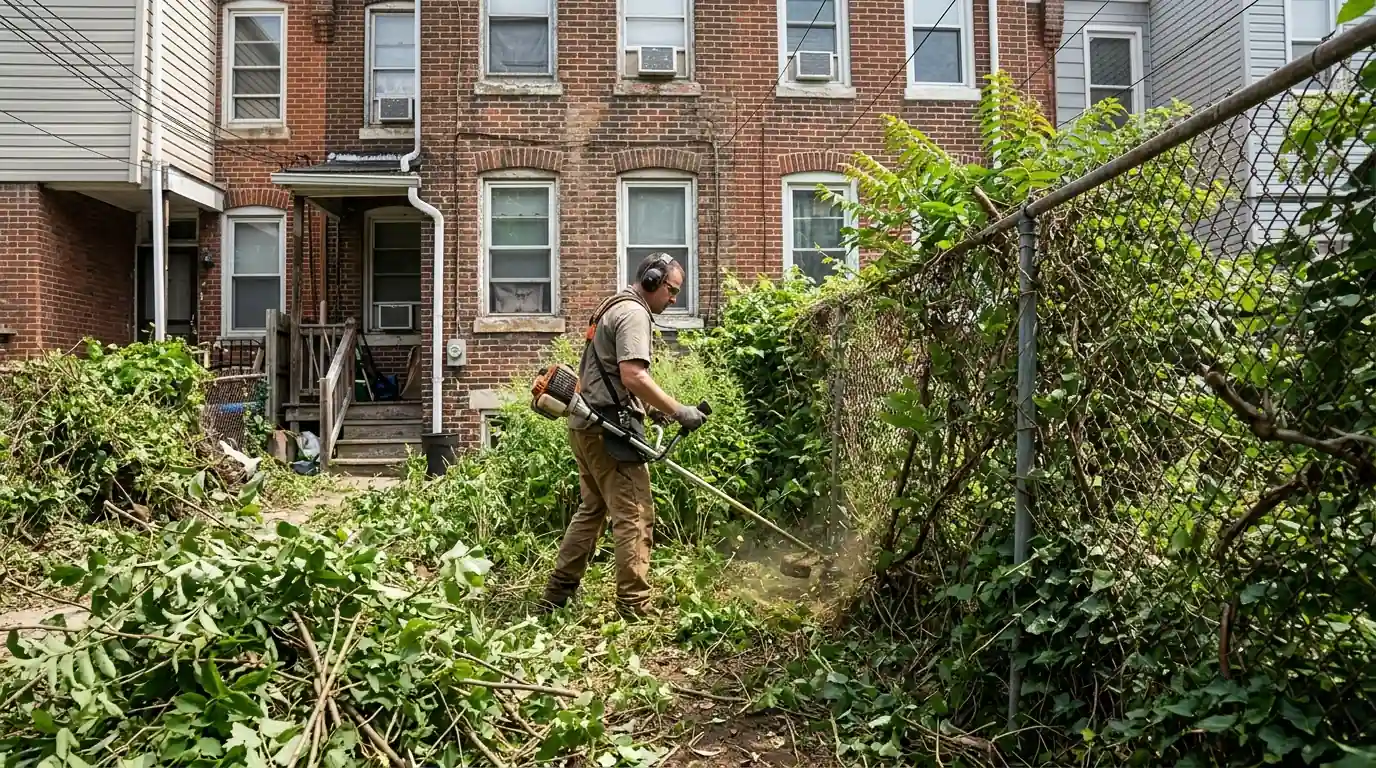
Overgrowth is a mix, and each part needs a different tool. Soft weeds go down with a brush cutter. Woody saplings up to a few inches thick need a saw and a stump cut flush. Vines tangled through a fence have to be cut in pieces and pulled out by hand, or the mesh gets bent.
Cutting is half the job. Sumac, tree of heaven and Callery pear all resprout from roots and stumps, so the cut ends need treatment or a follow-up visit. Anything bigger than a sapling is really tree work: dead trees in a neglected yard may call for removal from a tight backyard before the brush can be reached.
What brush clearing costs
Acre figures help on larger suburban parcels. For a city yard, these factors decide the price.
- 01
How thick the growth is. Knee-high weeds are a quick pass; a wall of eight-foot sumac and briars is a full day.
- 02
Saplings and small trees. Every woody stem over an inch or two needs a saw cut and often stump treatment.
- 03
Vines in fences and walls. Vines woven through chain-link come out slowly by hand to save the fence.
- 04
Hidden debris. Old tires, glass and buried fencing in a neglected lot slow the cutters down.
- 05
The carry to the truck. A rowhome yard with no alley means every armload goes through the house or over a wall.
| Job | Published range | Source |
|---|---|---|
| Land clearing | $1,500 to $8,000 per acre | CleanFill, 2026 |
| Tree crew, Philadelphia hourly | $240 to $310 per hour | HomeBlue, 2025 |
Planning numbers from published surveys, not our prices. We price after seeing the tree.
Clearing brush yourself, honestly
Plenty of people clear a small yard on a weekend. Trouble starts with poison ivy, a cutter throwing glass, or a pile with nowhere to go.
| Doing it yourself | Having us do it | |
|---|---|---|
| Poison ivy | Easy to grab hidden in a tangle; the oil stays on gloves and tools | We cut it with the rest and bag or chip it without handling it bare |
| Saplings and stumps | Lopped stems resprout thicker within a season | Stems cut flush and treated or ground so they stay down |
| Tools | A rented brush cutter throws stones and glass; a chainsaw in a tangle can kick back | Saws and cutters run by people who use them daily |
| Disposal | Piles of cut brush can sit for weeks waiting to be bundled out | Brush chipped on site or loaded and hauled the same day as the cutting |
Overgrown backyards
A backyard lost to a few seasons of neglect usually still has a patio, a path or a garden bed under the growth. We cut from the house outward to see what is there, keep any shrubs you want, and leave the stubble low enough to mow. New purchases often need this before anyone can judge the property.
Fence-line clearing
Fence lines collect everything: seeds dropped by birds sitting on the rail, vines climbing the mesh, saplings growing up through it. Pulling them out fast bends the fence, so we cut stems at the base and work the vines loose in sections. Sapling tree of heaven along a fence is common enough that some owners pair this with tree of heaven control so the roots stop sending up new shoots.
Alley and lot overgrowth
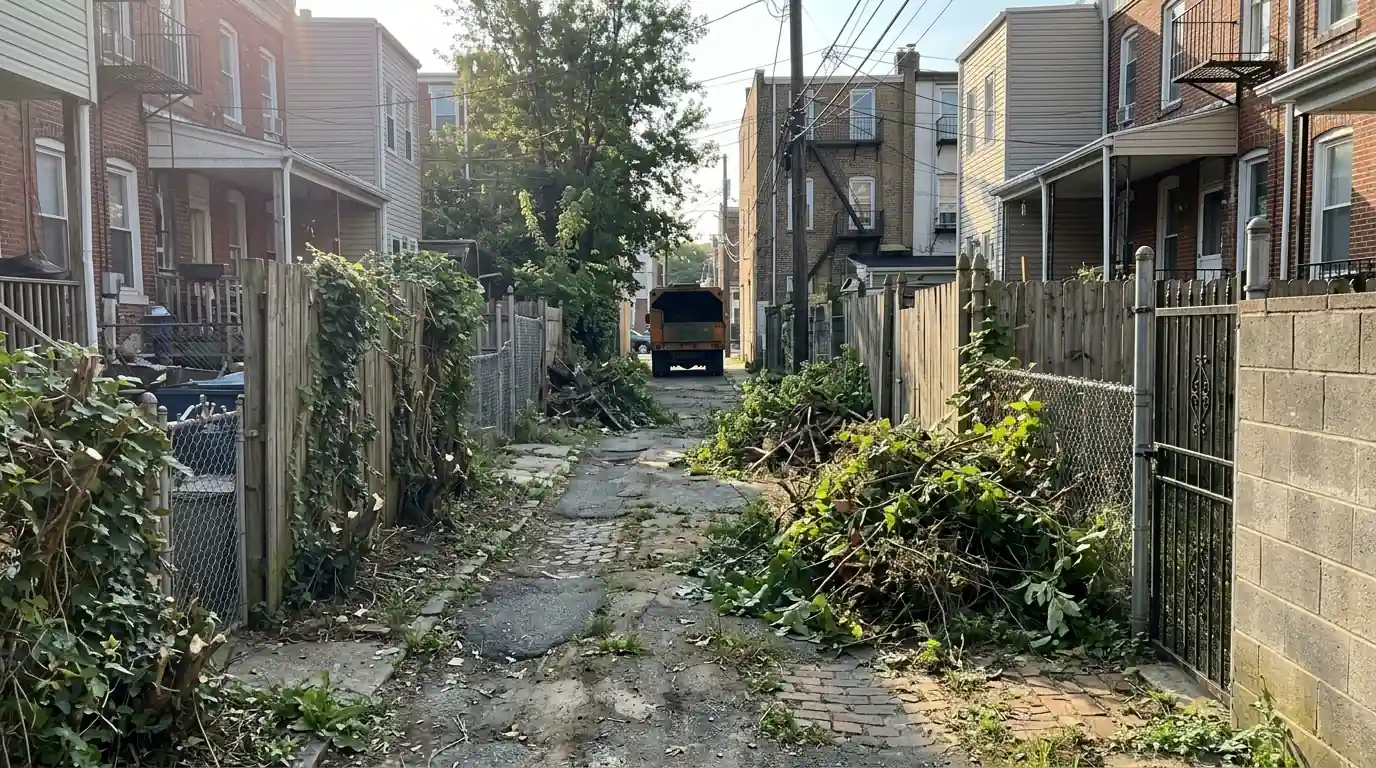
Shared alleys and side lots grow in when nobody owns the job. Branches across an alley block trash pickup and scrape cars, and thick growth hides debris. We cut it back, lift low limbs and haul everything. A parcel with standing trees and stumps to clear for building is a job for our lot clearing work.
What brush clearing from us includes
- A walk of the area to spot plants you want kept
- Poison ivy and hidden debris flagged before cutting
- Weeds and briars cut low with brush cutters
- Saplings sawn flush at the ground
- Stump treatment or grinding where resprouting is likely
- Vines cut and worked out of fences by hand
- Low limbs over the cleared area lifted
- Brush chipped on site or loaded and hauled
- Paths and patios blown clean at the end
Callery pear thickets and fire-prone pine country
Pennsylvania put Callery, or Bradford, pear on its noxious weed list as a Class B weed in late 2021 and moved to stop-sale orders from February 2024; cross-pollination made the tree fertile, and birds now spread its seed into fields, roadsides and disturbed ground in Bucks, Montgomery and Delaware counties and Philadelphia. That is why so many overgrown lots here fill with thorny pear thickets. In New Jersey, the Pinelands Area covers about 1.1 million acres, roughly 22 percent of the state and 38 percent of Camden County, and its pitch pine upland forests are among the most fire-prone in the country.
How a brush clearing visit goes
Send a photo or describe it
Size of the area, how tall the growth is, and how we reach it.
Walk it together
Plants to keep, poison ivy, debris and fence lines noted.
Cut the soft growth
Weeds and briars knocked down so the woody stems show.
Saw the saplings
Woody stems cut flush, resprouters marked for treatment.
Free the fences
Vines cut at the base and pulled out in sections.
Chip and load
Brush through the chipper or onto the truck.
Blow off and walk through
Hard surfaces cleared, the space checked with you.
Brush clearing questions from owners
Weeds will, from seed. Woody resprouters like sumac and tree of heaven come back from roots unless the cut stumps are treated or ground, so we plan for that.
Yes. We walk the space with you first and mark the shrubs, perennials or young trees to save, then cut around them by hand.
Yes. It goes through the chipper or onto the truck, and chips can stay as mulch on paths if you want them.
Late fall and winter are easiest, with leaves down and poison ivy dormant. Summer works too, but growth is thicker and the clearing takes longer.
Yes, with access from the properties involved. Cutting back what grows from your side is simplest, and neighbors often split a shared alley job.
More property cleanup work
Lot & Land Clearing
Wooded lots and overgrown ground cleared, with the trees you want kept left standing.
English Ivy & Vine Removal
Ivy and vines cut free of trunks before the extra weight pulls a tree over.
Log & Debris Haul-Away
Logs, brush piles and storm debris loaded up and hauled off the property.
Hedge & Shrub Trimming
Hedges, screens and overgrown shrubs cut back to clean, even lines.
Lost the yard to overgrowth?
Call and describe it, or send a photo. We will come cut it back, haul it away and leave you a yard you can use.