Quick answer
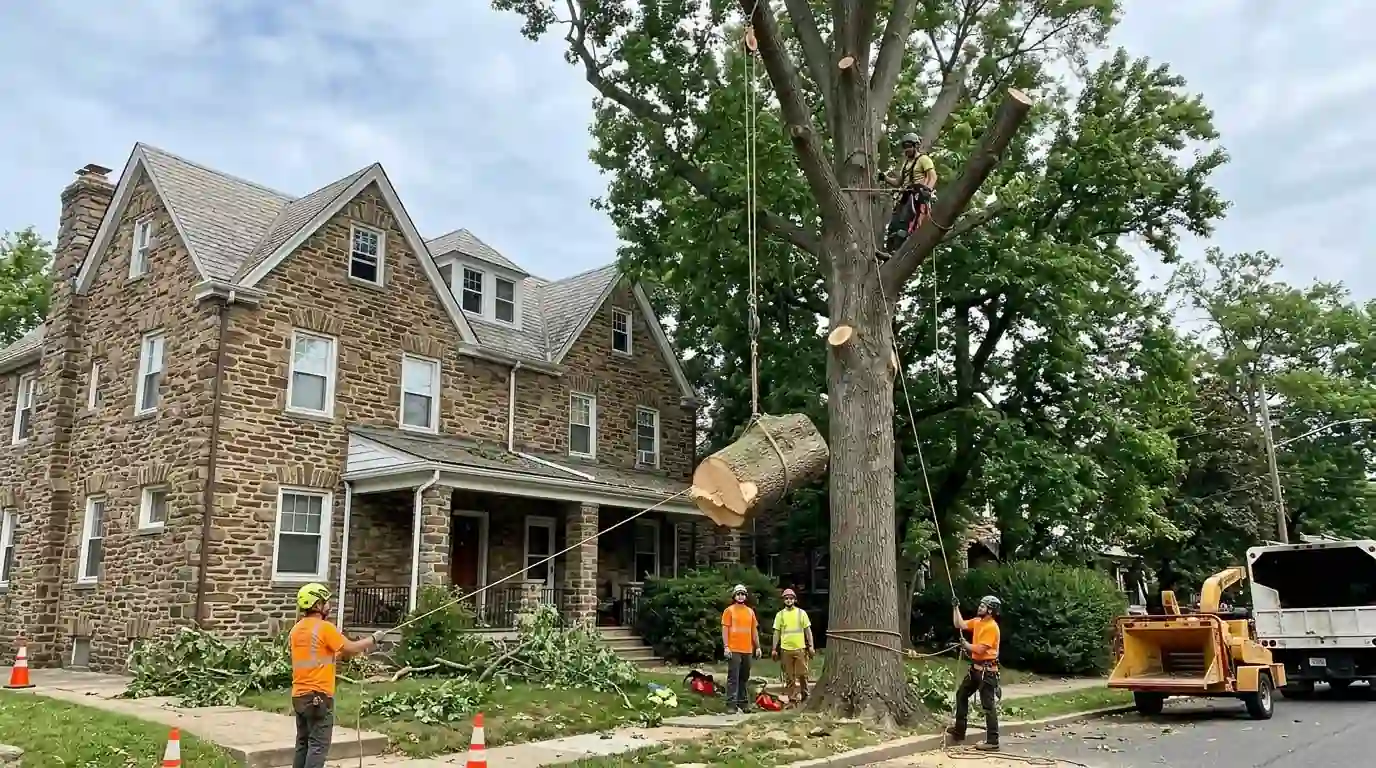
Getting rid of tree of heaven takes herbicide on the stem or the fresh stump, not cutting alone. Penn State Extension notes that an untreated cut sets off a flush of root and stump sprouts, which is how one tree in a fence line becomes a dozen. A follow-up visit catches whatever sprouts anyway.
Why cutting a tree of heaven makes it worse
Tree of heaven spreads through a wide root system as well as by seed. Cut the trunk and the roots push up suckers, sometimes many feet from the stump. Grinding the stump out does not stop it either, because the sprouts come from roots the grinder never touches.
What works is treating the plant before or right at the cut. On a standing tree, herbicide goes into shallow downward cuts around the trunk in summer and the dead tree comes down later. Where it has to go now, the fresh stump is treated within minutes. Our guide to tree of heaven and lanternflies explains the timing.
What tree of heaven removal costs
No published survey prices tree of heaven control by itself. The ranges below cover the cutting; treatment and the return visit are priced once we count the stems.
- 01
Number of stems. One tree is short work; a fence line full of suckers takes far longer.
- 02
Trunk size. Most volunteers are small, but old ones pass 30 feet.
- 03
Treat now or cut later. Treating a standing tree and removing it dead takes two visits.
- 04
What is underneath. Trees against garages and fences get lowered, not felled.
- 05
Follow-up rounds. Dense sucker patches may need a second treatment next season.
| Job | Published range | Source |
|---|---|---|
| Small tree removal, up to 30 ft | $150 to $450 | HomeAdvisor, 2026 |
| Medium tree removal, 30 to 60 ft | $450 to $1,200 | HomeAdvisor, 2026 |
Planning numbers from published surveys, not our prices. We price after seeing the tree.
Three ways to deal with a tree of heaven
| Method | What happens next | When it fits |
|---|---|---|
| Cut only | A flush of root and stump sprouts within the season | Almost never; it multiplies the problem |
| Treat standing, cut later | Roots die with the trunk; the dead tree comes down weeks later | Trees away from roofs and walks, treated in summer |
| Cut and treat the stump at once | Most roots die, though some sprouts may need a second round | Trees over a house or fence that cannot be left standing dead |
Can you kill tree of heaven yourself?
Homeowners can, with patience and a product labeled for the use. The usual mistake is cutting first.
| Doing it yourself | Having us do it | |
|---|---|---|
| Identifying it | Sumac and black walnut look similar; a wrong guess wastes a season. | We check leaflet notches and smell before cutting. |
| Cutting | An untreated cut sets off root sprouts across the yard. | The stem or stump is treated so the roots die with the top. |
| Herbicide use | The label sets the rules, and drift onto a neighbor's plants is a real risk. | Product stays on the stem or stump itself. |
| Sap and follow-up | The sap irritates some skin, and new sprouts hide until head high. | Gloves, long sleeves, and a planned return visit. |
Tree of heaven in fence lines
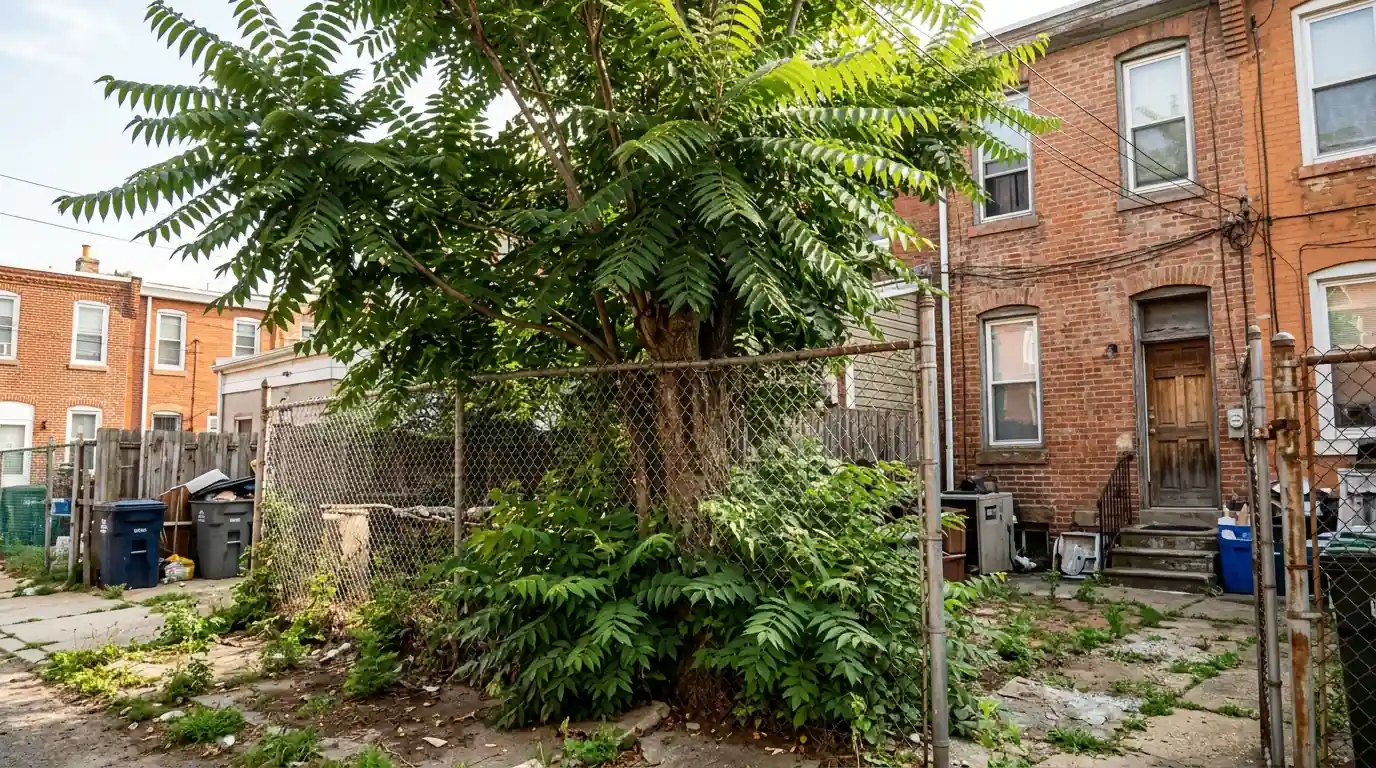
The classic spot is a chain-link fence, a garage wall or the gap between two yards, where a seedling went unnoticed until the trunk was as thick as a leg. Roots run under the fence and the slab, so the tree is often partly a neighbor's problem too. We treat every stem in the clump and lower pieces instead of dropping them, so the fence stays standing.
Root sprouts and suckers
A carpet of sprouts around an old stump means someone cut the tree without treating it. Pulling or mowing them only resets the roots. We treat the sprouts while they are in full leaf, when the plant is moving sugar down and carries the herbicide with it, then check back on what survived. Larger survivors get a stem treatment of their own.
Lanternfly host tree removal
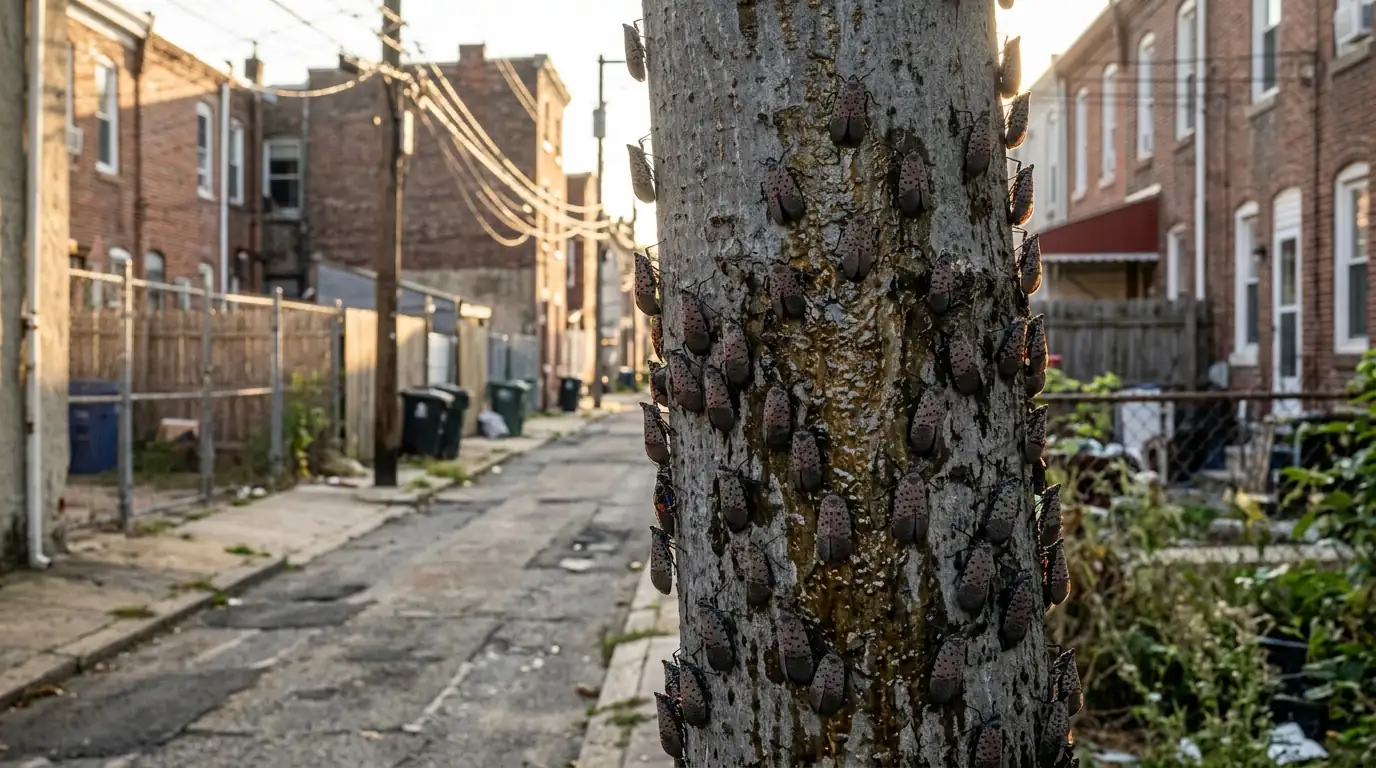
Spotted lanternflies cluster on tree of heaven in late summer, coating the trunk and dripping sticky honeydew onto cars and patios. Taking out the host trees removes their favorite food, though they feed on plenty of other plants. If lanternflies are also on your maples, see our lanternfly treatment for other trees. For the tree of heaven itself, the plan stays the same: treat, cut, follow up.
Tree of heaven inside Philadelphia's lanternfly quarantine
Philadelphia has been inside Pennsylvania's spotted lanternfly quarantine since 2017. The insect favors tree of heaven, a weed tree that has spread across the city, and the droppings from its sap feeding grow a mold that can eventually kill the plants underneath. Penn State Extension is plain about the tree itself: cutting it without treatment triggers a flush of root and stump sprouts, so control depends on herbicide applied to the stem or stump rather than on the saw alone.
How we clear tree of heaven for good
Confirm the plant
Leaflets, notches and smell rule out sumac and walnut.
Map the clump
Every stem and sucker tied to it gets counted.
Pick the timing
Summer stem treatment, or cut-and-treat if it must go now.
Treat the stems
Herbicide goes into shallow cuts or onto the fresh stump.
Take it down
Pieces lowered clear of fences, wires and roofs.
Chip the brush
Branches go straight into the chipper.
Come back
A later visit treats any sprouts that appear.
Tree of heaven questions we get
Cutting without treatment makes the roots push up suckers, sometimes many feet from the stump. That is the plant's normal response, not bad luck.
No. The sprouts rise from spreading roots well beyond the stump. Herbicide on the stem or the fresh cut is what actually stops them.
Mid-summer into early fall, when the tree sends sugar down to its roots and carries the herbicide along. Trees that must come down sooner get a cut-stump treatment.
Look for one or two small notches at the base of each leaflet, then crush a leaf: tree of heaven smells like burnt peanut butter. Sumac and walnut have neither.
It takes away their favorite host, which helps, but they feed on many other plants. Expect fewer of them on the property, not none.
Other invasive and problem tree work
Bradford Pear Removal
Callery pears that split in wind and spread across yards, taken out at the root.
Spotted Lanternfly Tree Treatment
Protecting the trees lanternflies hammer and removing the host trees they breed on.
Brush & Overgrowth Clearing
Overgrown yards, fence lines and alleys cut back and hauled out.
Tree Removal
Sectional takedowns sized to the yard, with the wood, brush and cleanup handled.
Tree of heaven taking over?
Give us a call. We will confirm what it is, lay out the treat-and-cut plan with its follow-up, and price it before work begins.