Quick answer
Most Philadelphia tree removals run about $500 to $2,200 per tree, according to HomeBlue cost data for the city. Where a job lands depends on height, what sits under the canopy, and how the wood gets out of the yard. A tree in the sidewalk strip also needs a Parks and Recreation permit before anyone cuts it.
What taking a tree down actually involves
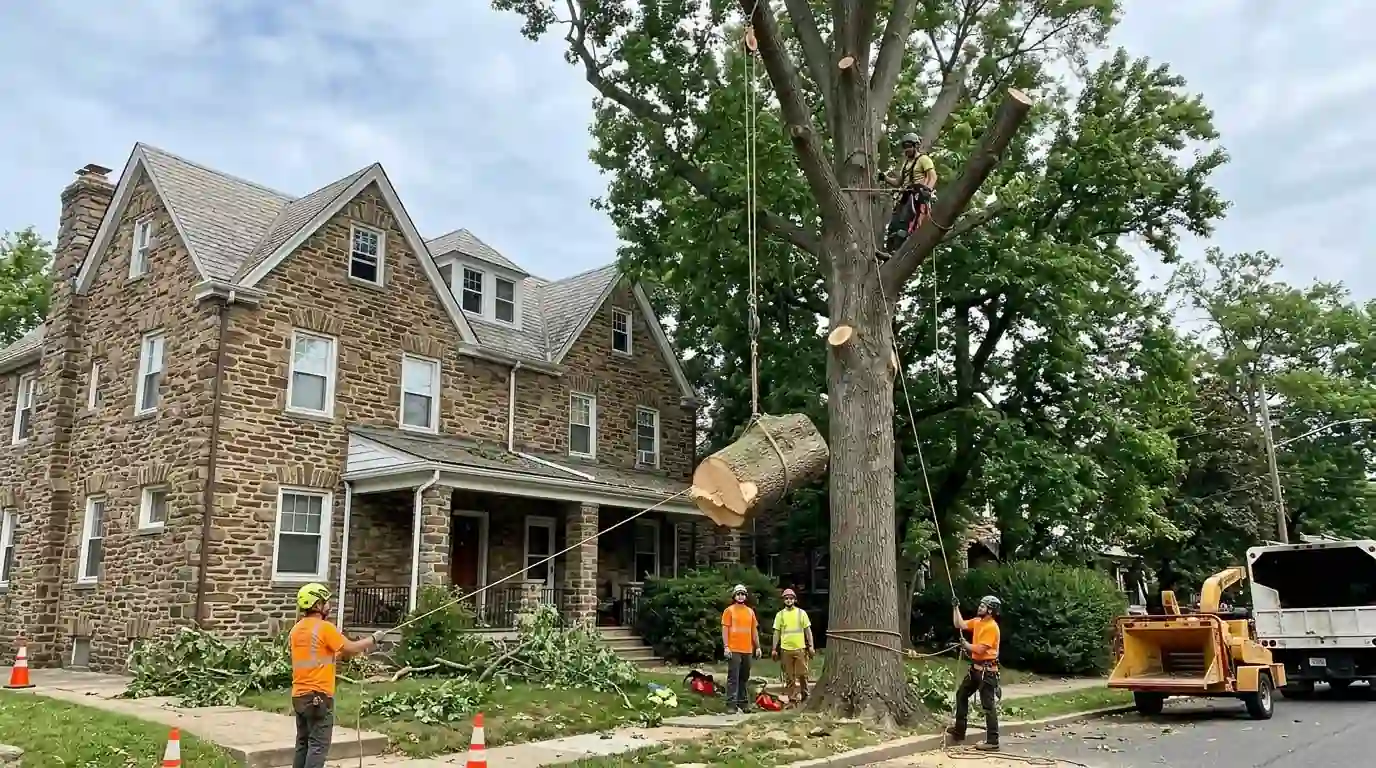
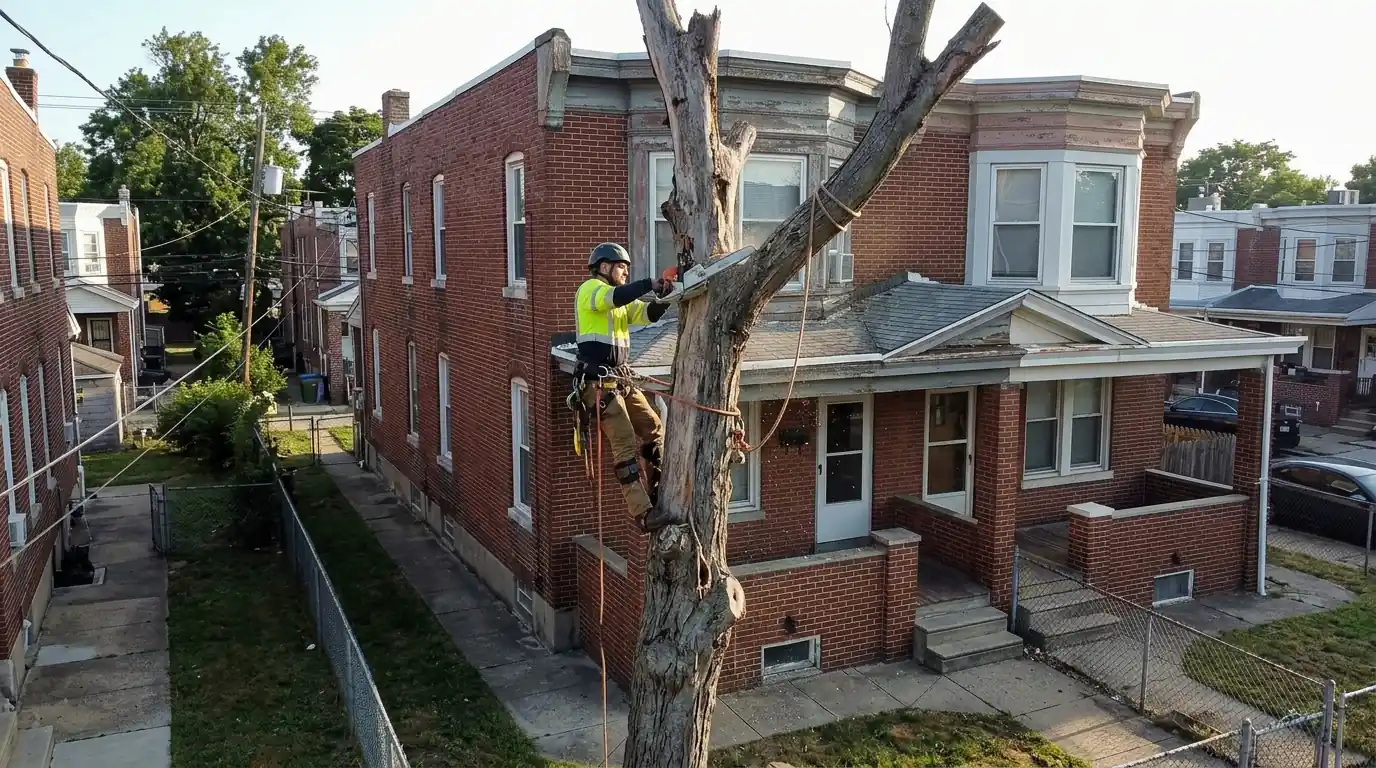
Felling a tree in one piece needs a clear drop zone longer than the tree is tall. Very few Philadelphia properties have that, so most removals here are sectional: a climber or a lift works from the top down, cutting limbs and then the trunk into pieces that are lowered on ropes to the ground crew.
The cutting is the short part of the day. The rest is rigging around the roof, the fence and the service wire, chipping brush, and carrying logs out. Some trees need a narrower approach: a dead tree is too brittle to climb, and a tree with no safe drop zone may need a crane pick.
What tree removal costs in Philadelphia
Published surveys give a useful starting range. Inside that range, five things decide where a particular tree lands.
- 01
Height and trunk size. A 70-foot tulip poplar is a full day of rigging; a 25-foot ornamental may be an hour.
- 02
What sits under it. A tree over a slate roof, a garage or a neighbor's porch has to come down in smaller, slower pieces.
- 03
Access for the wood. A driveway to the street is quick. A rowhome yard with no alley means carrying every log by hand.
- 04
Wires and permits. A limb on the service drop needs a utility make-safe first, and a street tree needs a Parks and Recreation permit.
- 05
Stump and cleanup scope. Grinding the stump and hauling the wood add to the price; keeping logs for firewood takes some off.
| Job | Published range | Source |
|---|---|---|
| Tree removal, Philadelphia | $500 to $2,200 | HomeBlue, 2025 |
| Small tree removal, up to 30 ft | $150 to $450 | HomeAdvisor, 2026 |
| Medium tree removal, 30 to 60 ft | $450 to $1,200 | HomeAdvisor, 2026 |
| Very large tree removal, over 80 ft | $1,000 to $2,000 | HomeAdvisor, 2026 |
Planning numbers from published surveys, not our prices. We price after seeing the tree.
Remove it, or keep it and fix it?
| Situation | Usually remove | Often keep |
|---|---|---|
| Dead or dying crown | More than half the crown is bare or the bark is falling off | A few dead limbs in an otherwise full crown, handled with deadwood removal |
| Split or weak trunk | An open crack running into the base | A narrow fork caught early, supported with cabling and bracing |
| Lean | A fresh lean with soil heaved on one side | An old lean the tree has grown into, with sound roots |
Front yard tree removal
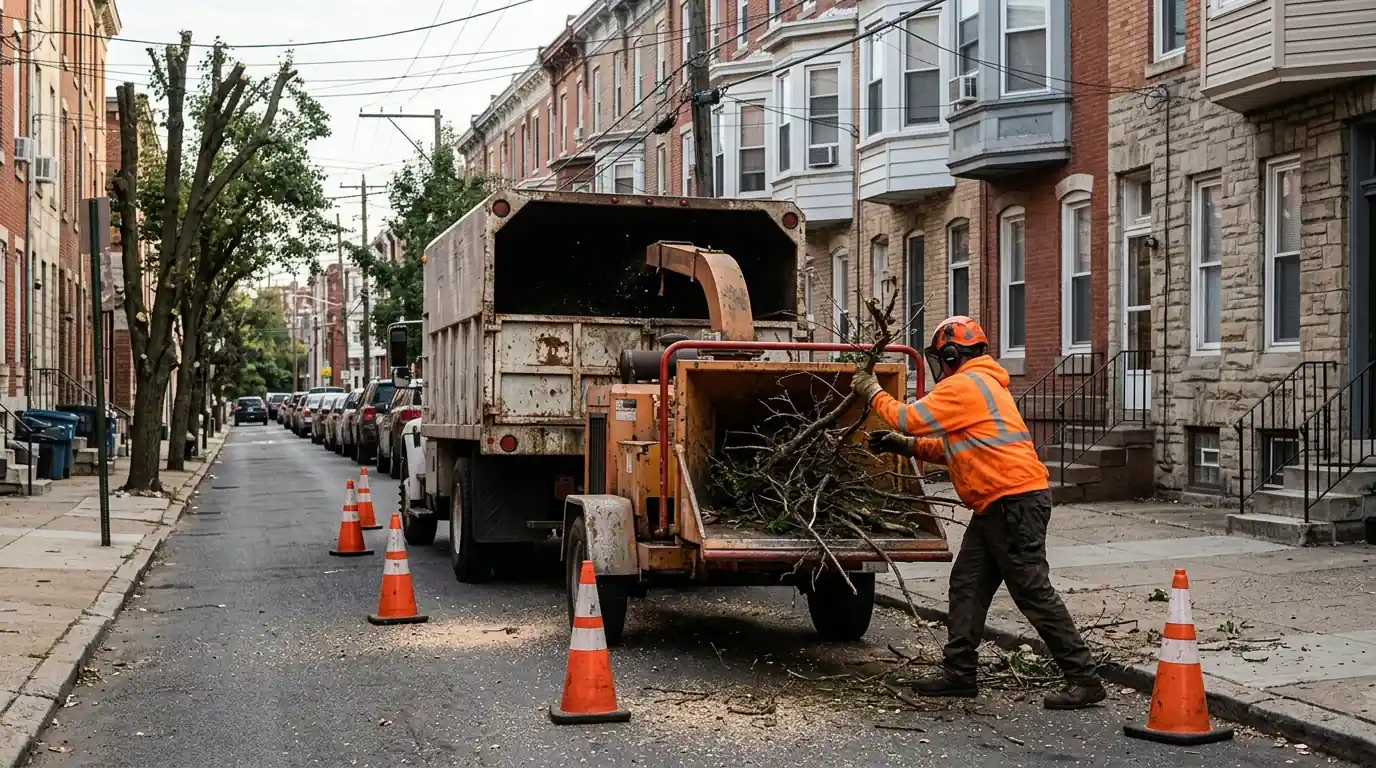
Front yards are usually the easiest takedowns because the street gives the truck and chipper room. The catch in Philadelphia is the sidewalk: logs come down beside parked cars and people walking past. We set cones, keep the drop zone tight, and lower anything big. A 30 to 60 foot front yard maple usually lands in the $450 to $1,200 band HomeAdvisor publishes for medium trees, stump extra.
Backyard tree removal
With a gate or a driveway, a backyard job runs like a front yard one with a longer carry. Without them, every log leaves by hand, so pieces get cut smaller and the day gets longer. Expect that to show in the price. Yards behind a row of houses with no alley are covered on our tight-access backyard removal page.
Tree removal between houses
A tree squeezed between twins or along a shared fence is mostly a rigging problem. Every limb hangs over somebody's roof or gutter, so each one is tied off, cut and swung clear before it is lowered. A branch that has to be cut from the neighbor's yard needs their permission first, so we raise it before the day of the job.
What a tree removal from us includes
- A look at the tree, its lean and what is under it
- The permit step for a street tree, before any cut
- A utility make-safe when a limb touches the service drop
- Rigged sectional takedown from the top down
- Brush chipped on site
- Logs cut, carried out and hauled, or stacked for firewood
- Stump ground below grade when it is part of the job
- Raking, blowing off walks, and a walk-through
- Plywood over soft lawn where the heavy wood crosses
Tree removal rules that catch Philadelphia owners out
Two city rules shape a lot of removals here. A street tree in the sidewalk strip sits in the public right-of-way, and Parks and Recreation will not take down a living, healthy one; if you want it gone, a contractor needs their permit first. Trees on private land are the owner's responsibility, overhanging branches included, and the city can fine owners $150 to $300 and bill them for work they leave undone.
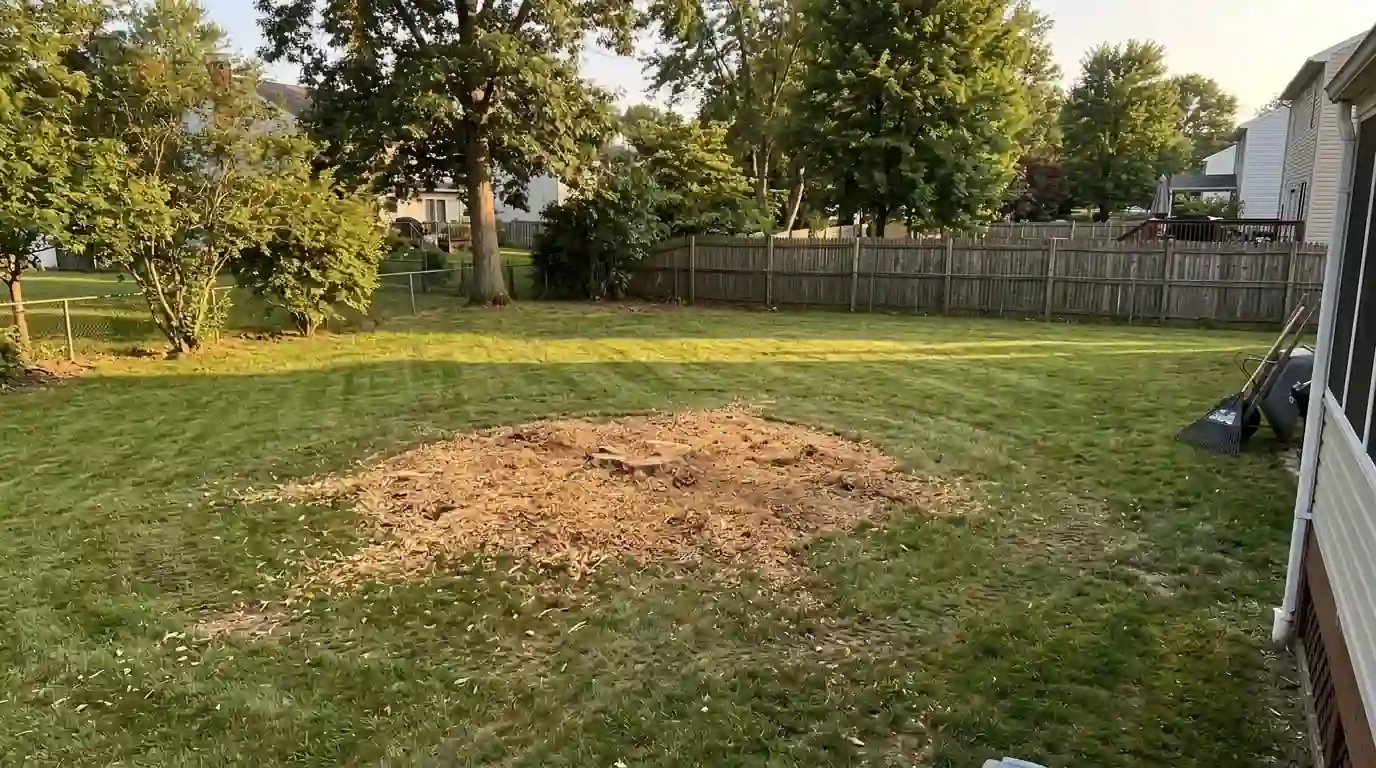
Most removals end like this: raked lawn, chips where the stump was, nothing left on the roof.
Call (916) 312-2373How a tree removal day runs
Call and describe the tree
Size, species if you know it, what it leans toward, and how we get to it.
We look at it in person
Lean, decay, cracks, wires, roofs and the route the wood will take.
Permits and make-safe
Street-tree permit or utility make-safe booked if either applies.
Set up and protect
Cones on the street, plywood on soft lawns, tarps over plants that stay.
Limbs, then trunk
Top-down cuts, each piece lowered on a rope to the ground crew.
Chip, cut and haul
Brush through the chipper, logs cut and carried out or stacked.
Stump and rake-out
Stump ground if included, then the yard raked and walks blown off.
Tree removal questions we hear most
For a street tree in the sidewalk strip, yes: the contractor needs a Parks and Recreation permit. Some suburbs, such as Cherry Hill and Lower Merion, run their own permit rules too.
Mostly. We lower pieces instead of dropping them and lay plywood where heavy wood crosses soft ground.
An hour or two for a small yard tree. A large tree with tight access or rigging over a roof is often a full day.
Yes, unless you want it. Many people keep the logs for firewood, which shortens the day and lowers the price.
Only if you ask. Stump grinding is a separate line on the quote so you can decide.
Other ways we take trees down
Large Tree Removal
Tall shade trees taken down in rigged sections, the way mature Philadelphia trees need.
Crane Tree Removal
Big picks lifted over roofs when there is no safe way to lower the wood by rope.
Tight-Access Backyard Tree Removal
Rowhome and twin yards with no alley, worked by rope and by hand.
Dead Tree Removal
Brittle dead wood taken down from a lift or by rope instead of climbing it.
Have a tree you want gone?
Call and tell us about it. We will come look, explain how it comes down, and give you a price before any work starts.