Quick answer
Yes, we cover Wynnefield, and storm work leads the list after July 2026, when gusts of 60 to 70 mph felled hundreds of city trees and hit this neighborhood hard. Day to day, the mix of 1920s row houses, twins and larger homes with rear alleys and garages decides how a job runs and how the wood gets out.
Four microbursts on a July Saturday
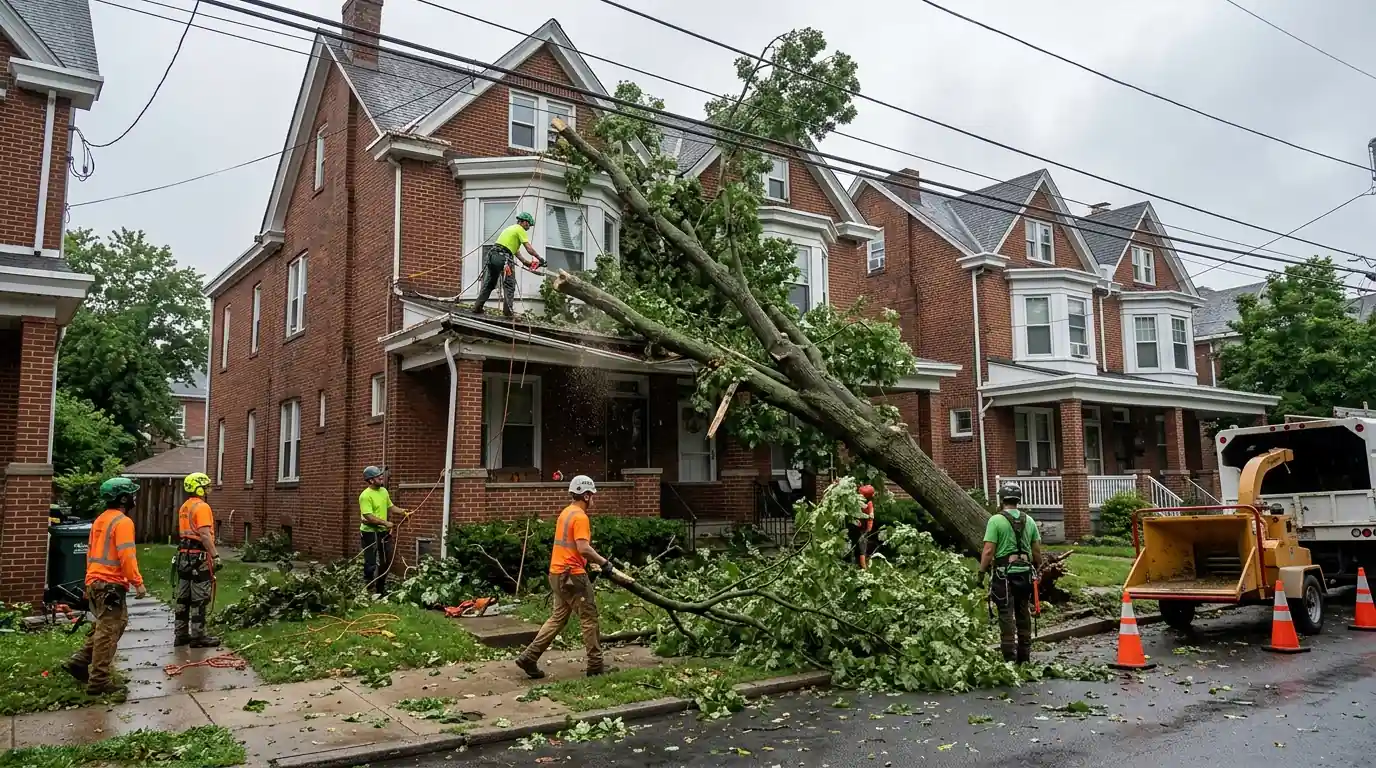
On a Saturday in July 2026, a series of four microbursts with 60 to 70 mph gusts felled hundreds of trees across Philadelphia, and Wynnefield was among the worst-hit areas. Parks and Recreation logged at least 340 emergency requests and inspected about 220 trees. The city ran under a declaration of disaster emergency during recovery, with tree support sent into West Philadelphia.
City crews deal with trees on public land. A tree that falls on your property is yours to resolve once 911 has handled any danger to people, the road or a house, and PECO has dealt with any wires. We pick up the phone 24/7 and start with the tree pressing on a roof or car, then clear the yard.
What Wynnefield calls usually need
Storm damage comes first, but the alleys and mixed housing shape the rest.
- Fallen Tree RemovalA trunk across the house, car or garage is cut off in pieces, lifting weight off before anything else moves.
- Storm Damage CleanupSplit limbs, snapped tops and debris across the yard and alley cleared after a blow.
- Broken & Hanging Limb RemovalBroken limbs still caught in the crown after a microburst come down before they drop on someone.
- Log & Debris Haul-AwayWood the city leaves for residents gets cut, loaded from the alley and hauled off.
- Tree TrimmingThinning a heavy crown over the house cuts the wind load before the next summer storm.
Row houses, rear alleys and the park on the east side
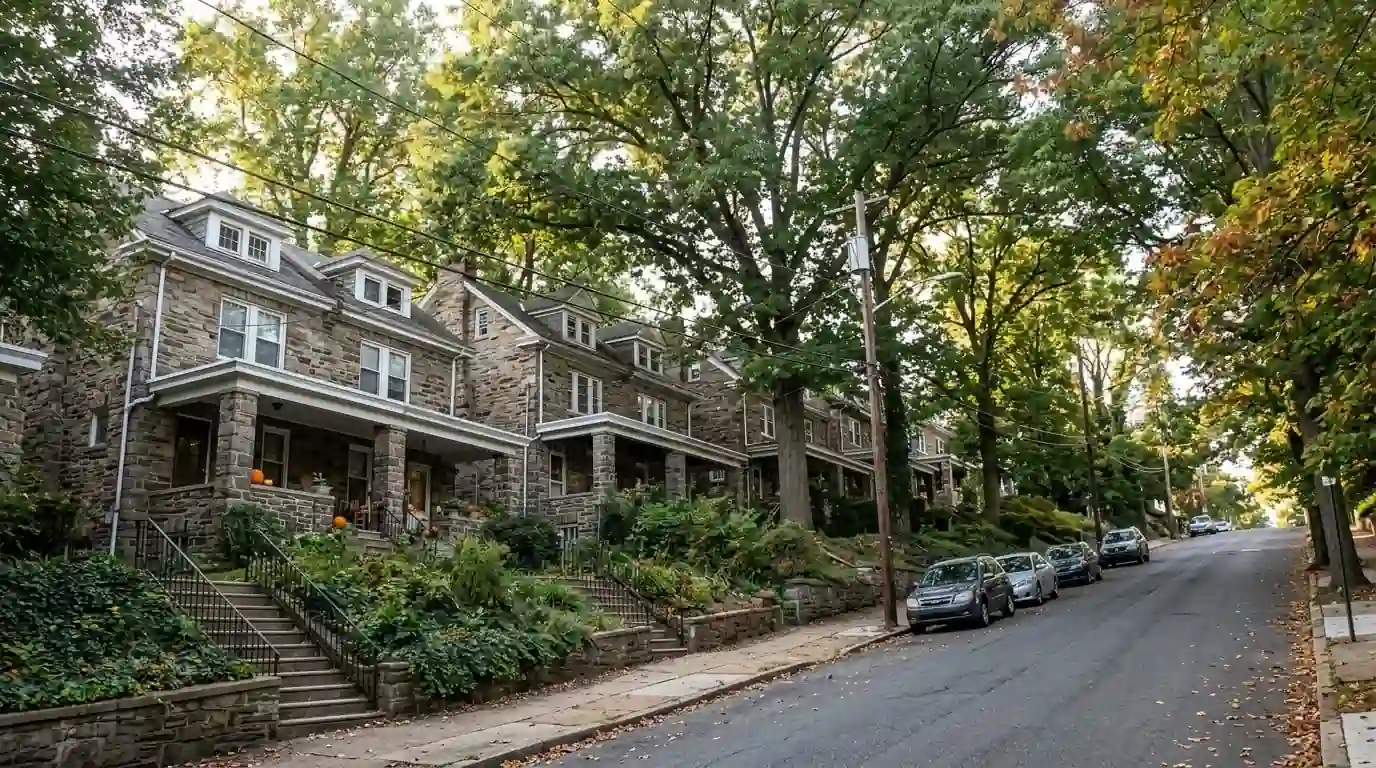
Wynnefield was mostly farmland, some of it dating to the late 1600s, until the 1920s, when smaller plots of row houses replaced the rural lots. Today two-story brick town homes and row duplexes sit alongside garden apartments, mid- and high-rise buildings and a few large mansions.
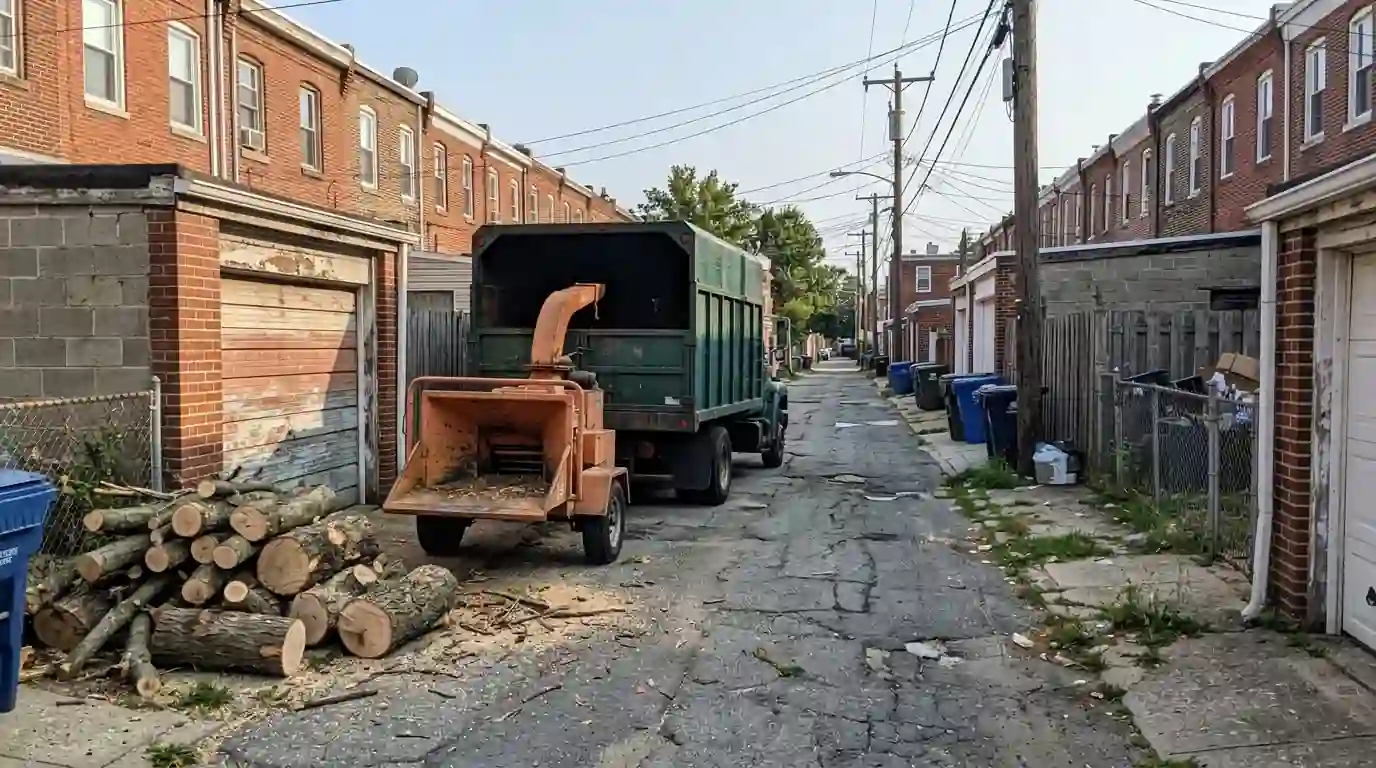
The newer houses were built with rear alleys and garages. For us that changes the whole day: a chipper in the alley beats carrying every log through the house, the way some tight rowhome yards elsewhere in the city require. Fairmount Park forms the eastern border, so big trees are never far off.
West Philadelphia is a priority area in the city's push toward 30 percent canopy in every neighborhood, so a removal here is a good time to talk about planting a replacement in a better spot.
Who answers for a tree when you rent in Wynnefield
Only 48.8 percent of the 21,361 housing units in Wynnefield's ZIP code are owner-occupied, so many people here live under a tree they do not own. Philadelphia puts trees on private land on the owner, overhanging branches included.
If the owner ignores a problem, the city can fine them $150 to $300, usually gives 30 days for non-emergency issues, and can turn unpaid city work into a lien. If you rent, tell your landlord in writing first; we are glad to talk to the owner directly when they call.
Wynnefield tree questions
Tell the property owner in writing first, since trees on private land are their responsibility. They can call us to look at it and arrange the work.
Usually, if it is wide enough and not blocked. Working from the alley lets us load wood straight onto the truck instead of carrying it through the house.
If a crown is heavy over the house or already lost limbs, yes. Thinning takes sail area out of the tree and removes cracked wood before it fails.
No. Debris from a tree on private property is left to residents. We cut, load and haul it, or stack it if you want firewood.
Areas near Wynnefield we also work in
Tree down in Wynnefield?
Call any time, day or night. Tell us what it landed on and we will explain how we get it off and out.