Quick answer
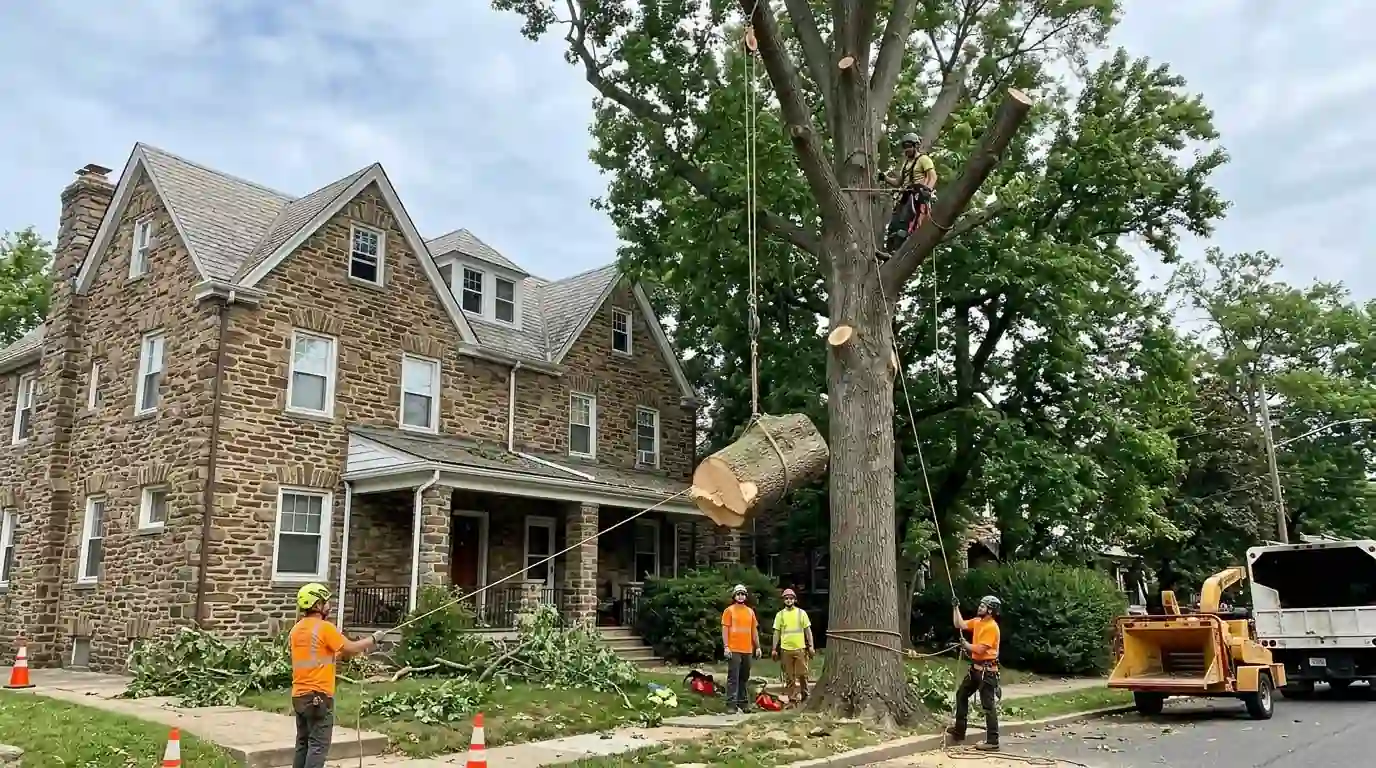
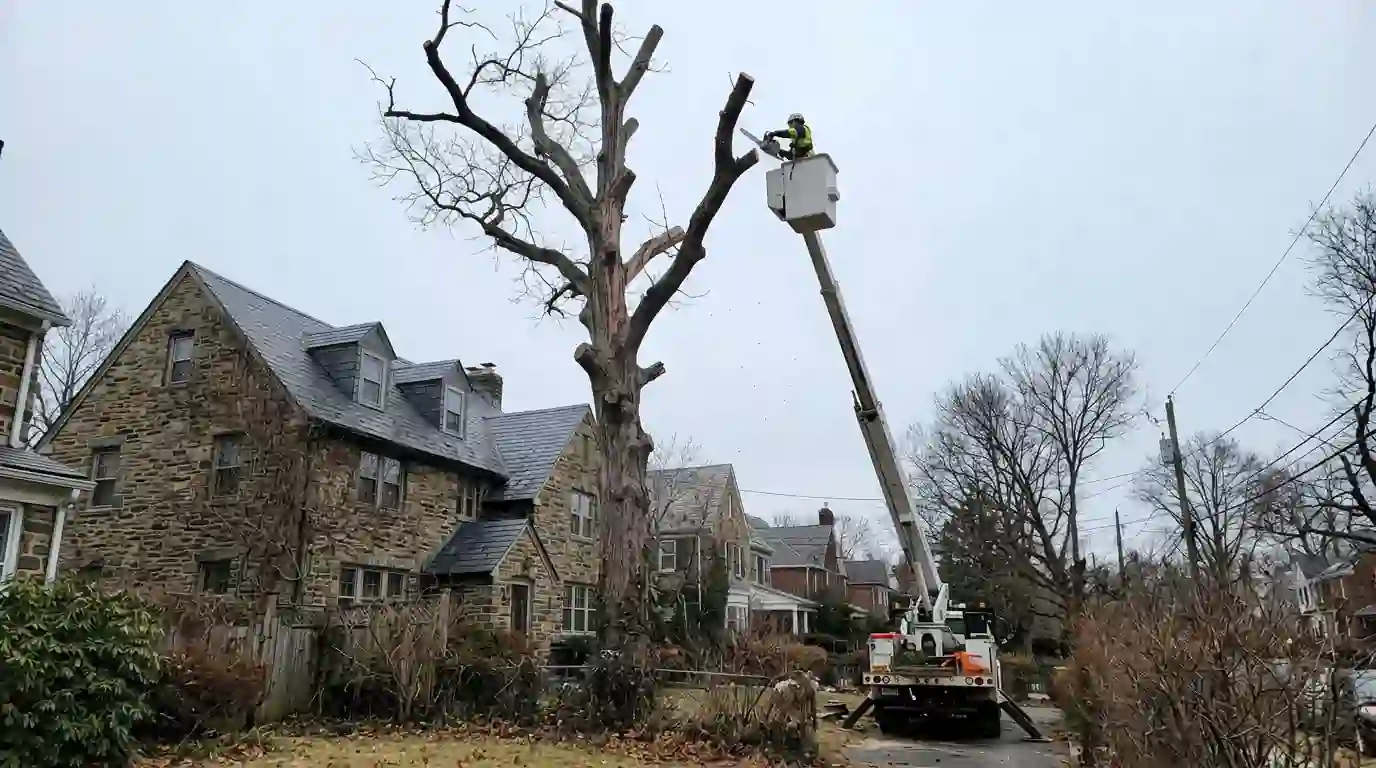
Dead trees in Philadelphia usually fall inside the $500 to $2,200 per tree range HomeBlue publishes for city removals, often toward the top, because brittle wood rules out climbing. The work happens from a lift or by rope from a sound neighbor tree, in small pieces. Waiting only weakens the wood further.
Why a dead tree is a different job from a live one
A live tree flexes and holds a climber's weight. A dead one dries out, its limbs snap without warning, and decay fungi soften the trunk and roots a rope would normally be tied to.
So we work from a lift where the truck can reach, or rig off a sound tree beside it, and keep every piece small. If only part of the crown has died, cutting out just the dead limbs may be enough. Our guide to the warning signs before a tree fails covers what to look at first. Prefer to keep the wood? We cut it to stove length instead of taking every log away.
What dead tree removal costs in Philadelphia
Dead trees are priced like any removal, plus one question: how much of the tree can still take a rope.
- 01
How far decay has gone. One dead a single summer keeps some strength; one dead for years may need a lift for every cut.
- 02
Height. A dead 20-foot dogwood is short work; a dead 70-foot oak needs rigging top to bottom.
- 03
Room for a lift. Reaching from the driveway beats rigging off a neighbor tree.
- 04
What sits underneath. Roofs and wires under a brittle crown mean smaller pieces.
- 05
Stump and wood. Grinding and hauling are separate lines on the quote.
| Job | Published range | Source |
|---|---|---|
| Tree removal, Philadelphia | $500 to $2,200 | HomeBlue, 2025 |
| Medium tree removal, 30 to 60 ft | $450 to $1,200 | HomeAdvisor, 2026 |
| Large tree removal, 60 to 80 ft | $800 to $1,500 | HomeAdvisor, 2026 |
Planning numbers from published surveys, not our prices. We price after seeing the tree.
Cutting down a dead tree yourself
A small dead tree is a fair weekend job. Tall ones are where homeowners get hurt.
| Doing it yourself | Having us do it | |
|---|---|---|
| Felling direction | Dead hinge wood can crumble, so the tree falls off line or pinches the bar. | We take it down in pieces from the top, with no full-length fall to aim. |
| Getting up high | A ladder on a dead trunk shifts, and the limb you stand on can snap. | We cut from a lift or tie in to a sound neighbor tree, never the dead one. |
| Falling deadwood | Saw vibration shakes loose dead tops onto whoever is cutting. | A ground worker watches the crown during every cut. |
Standing dead trees
A tree that died a year or two ago looks solid but rarely is. The bark comes off in plates and the trunk sounds hollow when you knock on it. We check the base for rot before deciding what can take a rope. A dead tree 30 to 60 feet tall sits in the $450 to $1,200 medium-tree band HomeAdvisor publishes, and brittle wood can push it higher.
Trees dying from the top down
Bare branches at the top while the lower crown still leafs out is the pattern emerald ash borer and beech leaf disease both leave. The lower wood is stronger than a fully dead tree, but the top keeps shedding. Ash in this shape belong on our ash tree removal list; for other species we say plainly which way the decline is heading.
Dead trees near structures
A dead tree beside a house or garage is the one not to leave. Brittle limbs break off rather than bend, so a light storm can put one through a gutter or skylight. Near a roof every piece is lowered on a rope and the limbs over the house come off first. When a dead trunk leans on the building, a crane lift is often the safer route.
What is killing trees around Philadelphia
Two problems have been killing trees in and around Philadelphia. Emerald ash borer arrived around 2012, and infested ash can die within three to four years; in Delaware County, Tyler Arboretum in Middletown Township identified close to 900 hazardous ash, with a first removal phase of about 584 trees expected to top $500,000. Beech leaf disease reached Philadelphia in 2022, by then present in 65 of Pennsylvania's 67 counties. Dark bands between leaf veins come first, then a thinning crown and dying branches.
How we take down a dead tree
Tell us what you see
Bare crown, falling bark or a lean, and how long it has looked that way.
Check the wood
We sound the trunk and root flare to see what can carry rope.
Pick lift, rope or crane
Access and decay decide where the cuts are made from.
Clear the drop zone
Cars and patio furniture move; tarps cover plantings that stay.
Small pieces from the top
Dead tops come off first so nothing heavy hangs overhead.
Trunk to the ground
Once the crown is gone, the trunk comes down in rounds.
Chip, haul and grind
Brush chipped, wood hauled, stump ground if quoted.
Signs the tree is dead, not just dormant
- Twigs that snap dry
A live twig bends green under the bark; a dead one breaks brown.
- Bark coming off in sheets
Bark sliding off to bare gray wood means growth has stopped.
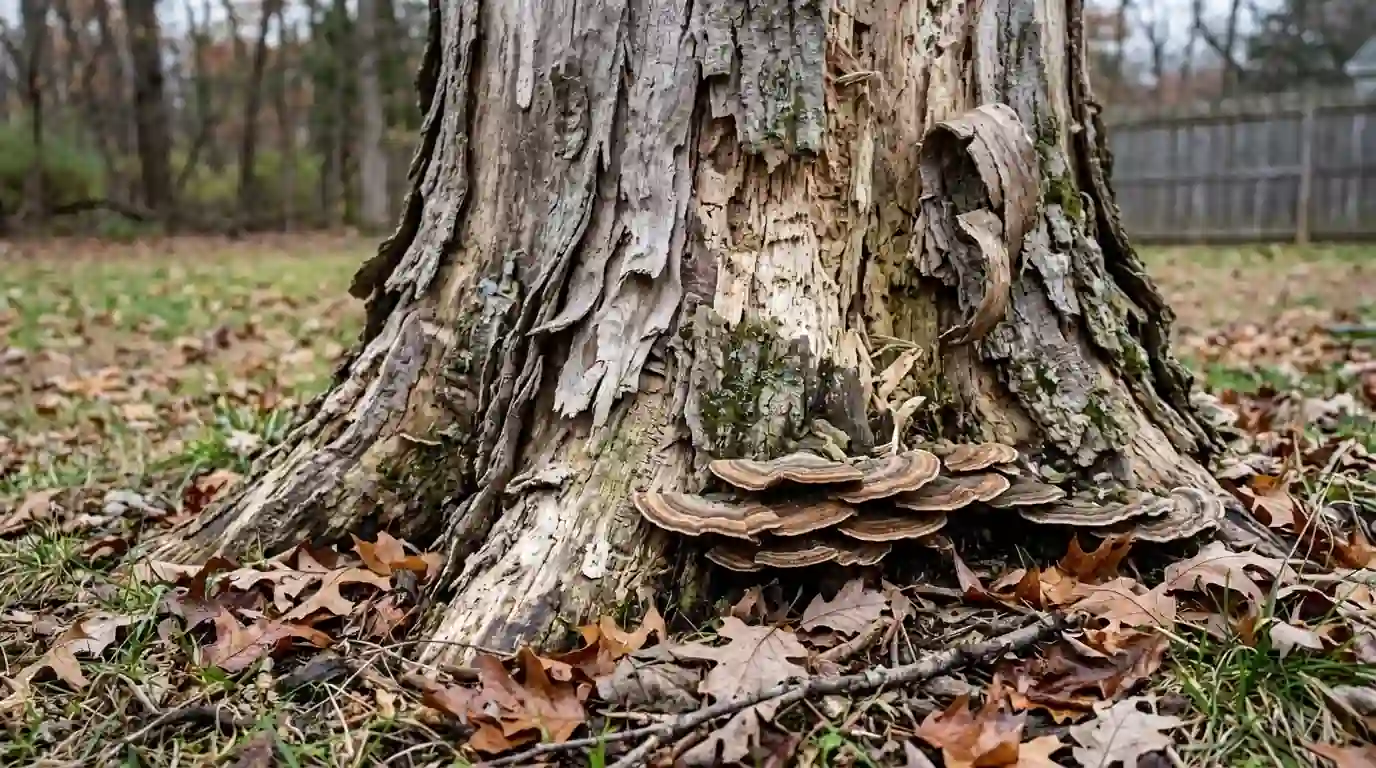
- Conks at the base
Shelf fungi on the root flare point to rot in the supporting wood.
- No leaves by June
The block is in full leaf and yours is still bare.
- Heavy woodpecker work
Fresh holes and flaked bark mean insects are feeding on a dying trunk.
- Limbs dropping on calm days
Branches on the lawn after still weather mean the crown is shedding.
Dead tree questions people ask us
It can be. Brittle wood usually rules out climbing, so the job may need a lift or extra rigging. A recently dead tree often prices like a live one.
Sometimes, away from the house and paths. A short snag keeps a woodpecker perch while removing the part that could reach anything.
Wait until late spring. If neighboring trees are in full leaf and yours shows no buds, scratch a twig: green underneath means alive.
Not that day, but soon. Dead wood weakens every season, ruling out climbing and slowing the job. One leaning toward a house should go first.
Recently dead hardwood burns well; wood dead for years is soft with rot. Burn ash killed by the borer locally instead of moving it.
Related removal work for failing trees
Ash Tree Removal
Ash trees killed or failing from emerald ash borer, removed before they shed.
Crane Tree Removal
Big picks lifted over roofs when there is no safe way to lower the wood by rope.
Large Tree Removal
Tall shade trees taken down in rigged sections, the way mature Philadelphia trees need.
Tree Inspection & Risk Assessment
A walk-around look at decay, cracks, lean and roots, with a straight answer on what needs doing.
Got a dead tree still standing?
Call and describe it. We will check the wood, explain which way it can safely come down, and price it before anyone cuts.