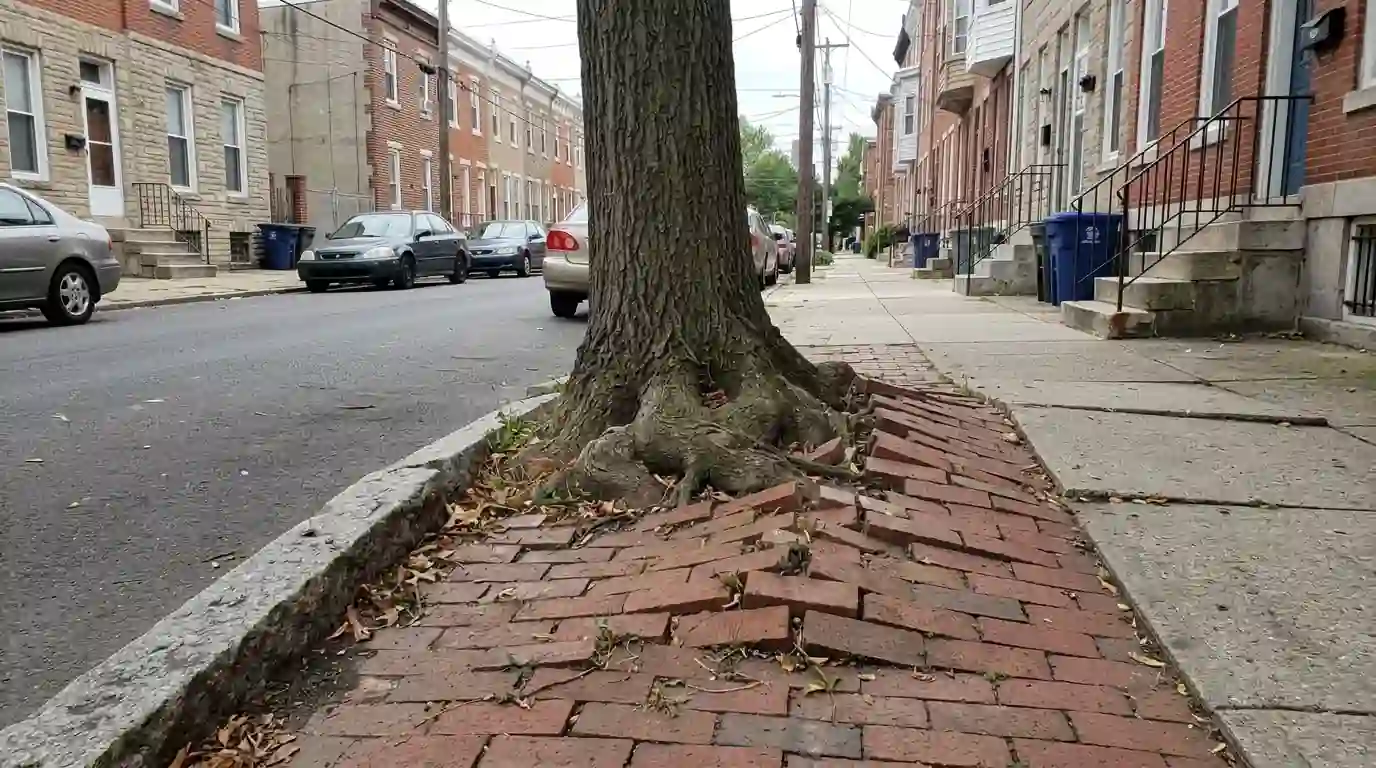
Quick answer
For most shade trees around Philadelphia, late winter is the time to prune: roughly December through early March, after leaves drop and before buds open. The tree is dormant, its structure is easy to see, and fresh cuts start closing as spring growth begins. Spring-flowering trees are the main exception and are pruned just after they bloom.
Why the dormant season is the default
A dormant tree has pulled its energy down into the trunk and roots, so taking off branches costs it less than cutting in full leaf. With the leaves gone you can see every crossing limb, narrow fork and stub, which makes the cuts more accurate. Many insects and fungal spores that enter fresh wounds are inactive in the cold, too.
Timing the work near the end of winter adds one more advantage. Cuts made a few weeks before bud break sit open only briefly before the spring flush of growth starts sealing them over. That is why structural shade tree trimming and work on young trees still being shaped both land in this window on most calendars.
What recent Philadelphia winters mean for scheduling
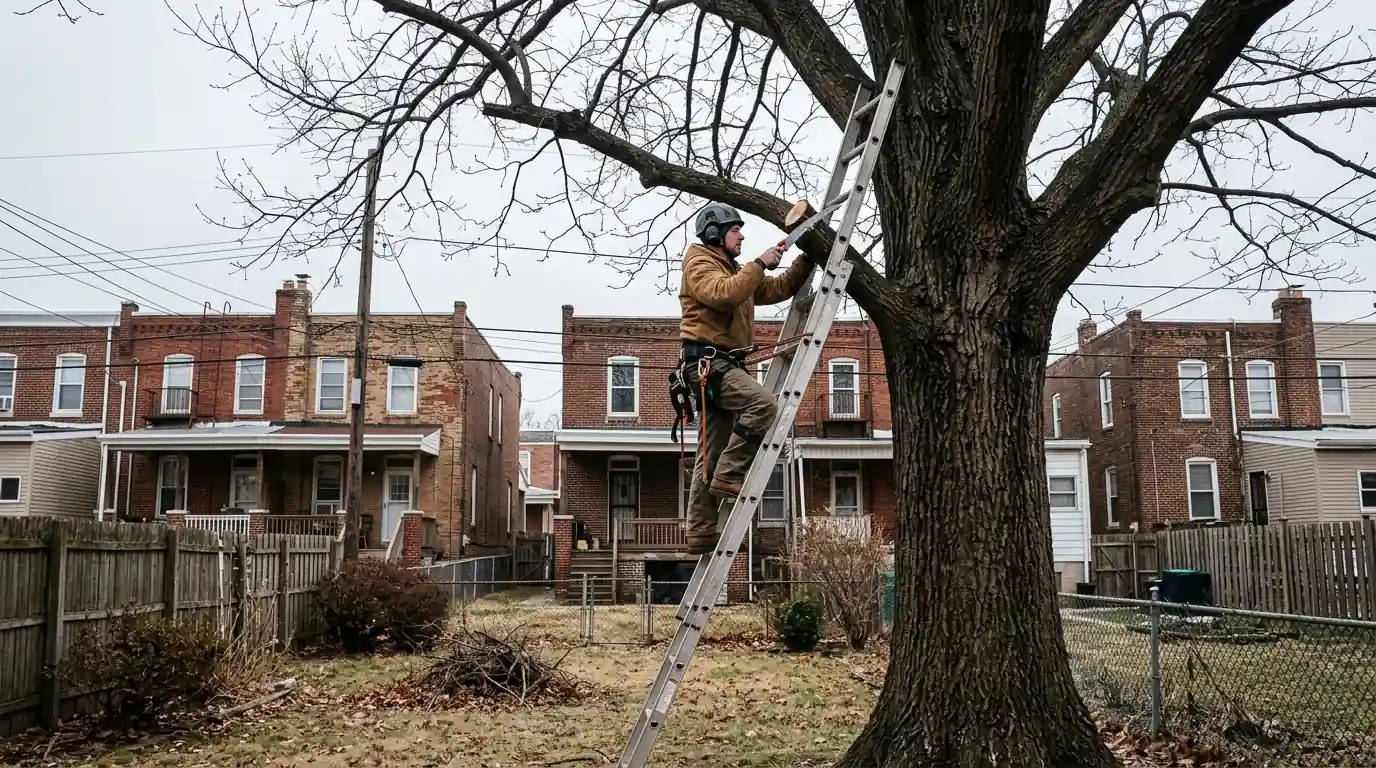
Recent winters have made dormant pruning easier to schedule. The 2024-25 winter brought Philadelphia just 8.1 inches of snow, around a third of normal, and the five winters before it averaged 11.3 inches, about half the long-term figure. Light snow cover means yards are usually reachable and frozen ground often carries equipment without rutting the lawn.
The region can still swing hard the other way. Philadelphia recorded 78.7 inches in 2009-10 and 68 inches in 2013-14, and heavy wet snow snaps limbs that are already weak. If a tree has a long, heavy limb over the roof or a cracked fork, have it dealt with in late fall instead of hoping for another mild winter.
A month-by-month pruning calendar
Use this as a starting point. Species, the tree's health and what the branches hang over can all move a job earlier or later.
| Months | What the trees are doing | Work that fits |
|---|---|---|
| December to February | Fully dormant, leaves off, branch structure in plain view | Structural pruning, crown thinning, weight reduction, most removals |
| Late February to March | Buds swelling; maples and birches may drip sap from cuts | Finish dormant pruning, fruit tree pruning before bloom |
| April to May | Leaves expanding, energy going into new growth | Light cuts only; prune lilacs, forsythia and other spring bloomers right after flowers fade |
| June to August | Full leaf, growth slowing by midsummer | Clearance from roofs and walks, deadwood spotting, hedges, oak checks for leaf scorch |
| September to October | Growth stopping, trees storing energy for winter | Deadwood and hazard limbs before storms; avoid heavy shaping |
| November | Leaves dropping, dormancy setting in | Plan winter work, cut back weak limbs before snow |
Want your trees on a winter pruning schedule? Call and tell us what you have.
Call (916) 312-2373Trees that do not follow the winter rule
Spring-flowering ornamentals set next year's buds the summer before, so a winter cut removes the flowers you were waiting for. Dogwoods, redbuds, magnolias and flowering cherries are usually trimmed lightly right after they finish blooming. Japanese maples are often shaped in winter for structure and touched up in summer, and our ornamental pruning page goes through those species one by one.
Maples, birches and some walnuts bleed sap heavily if cut in late winter. It looks alarming but does little harm; if the dripping bothers you, schedule them for early summer once leaves are full. Oaks get the opposite treatment. Many tree workers avoid pruning oaks from spring into early summer, when fresh wounds can draw the sap beetles that spread oak wilt, and keep oak work to the dormant months.
Summer: the season for seeing problems
Some trouble only shows when the tree is in leaf. A limb that leafs out thinly or not at all is easy to spot in July and nearly invisible in February, which is why summer is a sensible time to have dead branches cut out over walks and patios.
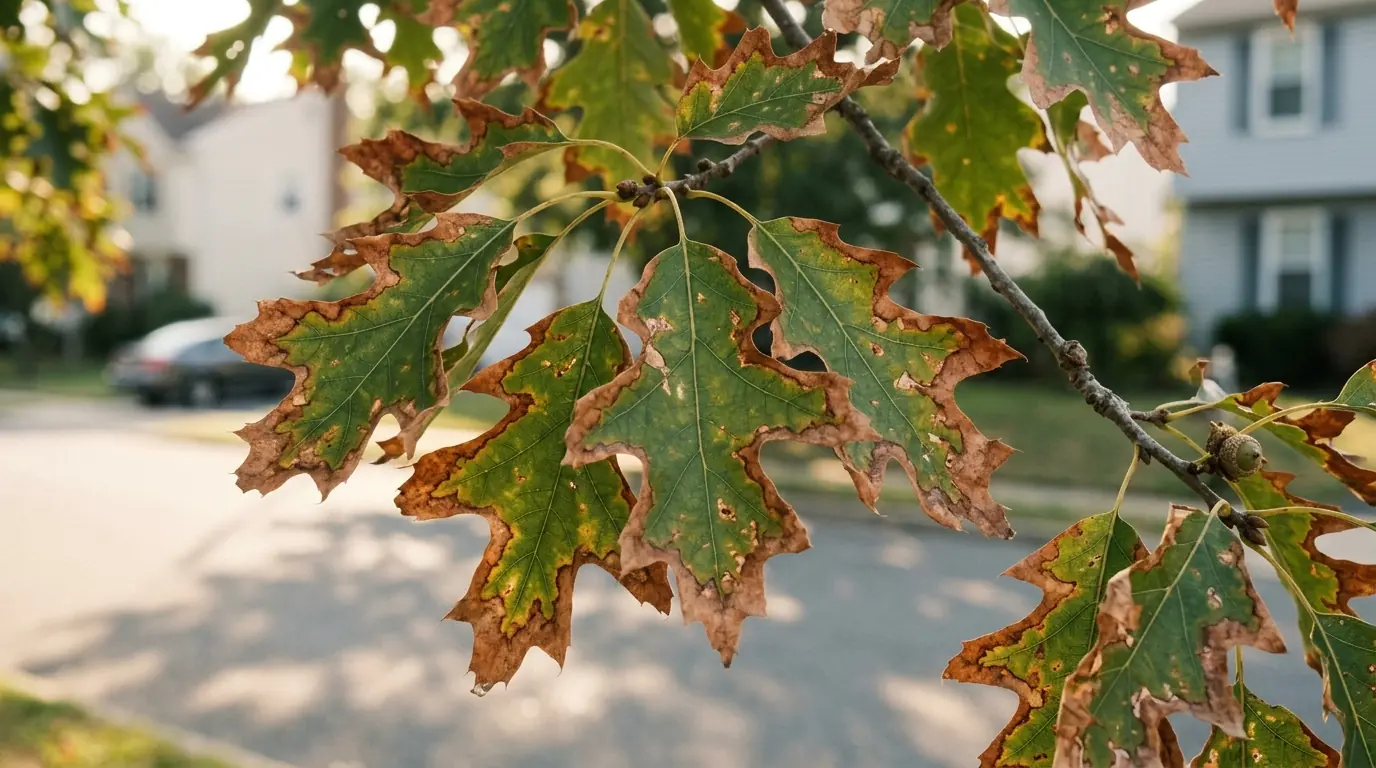
Oaks in South Jersey show another reason to look in summer. Bacterial leaf scorch, caused by Xylella fastidiosa, browns oak leaf edges from midsummer into early fall. It clogs the tree's water-conducting tissue, branches die back over several years, and there is no cure. The NJ Forest Service advises pruning well below the affected leaves, which is easiest to do while the scorched foliage is still on the tree to show where the damage stops.
Lanternflies and the winter work window
Philadelphia has been inside Pennsylvania's spotted lanternfly quarantine since 2017, and by August 2020 New Jersey's quarantine covered eight counties including Burlington and Camden. The insect prefers tree of heaven but feeds on about 70 kinds of plants, so maples and ornamentals in the same yard take a hit too.
Winter pruning visits are a good time to deal with it. Lanternflies lay gray, mud-like egg masses on bark, stone and outdoor furniture in fall, and those masses sit through winter before hatching in spring. Scraping them off while the canopy is bare, and taking out tree of heaven hosts, cuts down next summer's population. Our guide on why cutting tree of heaven is not enough explains why those hosts need more than a saw, and lanternfly tree treatment covers protecting the trees you keep.
Work that should not wait for the calendar
Season only applies to routine pruning. A cracked limb, a branch hung up in the crown after a storm, or a split fork over a bedroom needs attention as soon as you notice it, whatever the month. The small amount of stress an out-of-season cut puts on a tree is nothing next to a limb coming through the roof. If something is broken or hanging, hanging limb removal is the right call, not a spot on next winter's list.
Pruning timing questions
Heavy fall pruning is usually avoided because the tree is shutting down and cuts close slowly, and decay fungi release spores then. Removing dead or broken limbs in fall is fine and often wise before winter storms.
Maples move a lot of sap as buds swell, and cut ends drip for a while. It rarely harms the tree. Schedule future maple pruning for early summer if the dripping bothers you.
Many mature shade trees do well with a cleaning and structural check every three to five years. Young trees benefit from lighter work more often, roughly every year or two while their framework forms.
You can, but you will cut off buds that would have flowered in spring. Light shaping right after bloom keeps the flowers. Winter is still fine for removing dead, broken or crossing branches.
LawnStarter puts the national average at $430 to $640 per tree, with trees over 60 feet at $475 to $1,835. Height, access and how much comes out decide where a particular tree lands.
Pruning work by season
Tree Trimming
Cleaning, thinning and shaping that keeps a shade tree healthy and out of the way.
Fruit Tree Pruning
Late-winter pruning that opens backyard fruit trees to light and air.
Ornamental Tree Pruning
Careful hand pruning for Japanese maples, dogwoods and flowering cherries.
Deadwood Removal
Dead branches cut out of the crown before they drop on someone.
Ready to put your trees on a schedule?
Call and tell us what you have growing. We will suggest the month each tree should be cut and book the work for that window.